How Often Should You Water Your Garden tulip?
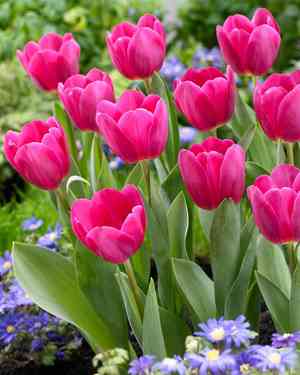
1
Throughout their active growth period, irrigate your Garden tulip every 1-2 weeks, making sure the substrate stays uniformly damp yet not oversaturated.
2
Place a humidity sensor to regularly monitor the soil's moisture content surrounding your Garden tulip.
3
In warm regions, apply mulch around the Garden tulip's base to aid in preserving soil hydration and minimizing water loss through evaporation.
Grasping the Hydration Needs of Garden tulip
Optimal Watering Schedule
The Garden tulip possesses distinct hydration requirements that fluctuate with its growth phases and environmental surroundings. Typically, these vivid blossoms thrive when watered every 1-2 weeks. This interval supplies ample moisture for development without saturating the roots. The goal is to maintain consistently damp soil â neither parched nor waterlogged. Employing measured water volumes in gallons (liters) aids in monitoring and managing this equilibrium effectively.
Elements Affecting Water Demands
Various elements influence the frequency of watering your Garden tulip. These encompass local climatic conditions, soil composition, and the specific developmental stage of your tulips. For instance, sandy soils drain more rapidly than loamy ones, necessitating more frequent irrigation. Furthermore, elevated temperatures and increased sun exposure accelerate water loss through evaporation, requiring more frequent watering. Bulb growth stages also impact moisture needs; for example, newly planted bulbs demand careful attention to soil moisture to promote root establishment.
Optimal Practices for Hydrating Garden tulip
Correct Watering Methods
Regarding hydrating your Garden tulip, employing the appropriate methods can be pivotal. Aim to water your tulips deeply and thoroughly, ensuring the moisture penetrates to the root zone rather than merely the surface. It is advisable to utilize a watering can with a narrow spout or a soaker hose, allowing water to permeate slowly and deeply into the soil. Watering in the early morning minimizes evaporation, providing the soil time to absorb and retain moisture throughout the day.
Monitoring Soil Moisture Levels
Maintaining ideal moisture levels in the soil is vital for the well-being of your Garden tulip. Simple techniques to assess soil moisture include inserting your finger to feel the top 2 inches (5 cm) of the soil, which should be slightly moist but not saturated. For greater precision, consider employing a soil moisture meter, which can offer real-time data on soil conditions. Applying mulch around the tulips also assists in retaining moisture and decreasing watering frequency, particularly in warmer climates.
Seasonal Adjustments for Garden tulip Watering
Watering During the Growth Period
During their active growth phase, typically in spring, Garden tulip necessitate more consistent hydration. As the bulbs sprout and foliage emerges, ensuring steady moisture levels supports robust development and vibrant blooms. Depending on your region's climate, this might entail more frequent watering, up to once weekly, especially if rainfall is insufficient. Always observe the plant and soil conditions to modify your watering schedule accordingly.
Adjustments for Inactive Periods
As Garden tulip enter their dormant phase, usually post-blooming, their water requirements diminish considerably. During this time, reduce watering frequency to once every two weeks or less, just enough to prevent the soil from completely drying out. It is crucial to avoid waterlogging during dormancy, as this can lead to bulb decay. Understanding and adapting to your tulips' natural cycle will ensure they accumulate sufficient energy for the subsequent growing season.
Common Water-Related Issues for Garden tulip
Symptoms and Solutions for Excessive Watering
Over-watering is a frequent problem for Garden tulip, potentially leading to various issues including root rot, fungal infections, and stunted development. Indicators include yellowing foliage, soft or mushy bulbs, and an unpleasant odor from the soil. If you suspect over-watering, decrease frequency, enhance soil drainage by incorporating organic matter, and ensure no standing water accumulates around the plants. Utilizing a well-draining potting mix and containers with drainage holes can also help prevent over-watering.
Signs and Remedies for Insufficient Watering
Equally problematic is under-watering, which can result in wilting, dry or brittle leaves, and poor flowering of your Garden tulip. To rectify under-watering, gradually increase the watering frequency, ensuring the soil can adequately absorb the moisture. Consistently check the soil moisture levels, and make it a habit to water in the mornings when evaporation rates are lower. Simple modifications can significantly contribute to ensuring your tulips remain healthy and flourishing.



