How Much Sunlight Do Pale mexican pricklypoppy Need?
1
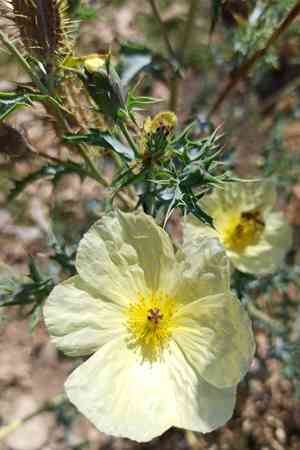
Pale Mexican Pricklypoppy flourishes in bright light, needing more than six hours of direct sun each day.
2
Not enough sunlight can result in fewer blooms and elongated stems for Pale Mexican Pricklypoppy.
3
Supplemental lighting can support indoor Pale Mexican Pricklypoppy, particularly when daylight hours are limited.
Understanding Light Needs for Pale Mexican Pricklypoppy
Pale Mexican Pricklypoppy's Light Adaptations
The Pale Mexican Pricklypoppy is well-suited to bright environments. Its silvery-gray foliage reflects light, minimizing water loss and keeping the plant cool in hot climates. This adaptation is vital for its survival in dry regions, where light is plentiful but water is scarce.
Native Environment and Light Exposure
Hailing from Mexico, the Pale Mexican Pricklypoppy is accustomed to areas that receive constant, intense illumination. These locations often feature arid, open spaces with minimal shade, making full sun exposure a typical condition for this hardy plant.
Optimal Light Conditions for Pale Mexican Pricklypoppy
Ideal Daily Light Duration
For best development, the Pale Mexican Pricklypoppy needs at least 6 hours of direct sunlight daily. This full sun exposure enables the plant to photosynthesize efficiently, generating the energy required for vigorous growth and abundant blooms.
Full Sun vs. Partial Sun Explained
Full sun means the Pale Mexican Pricklypoppy is exposed to direct sunlight for 6-8 hours per day. Partial sun, conversely, typically involves 3-6 hours of sun exposure. While the Pale Mexican Pricklypoppy can endure partial sun, it won't flourish or flower as robustly as it would in full sun.
Impact of Insufficient Light on Pale Mexican Pricklypoppy
Signs of Light Deficiency
When the Pale Mexican Pricklypoppy doesn't get enough light, it often shows specific stress indicators. These include elongated, spindly stems as the plant reaches for light sources, reduced flowering, and pale, underdeveloped leaves.
Comparing Low Light and Shaded Conditions
In dim or shaded conditions, the Pale Mexican Pricklypoppy struggles considerably. Its growth becomes stunted, and the plant might not produce any flowers. Compared to partial sun, where some blooms might still occur, shaded conditions offer insufficient light for any significant growth or flowering.
Maximizing Indoor Light for Growth
Best Indoor Spots for Sufficient Light
Indoors, position your Pale Mexican Pricklypoppy near south or west-facing windows to receive maximum light. If natural light is inadequate, consider rotating the plant regularly to ensure even light distribution.
Effective Use of Artificial Lighting
Supplement natural light with full-spectrum grow lights to meet the Pale Mexican Pricklypoppy's illumination needs. Place these lights 12-18 inches (30-45 cm) above the plant and keep them on for about 12-16 hours daily to simulate full sun conditions.



