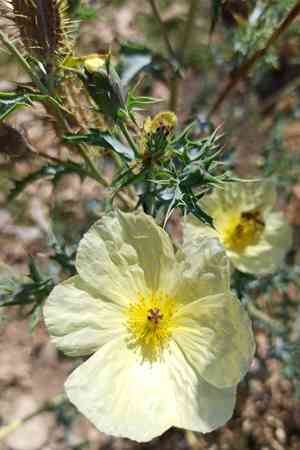
Pale mexican pricklypoppy (Argemone ochroleuca)
Also known as: Yellow prickly poppy, Mexican pricklypoppy
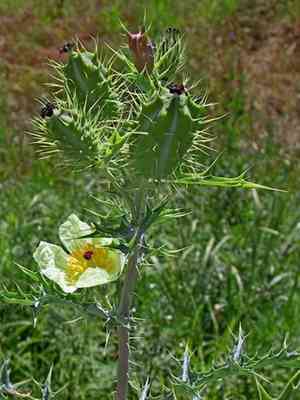
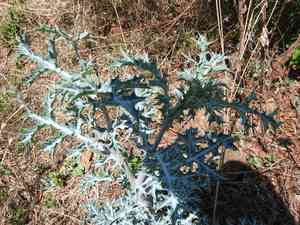
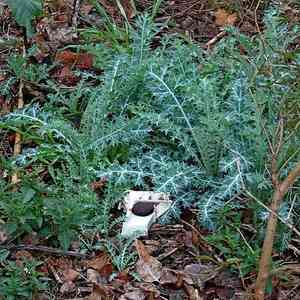
This herbaceous plant can grow up to 1 meter tall and features thorn-covered, blue-whitish stems that exude a milky yellow sap when cut. The leaves are divided, with toothed edges and spines at their tips. Its solitary, large flowers come in shades of yellow, cream, or white and have a papery appearance.
In This Article
Attributes of Pale mexican pricklypoppy
Lifespan
Annual, Perennial
Plant Type
Herb
Plant Height
1 m
Spread
Approximately 30-50 cm in a mature, fully spread plant
Leaf Color
Bluish-green with white veins
Flower Size
3 cm to 6 cm
Flower Color
White Yellow
Images of Pale mexican pricklypoppy
Quickly Identify Pale mexican pricklypoppy
1
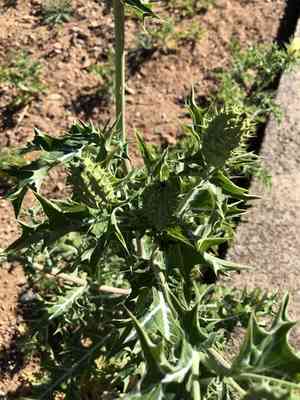
The plant can be identified by its spiny, bluish-green leaves with white veins and large, solitary, yellow to pale cream flowers. It also produces spiny seed pods. The entire plant contains a yellow latex.
Scientific Classification of Pale mexican pricklypoppy
Phylum
Vascular plants
Class
Dicotyledons
Order
Ranunculales
Family
Poppy
Genus
Prickly poppies
Species
Pale mexican pricklypoppy
Planting and Growing of Pale mexican pricklypoppy
Care Difficulty
Easy
Watering Schedule
Every 2 days
Sunlight Requirements
Full sun
Sunshine Duration
4-8 hours
Ideal Temperature
70-85℉
Soil Type
Potting Mix, Peat Mix
Soil pH
6.5-7.5
Fertilizer Type
Balanced
Pruning Season
Spring, Summer
Pruning Area
Branches, Leaves
Pruning Frequency
Once a year
Repotting Season
Spring
Pot Type
Plastic, Ceramic
 How to Water Pale mexican pricklypoppy?
When watering Argemone ochroleuca, aim for about 200 ml each time. The goal is to moisten the soil thoroughly without causing waterlogging. Ensure that the soil allows for enough drainage to prevent standing water, which can harm the roots.
What are the symptoms of an underwatered Pale mexican pricklypoppy?
›
What should I do if my Pale mexican pricklypoppy is not getting enough water?
›
What are the symptoms of an overwatered Pale mexican pricklypoppy?
›
How to save an overwatered Pale mexican pricklypoppy?
›
 What Are the Sunlight Requirements for Pale mexican pricklypoppy?
Argemone ochroleuca prefers full sun conditions, benefiting from 6 to 8 hours of direct sunlight. This ensures healthy foliage, vibrant blooms, and strong developmental processes.
More About Sunlight Requirements Techniques→
What is the ideal lighting condition for Argemone ochroleuca?
›
What solutions can be implemented for ideal lighting?
›
What benefits does Argemone ochroleuca experience with ideal light?
›
 What Is the Ideal Temperature Range for Pale mexican pricklypoppy?
The ideal temperature range for Argemone ochroleuca is between 70°F and 85°F. These temperatures allow the plant to thrive, promoting optimal growth and blooming. At this range, the plant experiences less stress and can maintain healthy physiological processes, such as photosynthesis and nutrient uptake.
 What Soil is Best for Pale mexican pricklypoppy?
Argemone ochroleuca thrives in well-drained soil, which prevents waterlogging and root rot. This preference is beneficial as it ensures healthy root growth and proper moisture balance for optimal plant development. A nutrient-rich substrate supports the vigorous growth of Argemone ochroleuca. The presence of essential nutrients like nitrogen, potassium, and phosphorus is vital for lush foliage and robust flowering. The addition of moderate organic matter enhances soil fertility and structure for Argemone ochroleuca. It improves aeration and moisture retention, which are crucial for sustaining the plant's health, especially during dry conditions.
 How to Fertilize Pale mexican pricklypoppy?
For Argemone ochroleuca, use a balanced liquid fertilizer at half the recommended strength to avoid any nutrient overload. When using slow-release fertilizers, ensure to apply just enough to cover the root zone without exceeding the package's instructions. This will offer the plant a steady nutrient supply without risking burning the roots.
 How to Prune Pale mexican pricklypoppy?
Start by wearing gloves, as Argemone ochroleuca can be prickly. Use sharp, clean scissors or pruning shears to gently trim back any dead or dying flowers and leaves. Focus on cutting just above a leaf node to encourage new growth. Remove any stems that show signs of disease or damage. To shape Argemone ochroleuca, assess the plant’s current structure and decide on a desired size. Trim excess branches and stems, maintaining a symmetrical balance. This will not only keep the plant looking neat but will also prevent it from overshadowing other plants in your garden.
More About Pruning Techniques→
 How to Propagate Pale mexican pricklypoppy plant?
1
Begin by filling seed trays with a suitable potting mix. Sow the Argemone ochroleuca seeds on the surface and lightly cover them with a thin layer of soil. Maintain a warm temperature to support germination, which typically occurs in about two to three weeks.
2
The seeds require consistent moisture but not waterlogged conditions. Use a gentle spray to mist the soil surface regularly, ensuring it remains moist. Avoid over-watering which can lead to fungal issues.
3
Once the seedlings have developed several true leaves, carefully transplant them into larger pots or their permanent location, ensuring they receive adequate sunlight and well-drained soil to continue healthy growth.
 How to Repot Pale mexican pricklypoppy plant?
1
Argemone ochroleuca shows it's time for repotting when roots start poking out of the drainage holes or when growth seems stunted despite regular care. These are clear signs that it's running out of room or nutrients. It's best to repot during its active growing seasons, spring and summer, enabling the plant to quickly overcome transplant shock.
2
Select a pot that is just one size larger than the current one, ideally with good drainage holes. A slightly larger pot prevents excess soil, which can retain too much moisture, causing root rot. A well-sized pot encourages healthy root growth and provides sufficient space for the plant to flourish in its new environment.
3
Opt for a well-draining sandy loam soil with good aeration properties. Such a combination ensures that excess water drains away, reducing the risk of waterlogged roots. The loose structure also helps air circulate, promoting healthy root development and preventing diseases.
Toxicity
Ingestion, Skin contact
WARNING
The judgment on toxicity and danger is for reference only. We DO NOT GUARANTEE any accuracy of such judgment. Therefore, you SHALL NOT rely on such judgment. It is IMPORTANT TO SEEK PROFESSIONAL ADVICE in advance when necessary.
Learn More About Pale mexican pricklypoppy Diseases
Anthracnose
Bacterial Leaf Spot
Bacterial Wilt
Chemical Injury
Damping-off
Downy Mildew
Drought Stress
Fusarium Wilt
Gray Mold
Leaf Curl
Leaf Spot
Mosaic
Nutrient Deficiency
Nutrient Toxicity
Powdery Mildew
Root Rot
Root-knot Nematode
Rusts
Sooty Mold
Spider Mites
Temperature Stress
Thrips Damage
White Mold



