How to Prune Kōwhai?
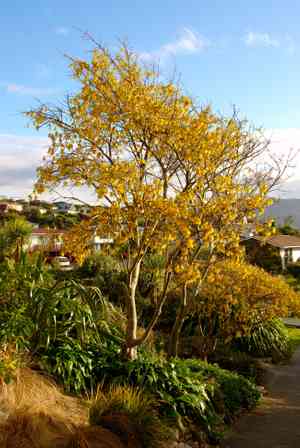
Originating from New Zealand, kōwhai is celebrated for its vibrant yellow blossoms and holds significant ecological importance in its native habitat. Perform kōwhai pruning in late winter prior to the emergence of new shoots. Initially, eliminate any deceased or compromised branches, subsequently reducing dense growth to improve its form and air circulation. Shorten elongated stalks to foster a more compact habit. Trimming kōwhai encourages revitalization and stimulates a more abundant flowering, guaranteeing its characteristic blooms persist in enchanting and sustaining local fauna.
What Are the Benefits of Pruning KÅwhai?
What Are the Benefits of Pruning KÅwhai?
Trimming kÅwhai encourages robust development, leading to a fuller and stronger plant. By carefully cutting branches, gardeners can also uphold the desired form and size, ensuring kÅwhai integrates well into the landscape design.
What Is the Best Time for Pruning KÅwhai?
What Is the Best Time for Pruning KÅwhai?
Pruning kÅwhai in late winter to early spring coincides with its dormant phase, just before active growth begins. This timing reduces sap loss, which can stress the plant. It also allows for the removal of any winter frost damage and avoids cutting wood where new season's flower buds form. Pruning during this period gives kÅwhai ample time to recover and produce new growth for the flowering season. Avoiding autumn pruning is crucial to prevent stimulating new growth that could be vulnerable to upcoming winter frosts.
What Tools Do I Need to Prune KÅwhai?
Bypass Pruners
Perfect for making clean cuts on kÅwhai's smaller branches, typically up to about 1/2 inch in diameter. They operate like scissors, providing a precise cut essential for the plant's health.
Loppers
Suitable for cutting branches that are somewhat thicker, usually up to 1 1/2 to 2 inches in diameter. Their long handles provide leverage to cut through kÅwhai's branches without causing harm.
Pruning Saw
For kÅwhai's thickest branches, typically those over 2 inches in diameter, a pruning saw with sharp teeth is ideal for making clean, straight cuts.
Pole Pruner
Useful for reaching higher kÅwhai branches without needing a ladder. They combine a saw and a lopper on a pole and are helpful for maintaining the plant's shape and health.
Gardening Gloves
Though not a cutting tool, sturdy gloves protect hands from scratches and offer a better grip on tools when pruning kÅwhai.
Sharpening Tools
Keeping all cutting tools sharp ensures they make clean cuts on kÅwhai, which is vital for preventing disease and damage.
How to Prune KÅwhai
Clean Tools
Before pruning kÅwhai, ensure all tools are clean to prevent disease spread. Sterilize secateurs, saws, and loppers with a bleach and water solution or rubbing alcohol.
Identify
Identify dead or diseased branches on kÅwhai by looking for wood that is dry, brittle, discolored, or shows signs of fungal growth. These branches often lack leaves or have discolored, wilted leaves.
Prune Dead
Using sharp, clean pruning tools, carefully remove dead branches. Cut each branch where it meets healthy wood, slightly above a bud or lateral branch, at a 45-degree angle away from the bud.
Prune Diseased
When trimming diseased branches from kÅwhai, cut well below the affected area to ensure all diseased tissue is removed. Sterilize your tools after each cut to avoid contaminating healthy parts of the plant.
Clean Up
After pruning kÅwhai, remove all cuttings from around the plant's base to prevent disease spread. Dispose of debris in a way that wonât contaminate other plants.
Common Pruning Mistakes with KÅwhai
Overpruning
Removing too much foliage can stress kÅwhai, leading to reduced flowering and a weakened structure. Aim to remove no more than one-third of the plant's total volume to maintain its health.
Improper Cuts
Cutting too close or too far from the nodes can hinder proper healing and promote disease. Make clean, angled cuts just above healthy buds to encourage new growth.
Ignoring Deadwood
Failing to remove dead or diseased wood can impede kÅwhai's growth and make it more susceptible to pests and diseases. Regularly inspect and clear away any problematic wood.
Neglecting Tool Hygiene
Using unsanitized tools can spread disease from one part of kÅwhai to another or even to other plants. Clean and disinfect pruning tools before and after use.
Pruning Without A Plan
Random or unthoughtful cuts can result in an undesired shape and affect future growth patterns. Plan your approach to maintain the natural form and promote the desired structure of kÅwhai.
Harsh Topping
KÅwhai does not respond well to severe topping, which involves cutting off the tops of main branches. This can stunt growth and disfigure the plant's natural shape.
Common Pruning Tips for KÅwhai
Selective Thinning
Thin out crowded branches to improve air circulation and light penetration, which promotes healthy growth and minimizes disease risk.
Encouraging Flowering
Focus on removing only the oldest wood, as kÅwhai flowers on the previous season's growth. Preserving newer branches will support more abundant blooms.
Maintaining Shape
Prune to maintain the natural, slightly weeping form of kÅwhai. Remove any branches that disrupt this shape or cross over others, which could cause damage.
Rejuvenation Pruning
For older kÅwhai specimens that have become sparse or leggy, use rejuvenation pruning techniques by cutting back old growth to stimulate vigorous new shoots.
Correct Tool Selection
Use sharp, precise tools like bypass pruners or loppers for kÅwhai, depending on branch thickness, to ensure clean cuts that heal quickly.
Protecting The Main Structure
Preserve the main framework of kÅwhai, focusing only on removing selective side branches and maintaining the integrity of the primary structure.



