How to Prune Strawberry guava?
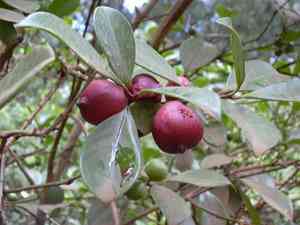
This perennial bush or compact tree is distinguished by its palatable crimson berries and lustrous emerald foliage. For strawberry guava, strategic trimming to eliminate lifeless or ailing limbs and to sculpt the specimen is crucial. Trimming ought to take place in the colder months when the plant is inactive, guaranteeing negligible strain and fluid depletion. Reducing the density of the crown enhances air movement and light exposure, fostering more robust development. Consistent removal of basal shoots preserves a singular trunk structure and redirects vitality towards fruit generation.
What Are the Benefits of Pruning Strawberry Guava?
What Are the Benefits of Pruning Strawberry Guava?
Trimming strawberry guava promotes robust development and helps maintain its form. Regular cutting improves light access and air movement, boosting photosynthesis and lowering disease risk. It also manages its size, ensuring strawberry guava remains attractive and manageable in a garden setting.
What Is the Best Time for Pruning Strawberry Guava?
What Is the Best Time for Pruning Strawberry Guava?
Late Winter is the ideal period for pruning strawberry guava for several reasons. Firstly, the plant is typically dormant during this season, meaning sap flow is reduced, minimizing stress or disease spread. Pruning during dormancy stimulates vigorous growth in the subsequent spring. Secondly, as strawberry guava is a fruit-bearing plant, pruning before spring growth begins allows the gardener to shape the plant and remove any dead or diseased wood without impacting the bloom cycle. This ensures a healthier growth phase and optimizes fruit yield. Lastly, the absence of leaves at this time offers better visibility of the plant's structure, enabling more precise cuts and a well-formed plant.
What Tools Do I Need to Prune Strawberry Guava?
Hand pruners
For strawberry guava's young or slender branches, hand pruners offer the exactness and control needed to make clean cuts without harming the plant.
Loppers
Given strawberry guava's potential for thicker branches as it matures, loppers are perfect for cutting branches up to 1½ inches in diameter, extending reach and leverage.
Pruning saw
For mature strawberry guava with branches exceeding 1½ inches thick, a pruning saw can execute the necessary larger cuts without damaging the plant's main structure.
Hedge shears
To shape strawberry guava when it is used as a hedge or to maintain a specific form, hedge shears allow for rapid trimming of new growth.
Pole pruner
If strawberry guava is tall, a pole pruner can help to reach and trim higher branches safely from the ground without needing a ladder.
How to Prune Strawberry Guava
Clean Tools
Before beginning, sanitize your pruning tools by wiping them with a solution of one part bleach to nine parts water to prevent disease transmission to strawberry guava.
Remove Debris
Clear away any dead or diseased material from the base of strawberry guava to enhance air circulation and decrease the likelihood of disease spread.
Cut Dead Branches
Identify and remove dead branches from strawberry guava by cutting them at their origin point or back to a healthy lateral branch, ensuring a 45-degree angle cut away from the bud to encourage proper healing and new growth.
Prune Diseased Branches
Address diseased branches on strawberry guava by trimming them at least several inches below the affected area to ensure complete removal of any infected tissue; dispose of these removed parts properly to prevent disease spread.
Thin Crown
Carefully thin out dense areas of strawberry guava's crown to increase light penetration and air flow, focusing on any crossing or rubbing branches to maintain a healthy plant structure.
Common Pruning Mistakes with Strawberry Guava
Overpruning
Removing too much foliage at once can stress strawberry guava, leading to stunted growth or an unbalanced shape. Aim to remove no more than one-third of the plant's volume during a pruning session.
Incorrect Cuts
Making cuts that are either too close to the trunk or too far from it can harm strawberry guava. Cuts should be made at a slight angle just above outward-facing buds to encourage proper regrowth.
Neglecting Disease Prevention
Using unclean pruning tools can spread diseases to strawberry guava, negatively impacting its health. Always disinfect tools before use.
Pruning Without Direction
Pruning strawberry guava without a clear goal can result in undesirable plant shapes and poor fruit production. Plan your cuts to maintain the desired form and to open up the canopy for better light penetration.
Common Pruning Tips for Strawberry Guava
Selective Thinning
Remove specific branches to improve air circulation and light penetration within the canopy of strawberry guava. Focus on dead, damaged, or diseased limbs and any that cross or rub against others.
Maintenance Pruning
Regularly prune strawberry guava for shape and size control. This encourages healthy growth and flowering, as well as keeps the plant aesthetically pleasing.
Encouraging Fruiting
When shortening branches, make cuts above a well-positioned bud that faces outside the canopy. This can stimulate strawberry guava to produce more flowers and fruit in the following season.
Healthy Cut Positioning
Make cuts at an angle to avoid water accumulation and promote quick healing. Ensure the cuts are clean and made with sharp tools to minimize stress on strawberry guava.



