How to Prune Scentless mock orange?
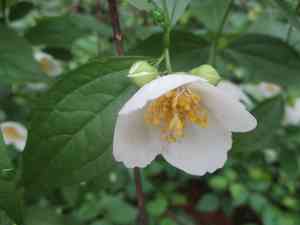
This deciduous shrub, celebrated for its abundant leaves and white blossoms, scentless mock orange, benefits greatly from pruning after its flowering period. Perform trimming immediately following its late spring or early summer bloom to foster its structure and vitality. Removing deceased or intersecting branches, alongside approximately one-third of the mature wood, stimulates robust development. Regular pruning not only preserves an appealing silhouette but also boosts the subsequent year's blooming capacity. This timely horticultural practice guarantees a well-kept, flower-laden scentless mock orange.
Advantages of Trimming Scentless Mock Orange
Advantages of Trimming Scentless Mock Orange
Trimming scentless mock orange encourages fresh development and results in more vibrant blooming periods. This practice also aids in preventing pest and disease outbreaks, keeping scentless mock orange robust and thriving.
Optimal Time for Trimming Scentless Mock Orange
Optimal Time for Trimming Scentless Mock Orange
The ideal period to trim scentless mock orange is from late spring to early summer, immediately after its flowering concludes. Pruning at this time aligns with scentless mock orange's growth pattern, as it flowers on old wood, meaning branches from the previous year. If trimmed in late winter or early spring before blooming, there's a risk of removing buds and diminishing the flowering potential for that year. Post-bloom pruning allows gardeners to shape the plant without sacrificing flower displays, and it also gives the plant ample time to develop new branches that will produce next year's flowers. Furthermore, the plant can recover from pruning during its active growth phase, ensuring strong health and vigor.
Tools Required for Trimming Scentless Mock Orange
Hand Pruners
Essential for making precise cuts on scentless mock orange's smaller stems and branches, hand pruners are perfect for snipping dead or crossing branches less than 1/2 inch in diameter. Using bypass pruners is advised, as they create clean cuts vital for the plant's well-being.
Lopping Shears
Given scentless mock orange's capacity to grow thicker branches, typically up to 1 1/2 inches in diameter, lopping shears are indispensable. They provide the necessary leverage to make clean cuts on larger branches without harming the plant.
Pruning Saw
For mature scentless mock orange specimens with branches exceeding 1 1/2 inches in thickness, a pruning saw is recommended. It enables gardeners to remove large branches without tearing the bark, which could compromise the plant's integrity.
Gloves
Although scentless mock orange is not particularly thorny, gloves are advisable to safeguard the gardener's hands from any rough branches or accidental slips during pruning.
How to Trim Scentless Mock Orange
Sanitize tools
Before trimming scentless mock orange, ensure all pruning implements are disinfected to prevent disease transmission.
Remove diseased and dead material
Carefully cut away any diseased foliage, withered leaves, dead branches, and infected branches from scentless mock orange at their point of origin to promote healthy development and prevent infection.
Thin out old wood
Reduce excessive growth and older wood to enhance light penetration and air circulation within scentless mock orange's structure, making cuts at a slight angle just above outward-facing buds.
Deadhead flowers
For scentless mock orange, remove any spent flowers to encourage better blooms in the subsequent season by cutting just above the first set of healthy leaves below the faded flower.
Shape plant
Finally, shape scentless mock orange by selectively trimming back overgrown branches, maintaining the plant's natural form to improve its aesthetic appeal and overall health.
Common Trimming Errors with Scentless Mock Orange
Excessive Pruning
Removing too much growth at once can shock scentless mock orange, impeding its natural shape and vigor.
Neglecting tool cleanliness
Using uncleaned pruning tools can introduce diseases to scentless mock orange, jeopardizing its health.
Shearing
Shearing scentless mock orange into an unnatural form can hinder proper flowering and lead to unhealthy growth patterns.
Pruning for size reduction
Attempting to significantly decrease the size of scentless mock orange through trimming can result in a weak structure and sparse flowering.
Ignoring deadwood
Failing to remove dead or dying branches can lead to pest infestations and disease in scentless mock orange.
Flush cutting
Cutting branches flush against the trunk removes the branch collar, which is crucial for proper healing and can lead to infection in scentless mock orange.
Incorrect cut angles
Improper cutting angles can prevent water from draining off the wound, potentially leading to rot or disease in scentless mock orange.
General Trimming Advice for Scentless Mock Orange
Clean cuts
Ensure cuts on scentless mock orange are clean and at a 45-degree angle to prevent water retention and promote rapid healing.
Sanitized tools
Always use sharp, disinfected pruning tools to make precise cuts and minimize the risk of spreading diseases to scentless mock orange.
Thin out
Thin out the center of scentless mock orange to encourage good air circulation and light penetration, which are vital for healthy growth and abundant flowering.
Shape naturally
Trim scentless mock orange by following its inherent growth habits rather than forcing it into an artificial shape, preserving its natural form.
Gradual rejuvenation
If rejuvenation pruning is necessary, spread it out over several years for scentless mock orange, ensuring a portion of mature wood remains for flowering each year.
Selective pruning
Selectively trim the oldest stems of scentless mock orange to stimulate new growth, which will produce more flowers.
Healthy wood preservation
Preserve healthy wood when trimming scentless mock orange to maintain a strong framework that supports the plant's growth and flowering potential.



