How to Prune Macaw-flower?
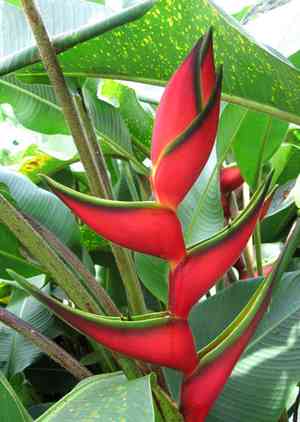
A tropical perennial, renowned for its vibrant bracts and avian-attracting blossoms, macaw-flower flourishes with consistent pruning. Discard faded flowers and impaired foliage at any point to preserve vitality and appearance. Trim clusters to reduce stem density, fostering air movement and fresh development. Its continuous growth throughout the year permits adaptable pruning; nevertheless, after flowering presents the most opportune moment to encourage revitalization. Pruning boosts robustness and bloom output, maximizing the plant's decorative allure for admirers.
Advantages of Trimming Macaw-flower
Advantages of Trimming Macaw-flower
Trimming macaw-flower promotes abundant flowering, stimulates vigor, and maintains a desired shape. Strategic cuts help direct the plant's energy towards producing vibrant flowers, ensuring robust, controlled development for aesthetic appeal and garden design.
Optimal Period for Pruning Macaw-flower
Optimal Period for Pruning Macaw-flower
Pruning or trimming of macaw-flower can be performed throughout the year due to its continuous growth cycle in tropical climates where it is typically found. This plant species lacks a specific dormancy period, and therefore does not require a pruning schedule aligned with traditional seasonal dormancy. Regular pruning helps maintain the desired shape, remove dead or diseased foliage, and encourage more vigorous growth and blooming. Trimming off old inflorescences can also stimulate the growth of new flower shoots, ensuring that macaw-flower remains aesthetically pleasing and healthy. It is important to conduct pruning with clean, sharp tools to minimize damage and potential disease transmission.
Essential Tools for Pruning Macaw-flower
Bypass Pruners
Perfect for making clean cuts on the smaller stems and leaves of macaw-flower, ensuring minimal harm to the plant tissues.
Long-handled Loppers
Useful for reaching into the dense foliage of macaw-flower to trim away older stems that may be tougher and thicker, which bypass pruners cannot handle.
Pruning Saw
Required for cutting through very thick stems or trunks of macaw-flower, which are too large for loppers to handle adequately.
Gardening Gloves
Protects the gardener's hands from the rough edges and sap of macaw-flower while pruning.
Cleaning Solution
Used for sterilizing the tools before and after pruning macaw-flower to prevent the spread of diseases.
How to Prune Macaw-flower
Clean and sharpen tools
Before commencing the pruning process for macaw-flower, ensure pruning tools are clean and sharp. Disinfect shears with a solution of 1 part bleach to 9 parts water to prevent the spread of disease.
Identify and trim withered parts
Carefully inspect macaw-flower for withered leaves and flower bracts. Gently remove them by cutting at the base where they meet the stem, taking care not to damage healthy tissue.
Remove diseased material
Identify and excise any diseased leaves and branches from macaw-flower. Make cuts well into the healthy tissue to ensure all diseased material is removed. Dispose of diseased plant matter responsibly to inhibit the spread of pathogens.
Clear dead branches
Locate and trim dead branches from macaw-flower by cutting at the point of origin or to the nearest living lateral branch, ensuring clean cuts to promote rapid healing.
Maintain plant shape
Maintain the desired shape and size of macaw-flower by selectively pruning to encourage growth direction and improve air circulation. Avoid excessive pruning which can stress the plant.
Common Pruning Mistakes with Macaw-flower
Overpruning
Removing too many leaves or stems at once can stress macaw-flower and lead to a reduction in flowering and an increased vulnerability to diseases.
Improper cut location
Cutting too close to the main stem or too far from a node can result in poor regrowth and leave macaw-flower susceptible to infections.
Using dull tools
Pruning with dull or unclean tools can damage the stems of macaw-flower, causing ragged cuts that poorly heal and may lead to disease entry.
Pruning active growth centers
Cutting off the actively growing points of macaw-flower can delay blooming, as these are where new flowers and leaves will emerge.
Ignoring damaged sections
Failing to remove dead or diseased parts of macaw-flower can permit the spread of pests and diseases, which may compromise the plant's health.
Common Pruning Tips for Macaw-flower
Clean and sharp tools
Always use sharp, clean pruning shears to ensure clean cuts and reduce the risk of infecting macaw-flower with pathogens.
Selective pruning
Focus on removing only dead or damaged foliage, as well as any stems that are crossing or growing out of the desired shape to maintain the health and appearance of macaw-flower.
Follow natural shape
Prune with the natural form of macaw-flower in mind, keeping interventions minimal to encourage its innate growth habit and optimal flowering.
Cuts at nodes
Make cuts just above the leaf nodes to encourage healthy new growth and avoid leaving stubs which can rot and invite disease.
Post-blooming cleanup
After macaw-flower has finished blooming, trim back the flower bracts, which can promote new growth and additional flowering in the next cycle.



