How to Prune Upright myrtle spurge?
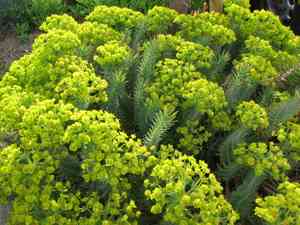
This perennial evergreen is recognized for its bluish-green leaves and yellow-green blossoms. Trim upright myrtle spurge by severing the flower-bearing stalks post-flowering to preserve its form and stimulate fresh development. Eliminate any deceased or compromised matter to uphold the plant's well-being. Trimming can be performed throughout the year. Exercise caution when managing upright myrtle spurge because of its poisonous fluid. Trimming fosters thick, robust growth and hinders seed scattering, thereby lowering the potential for invasiveness.
Advantages of Trimming Upright Myrtle Spurge
Advantages of Trimming Upright Myrtle Spurge
Trimming upright myrtle spurge fosters a strong structure, leading to abundant blooms. It manages its size, maintaining a tidy garden look while encouraging vigorous growth and resistance to environmental stress.
Optimal Time for Trimming Upright Myrtle Spurge
Optimal Time for Trimming Upright Myrtle Spurge
Trimming in late winter to early spring, just before new growth begins, supports the health of upright myrtle spurge by removing dead or damaged stems and promoting a desired shape. This timing avoids disrupting sap flow, which can be more active in this species during warmer months, and helps prevent sap-related injury to the plant or the pruner. Additionally, pruning after the risk of frost has passed prevents cold damage to fresh cuts. Trimming at this time also allows gardeners to better assess the plant's structure after winter dieback, and to manage its size and form before the growing season starts.
Tools Required for Trimming Upright Myrtle Spurge
Bypass Pruners
Perfect for making clean cuts on upright myrtle spurge's younger, green stems, ensuring minimal harm to plant tissues.
Gloves
Essential for protection when handling upright myrtle spurge due to its toxic sap which can cause skin irritation.
Long-sleeved clothing
Recommended to shield skin from the irritating sap while trimming upright myrtle spurge.
Goggles
Crucial for eye protection to prevent sap from upright myrtle spurge from causing irritation or injury.
Pruning Saw
Useful for cutting through older, woodier stems of upright myrtle spurge that are too thick for pruners.
Loppers
Helpful for reaching into denser parts of upright myrtle spurge and cutting thicker branches that bypass pruners cannot manage.
How to Trim Upright Myrtle Spurge
Prepare
Gather protective gloves, sharp pruning shears, and safety glasses to guard against the toxic sap of upright myrtle spurge.
Identify
Locate diseased leaves, withered leaves, dead branches, diseased branches, and spent flowers on upright myrtle spurge.
Remove Leaves
Carefully snip off diseased and withered leaves at their base without harming healthy parts of upright myrtle spurge.
Trim Branches
Cut dead and diseased branches close to the trunk or to a healthy junction, making clean cuts to encourage proper healing on upright myrtle spurge.
Deadhead Flowers
Remove withered flowers by cutting the flowering stems back to the nearest set of leaves to prevent seed formation and promote new growth on upright myrtle spurge.
Common Trimming Errors with Upright Myrtle Spurge
Overpruning
Removing too much growth at once can shock upright myrtle spurge and potentially lead to poor health or reduced flowering.
Improper Cut Locations
Cutting too far above or below the node can result in unsightly growth or dieback.
Using Dull Tools
Dull pruning tools can crush the stems of upright myrtle spurge rather than making a clean cut, which can lead to disease.
Neglecting Sap Protection
Failing to wear protective clothing to guard against the irritating sap released by upright myrtle spurge can result in skin irritation or other health concerns.
Disregarding Plant Structure
Not considering the natural shape of upright myrtle spurge may lead to an unbalanced appearance and negatively affect its growth.
General Trimming Advice for Upright Myrtle Spurge
Sharp Clean Tools
Always use sharp, clean pruning tools to make precise cuts which help the plant heal faster and reduce the risk of infection.
Proper Cut Location
Cut just above a leaf node or set of leaves to encourage bushier growth and to maintain the plant's natural form.
Personal Protection
Wear gloves, long sleeves, and eye protection to avoid sap irritation when pruning upright myrtle spurge.
Minimal Pruning Approach
Employ a conservative approach to pruning, removing only the necessary part - such as damaged or spent stems - to avoid overpruning the plant.
Consider Plants Natural Shape
Work with the natural branching pattern of upright myrtle spurge when pruning to encourage a pleasing, strong structure within the plant's existing form.



