How to Prune Common Christmas orchid?
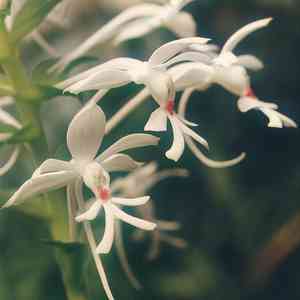
Originating from rainforest undergrowth, the common Christmas orchid is a perennial species characterized by abundant leaves and vibrant flowers. To achieve peak development, remove any withered or compromised foliage following the blooming period, usually in Spring or Autumn. Snip the flower spike once blossoms have faded, fostering new seasonal development and plant vigor. Refrain from severing healthy pseudobulbs, as this conserves energy for the subsequent flowering cycle. Perform light pruning to preserve its inherent form and avert stress, guaranteeing strong health and magnificent floral presentations.
Advantages of Trimming Common Christmas Orchid
Advantages of Trimming Common Christmas Orchid
Trimming common Christmas orchid promotes more abundant blooms, stimulates robust development, and maintains a tidy look. It is crucial for the plant's health and visual appeal.
Optimal Period for Trimming Common Christmas Orchid
Optimal Period for Trimming Common Christmas Orchid
Trimming common Christmas orchid from late winter to early spring is ideal, as this occurs before new growth begins, allowing the plant to channel energy into producing healthy new shoots and leaves. During this time, the plant is also less vulnerable to stress and diseases linked to pruning cuts. Trimming in late autumn is not advised, as subsequent new growth might be harmed by colder temperatures. Furthermore, mid-spring to summer is common Christmas orchid's active growth phase, and trimming then can impact flowering since common Christmas orchid typically blooms in spring or early summer. Thus, the period after blooming and before the active growth phase is the most suitable time to trim or prune common Christmas orchid to maintain its form, remove dead or diseased tissue, and encourage vigorous growth for the next season.
Tools Required for Trimming Common Christmas Orchid
Sterilized Sharp Scissors or Snips
Perfect for precise cuts needed to remove spent flowers and dead foliage without harming common Christmas orchid's delicate structure.
Tweezers
Useful for careful handling and removal of dead or diseased pseudobulbs within common Christmas orchid's dense clusters without causing unnecessary stress to the plant.
Isopropyl Alcohol or Bleach Solution
Essential for sanitizing tools before and after trimming common Christmas orchid to prevent disease transmission.
Protective Gloves
To shield your hands from potential irritants found within common Christmas orchid's environment or potting medium during trimming.
How to Trim Common Christmas Orchid
Sanitize Tools
Before trimming common Christmas orchid, disinfect all pruning tools with isopropyl alcohol or a 10% bleach solution to prevent disease spread.
Remove Diseased Leaves
Identify and carefully remove any diseased leaves from common Christmas orchid, cutting at the base of the leaf stem using sharp, clean shears. Dispose of these leaves properly to prevent infection spread.
Trim Withered Leaves
Locate and trim any withered leaves from common Christmas orchid to maintain healthy growth. Cut these leaves back to the base of the leaf stem, taking care not to damage the pseudobulbs or new shoots.
Deadhead Flowers
Once common Christmas orchid's flowers have faded, deadhead them by cutting the flower stem near the plant's base to encourage future blooming and redirect energy to healthy growth.
Clean Up
After trimming common Christmas orchid, clear away all debris and fallen leaves around the plant to deter pests and diseases, and lightly water the plant if the soil appears dry.
Common Trimming Errors with Common Christmas Orchid
Excessive Trimming
Removing too much of common Christmas orchid's foliage can weaken the plant, as common Christmas orchid needs sufficient leaf area to photosynthesize and support its growth.
Cutting Healthy Pseudobulbs
Unlike other plants where trimming promotes growth, cutting into common Christmas orchid's healthy pseudobulbs can introduce disease and hinder the plant's ability to flower.
Improper Tool Use
Using dull or dirty tools for trimming can damage common Christmas orchid's delicate tissues and also introduce pathogens, potentially leading to infections.
Trimming Without Justification
Common Christmas orchid should not be trimmed arbitrarily. Unnecessary trimming can stress the plant and may lead to reduced vigor and flowering.
Ignoring Plant Health
Trimming common Christmas orchid when it's showing signs of stress, disease, or during its flowering period can further weaken or damage the plant.
General Trimming Advice for Common Christmas Orchid
Sanitize Tools
Before trimming common Christmas orchid, always sterilize your tools with rubbing alcohol or a bleach solution to prevent disease spread.
Trim For Shape
To maintain common Christmas orchid's structure and encourage a pleasing shape, remove any unruly or dead growth that disrupts its natural form, but do so sparingly.
Cut Above The Node
When trimming common Christmas orchid, make cuts just above a node or pseudobulb, as this will help encourage new growth from that point.
Remove Dead Matter
Regularly remove any dead or decaying leaves, stems, and flowers from common Christmas orchid to help prevent disease and pest infestations.
Assess Before Cutting
Evaluate each part of common Christmas orchid before making any cuts to ensure you are only removing parts that are actually detrimental to the plant's health or desired form.



