How to Propagate Common Christmas orchid?
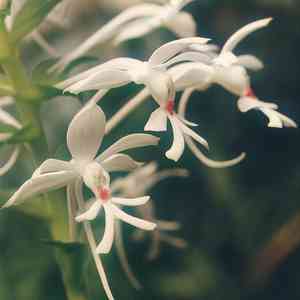
Originating from subtropical and tropical regions, the common Christmas orchid flourishes in well-drained, damp soil and benefits from partial shade. For reproduction, splitting is preferred. Gently detach the pseudobulbs while repotting, making sure each section possesses a minimum of three new shoots. Following separation, promptly place the divisions into an appropriate orchid substrate, sustaining elevated humidity and moderate illumination to foster root growth. Careful manipulation throughout this procedure safeguards the fragile root structures, thereby improving the likelihood of successful propagation.
Optimal Time for Propagating Common Christmas Orchid?
Propagation Method
Division
Propagation Period
Spring,Autumn
Tools Required for Common Christmas Orchid Propagation?
Sharp knife or pruning shears
These implements are vital for making clean cuts through the rhizomes of common Christmas orchid during the division process. A keen edge ensures minimal tissue damage, which is key for reducing infection risk and promoting faster healing and regrowth of the separated sections.
Sterilizing agent (e.g., rubbing alcohol or bleach solution)
Used to sanitize cutting instruments before and after use, this helps prevent disease transmission between plants. As common Christmas orchid can be susceptible to infections, maintaining sterile tools is essential for successful propagation and overall plant vitality.
Rooting hormone
This promotes faster root development on the newly separated parts of common Christmas orchid. While not always mandatory, applying a rooting hormone can improve rooting success, especially in less-than-ideal propagation environments.
Plant pots with drainage holes
Following division, each segment of common Christmas orchid should be potted individually. Containers with adequate drainage are crucial to prevent waterlogging, which can lead to root rot and other moisture-related problems. Good drainage aids in the plant's establishment post-propagation.
Potting mix suitable for orchids
A specially formulated orchid growing medium offers the aeration and drainage that common Christmas orchid requires. It typically comprises bark, perlite, and charcoal, supporting healthy root development without retaining excessive moisture around them.
How to Propagate Common Christmas Orchid?
Propagation Type
Easy
How to Care for Your Newly Propagated Common Christmas Orchid?
How to Care for Your Newly Propagated Common Christmas Orchid?
Post-propagation, maintain high humidity and indirect, moderate light for common Christmas orchid. Water new divisions sparingly until new growth appears, signaling successful establishment. Avoid allowing the soil to become completely dry or overly saturated. Fertilize with a balanced, diluted orchid feed every three to four weeks. Regularly check for pests and diseases, and maintain a suitable temperature range for common Christmas orchid. As common Christmas orchid acclimates, gradually adjust care to match the typical growing conditions for mature common Christmas orchid, focusing on consistent moisture and warmth.
Common Mistakes to Avoid When Propagating Common Christmas Orchid
Overwatering during propagation
This can cause root rot and fungal issues in common Christmas orchid, particularly since it naturally thrives in well-draining substrate and moist but not soggy conditions.
Using non-sterile tools and media
This may introduce pathogens to the delicate tissues of common Christmas orchid, leading to infections that can severely impact the growth and establishment of new plants.
Cutting too small rhizome pieces
For common Christmas orchid, undersized rhizome segments may lack sufficient energy reserves or growth nodes to ensure successful growth, resulting in failed propagation attempts.
Excessive handling or disturbance
Frequent inspection or relocation of propagated materials can damage young roots and shoots, delaying or even preventing the successful establishment of common Christmas orchid.
Tips For Propagating Common Christmas Orchid
Maintain humidity with gentle ventilation
Common Christmas orchid benefits from high humidity around the propagation area, but good air circulation is vital to prevent fungal and bacterial growth.
Use sharp, sterile tools
Ensuring all cutting implements and equipment are sterile when dividing the rhizome helps prevent infections, which can be detrimental to the successful propagation of common Christmas orchid.
Choose appropriate substrate
A blend of fine bark, moss, and perlite provides the drainage and support needed by common Christmas orchid, mimicking its natural growing environment.
Monitor water levels carefully
While common Christmas orchid requires moist conditions, the root environment should not be waterlogged. Monitoring and adjusting the watering regimen is crucial to avoid root rot.



