How to Prune Beach saltbush?
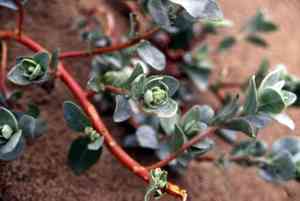
Distinguished by its silver-hued leaves and resilience in infertile ground, beach saltbush needs very little trimming. The ideal period for trimming is in early spring, right before fresh shoots emerge. Perform light cuts to eliminate impaired or elongated sections, fostering a denser look and averting excessive growth. Make certain all cuts are precise and angled to deter illness. Effective trimming improves air movement and light access, contributing to the plant's general well-being.
What Are the Benefits of Pruning Beach Saltbush?
What Are the Benefits of Pruning Beach Saltbush?
Pruning Beach saltbush encourages vigorous growth and maintains its form. This fosters robust development, manages plant size, and enhances its overall look while boosting resistance to pests and diseases.
What Is the Best Time for Pruning Beach Saltbush?
What Is the Best Time for Pruning Beach Saltbush?
Early spring is the optimal period to prune Beach saltbush, as it coincides with the plant's active growth phase. Pruning at this time allows the plant to recover and rejuvenate more effectively, preparing it for the upcoming growing season. Furthermore, this timing minimizes the risk of removing new growth or flower buds, ensuring the plant stays healthy and can direct its energy towards producing strong foliage and potential blooms. Pruning in early spring also aids in preventing disease and pest infestations by eliminating dead or damaged branches before the growing season commences.
What Tools Do I Need to Prune Beach Saltbush?
Bypass Pruners
Perfect for making precise cuts on stems and branches up to 3/4 inch thick. Excellent for shaping and maintaining Beach saltbush.
Loppers
Useful for cutting through thicker stems or branches up to 2 inches in diameter. Offers leverage for accurate cuts on Beach saltbush.
Pruning Saw
Essential for removing any larger, woody branches. Provides control for more significant pruning tasks on Beach saltbush.
Hedge Shears
Effective for uniformly trimming and shaping foliage, helping to preserve the aesthetic appeal of Beach saltbush.
Gloves
Crucial for protecting hands from scratches, especially important due to the dense foliage of Beach saltbush.
How to Prune Beach Saltbush
Assess
Thoroughly examine Beach saltbush to identify diseased leaves, withered leaves, dead branches, and diseased branches. This step ensures you are aware of all parts that require pruning.
Sanitize
Clean and disinfect your pruning tools to prevent the spread of disease. This minimizes the risk of infecting healthy parts of Beach saltbush.
Remove Diseased Leaves
Carefully cut away and discard any diseased leaves to prevent the spread of pathogens. Ensure you cut close to the stem but avoid damaging the healthy tissue.
Trim Withered Leaves
Prune withered leaves by cutting them at the base where they meet the main stem. This will help the plant focus its energy on healthy growth.
Cut Dead and Diseased Branches
Remove dead and diseased branches by making clean cuts at the base of the branches. Be sure to cut just above a healthy node or bud if it's a partial branch trimming.
Common Pruning Mistakes with Beach Saltbush
Incorrect technique
Using dull or unsuitable tools can harm the plant and introduce diseases.
Over-pruning
Removing too much foliage at once can stress the plant and impede its growth.
Pruning at the wrong node
Cutting too close to the leaf or bud can lead to die-back and poor wound healing.
Ignoring plant health
Pruning a diseased or unhealthy plant can worsen its condition and spread pathogens.
Common Pruning Tips for Beach Saltbush
Use sharp, clean tools
Ensure your pruning shears are sharp and disinfected to make clean cuts and prevent disease transmission.
Moderate pruning
Remove no more than one-third of the plant's foliage at one time to avoid stress and promote better recovery.
Make clean cuts
Prune just above a leaf node or bud to encourage new growth from that point and reduce the risk of die-back.
Observe plant health
Always assess the plant's health before pruning. Remove any dead, damaged, or diseased branches first to promote overall vigor.
Encourage airflow
Thin out over-crowded branches to improve air circulation, which can help prevent fungal diseases and allow more light to reach the inner leaves.



