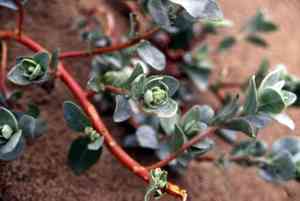
Beach saltbush (Atriplex leucophylla)
Also known as: Great Basin wildrye, Coastal Saltbush, Arroyo Willow
The beach saltbush (Atriplex leucophylla) is well-adapted to coastal environments with several unique features. Its silver-gray, scaly leaves efficiently reflect harsh sunlight, aiding in water conservation. This hardy perennial thrives in sandy, saline soils typical of beach areas. Its remarkable tolerance to salt spray and drought conditions allows it to successfully inhabit sea cliffs and dunes, making it a coastal specialist.
In This Article
Attributes of Beach saltbush
Lifespan
Perennial
Plant Type
Shrub
Plant Height
0.3 to 0.6 meters (1 to 2 feet)
Spread
0.9 to 1.2 meters (3 to 4 feet)
Leaf Color
Silvery white
Flower Size
less than 1 cm
Flower Color
Yellowish or greenish
Images of Beach saltbush
Quickly Identify Beach saltbush
1
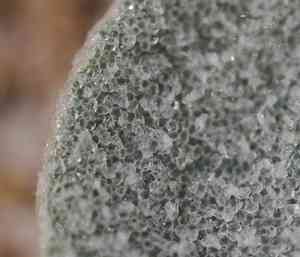
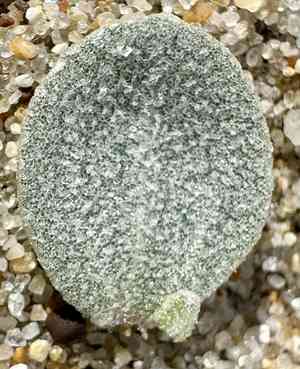
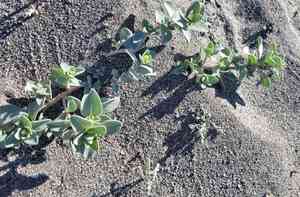
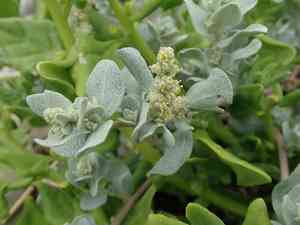
Atriplex leucophylla is recognizable by its silvery white leaves and small, inconspicuous flowers. It typically grows in low, spreading forms and can form dense mats over large areas. The leaves are typically oval and covered in small, white hairs giving them a frosted appearance.
Scientific Classification of Beach saltbush
Phylum
Vascular plants
Class
Dicotyledons
Order
Caryophyllales
Family
Amaranth
Genus
Saltbush
Species
Beach saltbush
Planting and Growing of Beach saltbush
Care Difficulty
Easy
Watering Schedule
Every 2 days
Sunlight Requirements
Full sun
Sunshine Duration
6-10 hours
Ideal Temperature
60-70℉
Soil Type
Potting Mix, Peat Mix
Soil pH
6.5-7.5
Fertilizer Type
Balanced
Pruning Season
Spring, Summer
Pruning Area
Branches, Leaves
Pruning Frequency
2 times a year
Repotting Season
Spring
Pot Type
Plastic, Ceramic
 How to Water Beach saltbush?
Atriplex leucophylla, being adapted to arid conditions, requires moderate watering. Aim to water the plant with about 250 ml each time, ensuring the soil is slightly moist but not excessively saturated. Allow the topsoil to dry completely between waterings to prevent root rot.
What are the symptoms of an underwatered Beach saltbush?
›
What should I do if my Beach saltbush is not getting enough water?
›
What are the symptoms of an overwatered Beach saltbush?
›
How to save an overwatered Beach saltbush?
›
 What Are the Sunlight Requirements for Beach saltbush?
Atriplex leucophylla thrives best in a full sun setting, implying 6 to 8 hours of direct sunlight, which supports optimal growth, color, and overall robustness.
What is the ideal light condition?
›
How to achieve ideal lighting?
›
What are the benefits of ideal lighting?
›
 What Is the Ideal Temperature Range for Beach saltbush?
The ideal temperature range for Atriplex leucophylla cultivation is between 60°F and 70°F. This range provides the optimal conditions for growth, allowing the plant to thrive and develop robustly. When maintained within these temperatures, the plant exhibits vibrant foliage and strong, healthy stems.
 What Soil is Best for Beach saltbush?
Atriplex leucophylla thrives best in well-draining soil, which helps prevent waterlogging and root rot. Using sandy or sandy loam soil ensures excess water quickly disperses, providing a healthy growing environment. While this plant is known for its ability to grow in poor soils, a nutrient-rich mix can boost its growth and resilience. Enriched sandy soils can support better foliage and overall plant health. This plant prefers slightly acidic to neutral pH levels, around 6.5 to 7.5, ensuring optimal nutrient availability and microbial activity that benefits its growth.
 How to Fertilize Beach saltbush?
The recommended amount for Atriplex leucophylla should be relatively moderate due to its salt tolerance. Use approximately half the strength of a standard general-purpose fertilizer to avoid nutrient buildup and harm to the plant.
 How to Prune Beach saltbush?
Begin by removing any dead or diseased branches using sharp, clean pruning shears. Trim back overgrown areas to maintain the plant's shape, and always cut just above a leaf node to encourage healthy new growth. Aim for an open center to allow light and air to penetrate all parts of the plant.
More About Pruning Techniques→
 How to Propagate Beach saltbush plant?
1
Soak the seeds of Atriplex leucophylla in warm water for 24 hours before sowing to weaken the seed coat and improve germination rates.
2
Pour the prepared seeds evenly on the surface of the seed tray filled with potting mix. Cover them lightly with a thin layer of soil to protect them from external elements while allowing light to reach them.
3
Water the seeds gently with a fine spray to keep the soil consistently moist but not waterlogged. Maintain an ideal temperature range between 18 to 22 degrees Celsius to enhance germination.
 How to Repot Beach saltbush plant?
1
Repot Atriplex leucophylla when roots start poking out of the drainage holes or when the plant becomes root-bound. You'll also notice a decrease in growth rate or yellowing of leaves, which are signs it's time for a larger pot.
2
Select a pot that's 1-2 inches wider than the current one to allow room for growth. Ensure it has adequate drainage holes to prevent waterlogging, which can cause root rot. A slightly larger pot will also help the plant stabilize better in its new environment.
3
Choose well-draining sandy soil to mimic Atriplex leucophylla's natural coastal habitat. Such soil will provide good aeration and prevent excess moisture retention, which is vital for the plant's health and root development.



