How to Propagate Lavender bladderwort?
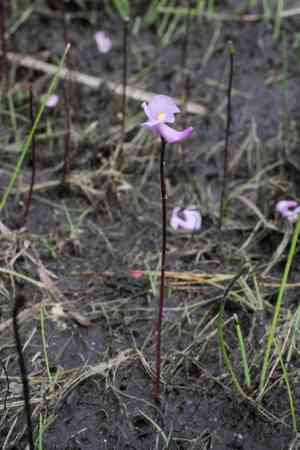
Lavender bladderwort flourishes when propagated by seeding, a technique perfectly aligned with its water-based needs. Cultivators ought to disperse seeds directly into suitable aquatic substrates, guaranteeing steady dampness and sufficient illumination to encourage sprouting. Being an aquatic bladderwort, lavender bladderwort necessitates particular environmental factors, including water that is low in nutrients and acidic, replicating its native environment.
Optimal Time for Lavender Bladderwort Propagation
Propagation Method
Seeding
Propagation Period
Spring
Tools for Lavender Bladderwort Propagation
Aquarium or clear container
This item is vital for creating a controlled aquatic setting, essential for the growth and propagation of lavender bladderwort. It aids in maintaining ideal moisture levels and water purity, critical for successful germination and development. Its transparency also allows for easy observation of rooting and germination.
Sterilized water
Ensures the propagation medium's water is free from contaminants and pathogens that could harm lavender bladderwort's health. This preventative measure helps establish a healthy environment, promoting successful germination and preventing diseases that might affect fragile seedlings.
Fine mesh or netting
Used to cover the container, this tool prevents debris or insects from contaminating the water and plant. It also permits sufficient light penetration, necessary for photosynthesis in lavender bladderwort, while offering a mild barrier against excessive evaporation.
Tweezers or fine forceps
These are especially useful for handling small seeds or delicate seedlings of lavender bladderwort. They offer precision and minimize physical damage during seedling transplantation, thereby improving the survival rate of propagated plants.
pH testing kit
This tool checks the water's pH level, ensuring it falls within the ideal range for lavender bladderwort's growth. Maintaining the correct pH is crucial as it impacts nutrient availability and root health, thus supporting robust growth and development during and after propagation.
Propagating Lavender Bladderwort
Propagation Difficulty
Simple
Post-Propagation Care for Lavender Bladderwort
Post-Propagation Care for Lavender Bladderwort
Following successful propagation, gradually reduce humidity to acclimate lavender bladderwort to typical growing conditions. Position lavender bladderwort in a water tray setup where roots can continuously access water, mimicking its natural wetland habitat. Provide full to partial sunlight and monitor water quality, ensuring it remains low in minerals. Regular cleaning of the water tray is crucial to prevent algal growth and maintain healthy development.
Common Errors to Avoid When Propagating Lavender Bladderwort
Substandard water quality
Using tap water or water with high mineral content can be detrimental to lavender bladderwort, which requires pure, soft water. High mineral content can lead to the accumulation of salts and minerals that may inhibit growth and root development.
Poor substrate selection
Choosing an unsuitable substrate type can impede the growth of lavender bladderwort. This plant thrives in a nutrient-poor, acidic substrate similar to sphagnum peat or specialized carnivorous plant mixes. Using nutrient-rich soil can result in poor health and growth.
Overcrowding during propagation
Propagating too many specimens in a small area can lead to overcrowding. This reduces air circulation around lavender bladderwort, increasing the risk of fungal infections and reducing overall growth vigor.
Tips for Propagating Lavender Bladderwort
Utilize distilled or rainwater
Ensure lavender bladderwort is watered with distilled water or clean rainwater to prevent chemical buildups that can harm its delicate system. This simulates the natural water quality lavender bladderwort experiences in its native habitat.
Prepare suitable substrate
Use a mix of peat and perlite or pure sphagnum moss for optimal results. These materials support the necessary acidic environment and provide adequate drainage while maintaining moisture, crucial for lavender bladderwort's growth.
Ensure adequate lighting
While lavender bladderwort enjoys bright, indirect light, direct sunlight can be harmful, especially after water changes or when new growth emerges. Proper lighting supports photosynthesis and overall health of lavender bladderwort.
Regulate propagation environment
Maintain relatively high humidity and moderate temperature to mimic lavender bladderwort's natural environment. This can be achieved by using a terrarium or placing a humidity dome over the propagation area.



