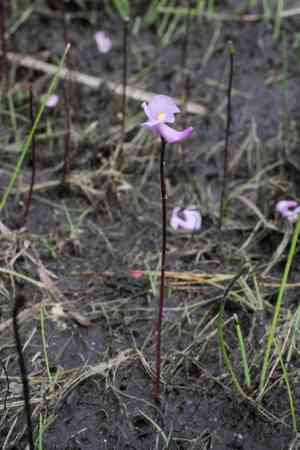
Lavender bladderwort (Utricularia resupinata)
Also known as: Flatleaf Bladderwort
The plant you're referring to is native to eastern Canada, the United States, and Central America. It tends to flower in its northern range only when both low water levels and higher than average temperatures coincide. This species was believed to be extinct in Indiana until its surprising rediscovery in 2005.
In This Article
Attributes of Lavender bladderwort
Lifespan
Annual, Perennial
Plant Type
Herb
Plant Height
5 cm to 30 cm
Spread
Not applicable (aquatic plant)
Leaf Color
Green
Flower Size
0.5 - 1 cm
Flower Color
Purple Pink
Images of Lavender bladderwort
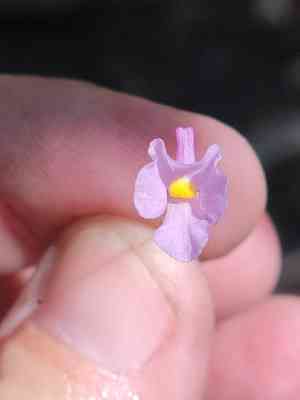
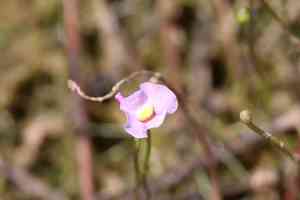
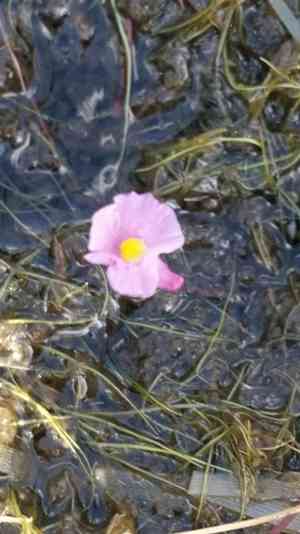
Quickly Identify Lavender bladderwort
1
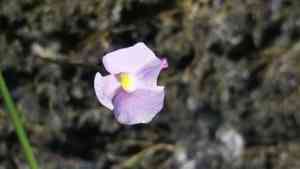
This plant can be identified by its flat, floating leaves and its small, delicate violet or lavender flowers. The bladder traps, which it uses to capture prey, are typically located below the water surface.
Scientific Classification of Lavender bladderwort
Phylum
Vascular plants
Class
Dicotyledons
Order
Lamiales
Family
Bladderworts
Genus
Bladderworts
Species
Lavender bladderwort
Planting and Growing of Lavender bladderwort
Care Difficulty
Hard
Watering Schedule
Every 4 days
Sunlight Requirements
Partial sun
Sunshine Duration
4-8 hours
Ideal Temperature
70-75℉
Soil Type
Potting Mix, Peat Mix
Soil pH
4.5-6.5
Fertilizer Type
Balanced
Pruning Season
Spring, Summer
Pruning Area
Branches, Leaves
Pruning Frequency
2 times a year
Repotting Season
Spring
Pot Type
Plastic, Ceramic
 How to Water Lavender bladderwort?
Utricularia resupinata, also known as the lavender bladderwort, thrives in very wet environments. When watering, the substrate should be thoroughly soaked but not left submerged in water. Aim for about 150 milliliters per watering, ensuring the soil remains consistently moist, mimicking its natural habitat in boggy wetlands.
What are the symptoms of an underwatered Lavender bladderwort?
›
What should I do if my Lavender bladderwort is not getting enough water?
›
What are the symptoms of an overwatered Lavender bladderwort?
›
How to save an overwatered Lavender bladderwort?
›
 What Are the Sunlight Requirements for Lavender bladderwort?
Partial sun conditions mimic the plant's natural habitat, promoting balanced growth and vibrant blooms. With 4-6 hours of sunlight, photosynthesis is optimized, resulting in healthy foliage and robust flowering.
How much sunlight does Utricularia resupinata need?
›
What is the best way to provide Utricularia resupinata with ideal light?
›
What benefits does Utricularia resupinata gain from ideal lighting?
›
 What Is the Ideal Temperature Range for Lavender bladderwort?
The ideal temperature range for Utricularia resupinata cultivation is between 70°F and 75°F. This range keeps the plant at optimal metabolic rates and helps ensure healthy growth, including proper nutrient absorption and photosynthesis efficiency.
 What Soil is Best for Lavender bladderwort?
Utricularia resupinata thrives in consistently moist conditions. Ensuring the soil is soggy will simulate its natural habitat, supporting its unique aquatic nature. This plant prefers nutrient-poor environments, where richer soils might impede its growth. Mimicking these conditions encourages healthy development and sustains its delicate balance. Utricularia resupinata requires acidic to neutral soils. Alkaline conditions can stunt its growth, so maintaining the right pH ensures vigorous health and growth.
 How to Fertilize Lavender bladderwort?
Utricularia resupinata is a delicate carnivorous plant that requires careful fertilization. Liquid fertilizers should be diluted to one-quarter of their strength to avoid over-nourishment. Using around 1-2 drops per liter of water every two weeks should provide the necessary nutrients without harming the plant.
 How to Prune Lavender bladderwort?
When pruning Utricularia resupinata, gently remove any dead or decaying leaves and stems by pinching them off with your fingers or using small scissors. Focus on removing parts that may hinder the plant's buoyancy or block sunlight. Ensure to prune just above a node to encourage new growth. Keep the pruning minimal to avoid stressing the plant, as it relies on photosynthesis for survival.
More About Pruning Techniques→
 How to Propagate Lavender bladderwort plant?
1
Fill the seed trays with a fine potting mix and moisten it thoroughly. Ensuring even moisture is important for the successful germination of Utricularia resupinata's tiny seeds.
2
Scatter the seeds of Utricularia resupinata evenly over the surface of the prepared seed tray. Do not cover them with soil as they require light to germinate.
3
After sowing, cover the tray with a transparent lid or plastic wrap to maintain high humidity and place it in a location with bright, indirect light.
 How to Repot Lavender bladderwort plant?
1
Repot when Utricularia resupinata outgrows its pot, evident by roots escaping through drainage holes or slowed growth. Notice these signals in early spring or summer to ensure minimal disruption.
2
Choose wide, shallow pots to accommodate its spreading habit and encourage healthy bladder development. Opt for pots with good drainage to prevent waterlogging, which keeps roots healthy and prevents rot.
3
Use acidic, peat-based soil mixed with sand for Utricularia resupinata. This soil mimics its natural habitat, providing necessary drainage and moist conditions to support its delicate root system.



