How to Propagate Chestnutleaf trumpetbush?
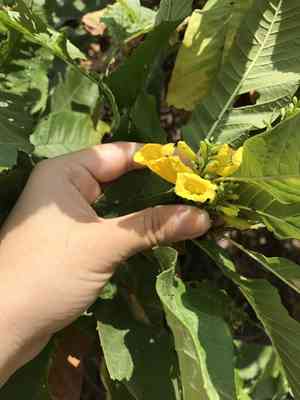
Tecoma castanifolia is a distinctive botanical specimen featuring brilliant yellow flowers and lustrous foliage resembling chestnuts. Reproduce this plant by utilizing semi-hardwood cuttings obtained from robust portions of the specimen. It is crucial to choose cuttings free from pathogens and to apply a rooting stimulant to foster root growth. Confirm that the cuttings stay hydrated, but exercise caution to prevent overly saturated soil, which can lead to decay. This technique produces vigorous and thriving new plants when managed correctly.
Optimal Time for Chestnutleaf Trumpetbush Propagation
Propagation Type
Cutting
Propagation Season
Spring,Summer
Tools for Chestnutleaf Trumpetbush Propagation
Pruning Shears
Pruning shears are utilized to obtain cuttings from chestnutleaf trumpetbush. Their sharp blades ensure a clean cut, vital for minimizing plant tissue damage and boosting successful rooting prospects.
Rooting Hormone
Rooting hormone, when applied to the cut end of cuttings, stimulates root growth. This is especially beneficial for chestnutleaf trumpetbush, as it improves the likelihood of cuttings establishing well.
Propagation Trays
Propagation trays offer a controlled setting for chestnutleaf trumpetbush cuttings to develop roots. These trays allow for proper spacing and easy handling, reducing root disturbance.
Humidity Dome
A humidity dome, placed over propagation trays, maintains high humidity levels, which is crucial for preventing chestnutleaf trumpetbush cuttings from drying out before root formation.
Sterile Potting Mix
Employing a sterile potting mix lowers the risk of fungal infections and pests, providing a healthy medium for chestnutleaf trumpetbush cuttings to establish roots.
Misting Bottle
A misting bottle is used to keep chestnutleaf trumpetbush cuttings moist without overwatering, helping to maintain the necessary humidity for successful rooting.
Heat Mat
A heat mat can be positioned beneath propagation trays to provide warmth from below, encouraging faster root development for chestnutleaf trumpetbush cuttings.
Labeling Tags
Labeling tags ensure accurate tracking and management of different cuttings, important for organization and maintaining care quality for chestnutleaf trumpetbush.
Sharp Knife
A sharp knife can be used to trim cuttings before planting, ensuring clean cuts and reducing infection risk for chestnutleaf trumpetbush.
How to Propagate Chestnutleaf Trumpetbush?
Propagation Type
Moderately Difficult
Caring for Newly Propagated Chestnutleaf Trumpetbush
Caring for Newly Propagated Chestnutleaf Trumpetbush
Once cuttings have rooted (typically 4-6 weeks), gradually introduce them to lower humidity by removing the plastic cover. Replant them into larger containers with a quality potting mix. Position them in a spot with bright, indirect light and water regularly to keep the soil moist. Fertilize young plants with a balanced, water-soluble fertilizer every 4-6 weeks during the growing season. Monitor for pests or diseases and address them promptly to ensure healthy growth.
Common Propagation Mistakes for Chestnutleaf Trumpetbush
Overwatering
Excessive moisture can lead to root rot, which is particularly harmful to chestnutleaf trumpetbush cuttings.
Using Poor Quality Cuttings
Selecting unhealthy or diseased stems can decrease the chances of successful rooting and result in weak plants.
Improper Soil Mix
Using a soil mix that retains too much water or lacks adequate aeration can hinder root development and increase the risk of fungal infections.
Incorrect Light Levels
Providing either too much direct sunlight or insufficient light can stress cuttings and impede root growth.
Neglecting Humidity Needs
Failing to maintain proper humidity can cause cuttings to dry out before they establish roots.
Tips for Propagating Chestnutleaf Trumpetbush
Select Healthy Cuttings
Use clean, sharp tools to take cuttings from healthy, disease-free plants to ensure vigorous growth.
Use Well-Draining Soil
Prepare a soil mix with good drainage and aeration, such as a blend of peat, perlite, and coarse sand.
Maintain Appropriate Humidity
Cover cuttings with a plastic dome or place them in a humid environment to prevent desiccation until they root.
Provide Indirect Light
Keep cuttings in a location with bright, indirect light to promote healthy development without stress from direct sunlight.
Monitor Watering
Water sparingly, ensuring the soil remains slightly moist but not waterlogged to prevent root rot and encourage root establishment.



