How to Propagate Marsh hedge nettle?
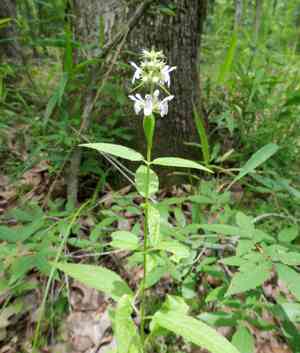
The most effective method for propagating Marsh hedge nettle involves using cuttings. Select cuttings exclusively from robust specimens. Employ a sterilized, sharp instrument to reduce harm and the potential for illness. While not mandatory, applying rooting hormone can improve the likelihood of successful rooting. Place these cuttings in a potting blend that drains efficiently, ensuring the substrate remains uniformly damp without becoming saturated. They flourish in diffused light until their root systems are developed, after which they should be progressively introduced to their typical environment.
Optimal Period for Marsh Hedge Nettle Propagation
Propagation Method
Cutting
Propagation Period
Spring,Summer
Tools Required for Marsh Hedge Nettle Propagation
Sharp Pruning Shears
Crucial for making clean cuts on marsh hedge nettle when taking sections. Sharp blades ensure precise cuts that prevent damage and disease, encouraging faster rooting and healthier development.
Rooting Hormone
Enhances the probability of successful root formation from marsh hedge nettle cuttings. Rooting hormone accelerates rooting and improves survival and growth rates.
Sterile Potting Mix
Offers a pathogen-free environment suitable for root growth in marsh hedge nettle cuttings. The sterile medium prevents fungal and bacterial infections that could harm young roots.
Small Pots or Trays
Utilized to hold the potting medium and marsh hedge nettle cuttings. Ensures adequate space for individual cuttings, allowing proper air circulation and root expansion.
Plastic Bags or Propagation Dome
Establishes a humid microclimate around marsh hedge nettle cuttings to prevent moisture loss, vital for keeping the cuttings hydrated until roots emerge.
How to Propagate Marsh Hedge Nettle?
Propagation Type
Easy
Post-Propagation Care for Your Marsh Hedge Nettle
Post-Propagation Care for Your Marsh Hedge Nettle
Once roots are established, gradually introduce marsh hedge nettle to its typical growing conditions. Marsh hedge nettle thrives best in partial shade and moist, well-drained soils. Consistent watering is essential, especially during dry spells, but avoid waterlogging. Regular feeding with a balanced fertilizer during the growing season will promote vigorous growth. Monitor for pests and diseases and treat as needed to maintain plant vitality.
Common Errors to Avoid When Propagating Marsh Hedge Nettle
Overwatering
Placing marsh hedge nettle in excessively wet soil can lead to root rot, diminishing the plant's ability to absorb nutrients and weakening overall development.
Deep planting
Burying marsh hedge nettle's root cuttings or seeds too deeply in the soil can hinder germination and root emergence due to insufficient light and oxygen.
Neglecting humidity
Ignoring the humidity requirements of marsh hedge nettle can result in desiccation of cuttings and failure to root, as this species thrives in moist environments.
Using poor soil
Employing low-quality, non-draining soil can impede the root development of marsh hedge nettle, leading to stunted growth due to inadequate nutrient availability and waterlogging.
Tips For Propagating Marsh Hedge Nettle
Use moist, well-draining soil
Ensuring the soil mix for marsh hedge nettle is both rich in organic material and well-draining will encourage strong root growth without waterlogging risks.
Maintain high humidity
Marsh hedge nettle benefits from a humid environment, especially during the rooting of cuttings, so maintaining moisture through regular misting or a humidity tray is advantageous.
Shallow planting
Planting cuttings or seeds of marsh hedge nettle just below the soil surface ensures they receive sufficient light and oxygen, crucial for successful germination and rooting.
Select healthy parent plants
Choosing vigorous and disease-free plants for obtaining cuttings or seeds of marsh hedge nettle ensures a higher success rate in propagation.



