How to Propagate Smooth false buttonweed?
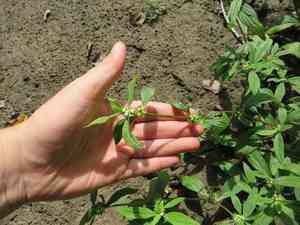
Smooth false buttonweed, a species within the Rubiaceae family, flourishes when reproduced via seeding. For best outcomes, employ newly collected seeds directly from established specimens. Create a well-aerated potting blend commonly used for tiny seeds, ensuring it stays damp yet not oversaturated. To facilitate successful sprouting, sustain a consistent, warm ambient temperature. Developing plants ought to be progressively accustomed to external environments prior to their ultimate relocation.
Optimal Period for Propagating Smooth False Buttonweed
Propagation Type
Sowing
Propagation Season
Spring
Tools Utilized in Smooth False Buttonweed Propagation
Seed trays
Seed trays are crucial for the sowing method, enabling uniform distribution and management of smooth false buttonweed's seeds. Their compact design optimizes space and allows for easy movement, vital for controlling environmental factors like light and temperature, which are key for smooth false buttonweed's germination.
Sterile potting mix
A sterile potting mix is vital for ensuring smooth false buttonweed's seeds are sown in a pathogen-free medium, boosting germination rates and early growth. This mix supplies essential nutrients and proper drainage, critical for the delicate initial stages of smooth false buttonweed's development.
Misting bottle
A misting bottle is employed to gently hydrate seeds in trays, ensuring adequate but not excessive moisture, which could otherwise cause fungal issues. The fine mist is ideal for smooth false buttonweed, preventing seed displacement, a common problem with direct watering.
Grow lights
Grow lights are beneficial for smooth false buttonweed propagation, especially when starting seeds indoors or in low natural light. These lights provide the optimal wavelength and intensity needed for photosynthesis and robust early growth of smooth false buttonweed.
Heat mat
A heat mat is a specialized device that helps maintain a consistent and suitable soil temperature, which is critical for smooth false buttonweed's germination. The steady warmth from the mat promotes quicker and more uniform seed sprouting.
How to Propagate Smooth False Buttonweed
Propagation Type
Easy
Caring for Your Newly Propagated Smooth False Buttonweed
Caring for Your Newly Propagated Smooth False Buttonweed
Smooth false buttonweed thrives in full sun or partial shade and needs well-drained soil. After transplanting, consistent watering is necessary during the first season to support healthy root development. Fertilize lightly during the growing period. Regularly check for pests and diseases.
Common Errors to Avoid When Propagating Smooth False Buttonweed
Overwatering
Excessive watering of smooth false buttonweed post-propagation can lead to waterlogged soil, increasing the risk of root rot and fungal infections. These problems can severely hinder root development and reduce successful propagation.
Deep Planting
Planting smooth false buttonweed's cuttings or seeds too deeply can impede their ability to sprout and establish. Deeper planting may restrict necessary air exposure and light, both crucial for initiating new growth.
Using Unsterilized Tools
Propagating with unsterilized tools can introduce pathogens to smooth false buttonweed, causing infections detrimental to new plants. This error can result in poor growth or even the death of propagated plants.
Tips For Propagating Smooth False Buttonweed
Correct Soil Mixture
Utilizing a well-draining soil mix is crucial for successful smooth false buttonweed propagation. A mix that allows good drainage while retaining sufficient moisture will support healthy root growth and prevent waterlogging.
Appropriate Cutting Size
For propagating smooth false buttonweed via cuttings, ensure they are about 4-6 inches long. This length helps maintain the necessary balance between leaf area and root growth potential, typically optimal for rooting and initial development.
Regular Monitoring
Consistently checking moisture levels and signs of growth or distress in smooth false buttonweed can greatly improve propagation success. Early detection of issues like pests or disease allows for timely intervention to save the propagation effort.



