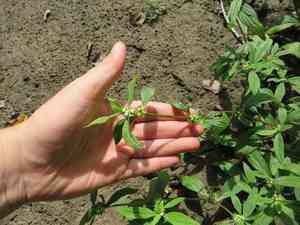
Smooth false buttonweed (Spermacoce glabra)
Also known as: Smooth Buttonweed, Glabrous False Buttonweed
The species is also found in southern Mexico (Tabasco and Campeche), Honduras, and various parts of South America, including Colombia, Venezuela, Ecuador, Brazil, Paraguay, Uruguay, and Argentina.
In This Article
Attributes of Smooth false buttonweed
Lifespan
Perennial
Plant Type
Herb, Shrub
Plant Height
up to 50 cm
Spread
N/A
Leaf Color
Green
Flower Size
approximately 0.5 cm
Flower Color
White
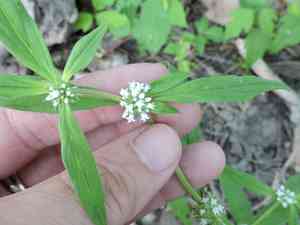
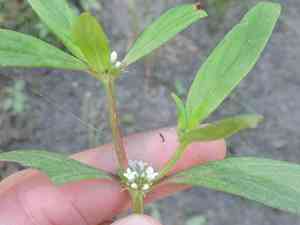
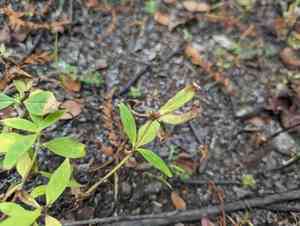
Images of Smooth false buttonweed

Quickly Identify Smooth false buttonweed
1
To identify Spermacoce glabra, look for a herbaceous plant with smooth (hairless) stems and opposite leaves. The flowers are small, white, and tubular, typically clustered at the leaf axils.
Scientific Classification of Smooth false buttonweed
Phylum
Vascular plants
Class
Dicotyledons
Order
Gentianales
Family
Madder
Genus
Spermacoce
Species
Smooth false buttonweed
Planting and Growing of Smooth false buttonweed
Care Difficulty
Easy
Watering Schedule
Every 4 days
Sunlight Requirements
Partial sun
Sunshine Duration
4-8 hours
Ideal Temperature
70-85℉
Soil Type
Potting Mix, Peat Mix
Soil pH
6.5-7.5
Fertilizer Type
Balanced
Pruning Season
Spring, Summer
Pruning Area
Branches, Leaves
Pruning Frequency
2 times a year
Repotting Season
Spring
Pot Type
Plastic, Ceramic
 How to Water Smooth false buttonweed?
For Spermacoce glabra, it is crucial to water thoroughly but not excessively. The goal is to moisten the soil until water drains from the bottom of the pot. Around 200 ml should suffice each time, ensuring even distribution to avoid any dry spots in the soil.
What are the symptoms of an underwatered Smooth false buttonweed?
›
What should I do if my Smooth false buttonweed is not getting enough water?
›
What are the symptoms of an overwatered Smooth false buttonweed?
›
How to save an overwatered Smooth false buttonweed?
›
 What Are the Sunlight Requirements for Smooth false buttonweed?
Spermacoce glabra ideal light range is partial sunlight. Optimal lighting helps promote healthy growth patterns, vigorous blooming, and reduces stress-related damage to the foliage.
What type of sunlight does Spermacoce glabra prefer?
›
How can I achieve ideal light exposure for Spermacoce glabra?
›
What are the benefits of ideal lighting for Spermacoce glabra?
›
 What Is the Ideal Temperature Range for Smooth false buttonweed?
The ideal temperature range for cultivating Spermacoce glabra is between 70°F and 85°F. This range provides a warm environment that closely mimics the plant's natural habitat, ensuring healthy growth and optimal development.
 What Soil is Best for Smooth false buttonweed?
Spermacoce glabra thrives in soil that provides good drainage to prevent waterlogging. Proper drainage encourages healthy root development, reducing the risk of root rot. This plant benefits from loam soils rich in essential nutrients. A fertile soil supports vigorous growth and splendid flowering by providing the necessary nutrients. While Spermacoce glabra prefers well-draining soil, consistent moisture levels are crucial. Ensuring soil doesn't dry out completely helps maintain plant vitality and prevents wilting.
 How to Fertilize Smooth false buttonweed?
For Spermacoce glabra, applying fertilizer should be done cautiously: use 1 teaspoon per gallon of water for liquid fertilizers and a handful of slow-release granules per plant. This ensures the plant gets nutrients without being overwhelmed.
 How to Prune Smooth false buttonweed?
Begin by identifying any dead or weak stems that need removal. Using sharp, clean pruning shears, make cuts at a slight angle just above a leaf node to encourage new growth. Avoid cutting more than one-third of the plant at a time to prevent stress. To maintain a bushy and attractive shape, trim back any overly long branches that disrupt the plant's overall symmetry. Regularly check for stray shoots that could lead to an unbalanced appearance and trim them accordingly.
More About Pruning Techniques→
 How to Propagate Smooth false buttonweed plant?
1
Before planting, ensure that the seeds are clean and free from any disease or parasites. Soaking seeds in water overnight can help to promote germination by softening the seed coat.
2
Sow the seeds in a seed tray filled with sterile potting mix. Place the seeds on the surface and cover lightly with a thin layer of soil. Water gently to moisten the soil without displacing the seeds.
3
Place the seed trays in a warm spot with indirect sunlight. Keep the soil consistently moist but not waterlogged. Check daily for signs of germination, which should occur within two to three weeks.
 How to Repot Smooth false buttonweed plant?
1
Repot your Spermacoce glabra when you notice root-bound symptoms, such as roots growing out of the pot's drainage holes or stunted growth. Ideally, schedule repotting in spring or early summer when the plant is in its active growth phase, facilitating faster recovery.
2
Select a pot that's one size larger than the current one to give roots room to grow. Ensure the pot has adequate drainage holes to prevent waterlogging, which can lead to root rot. A clay pot can help in evaporation, keeping the soil from becoming overly soggy.
3
Opt for well-draining sandy loam soil as it provides excellent drainage and prevents root rot. This soil type also retains enough moisture to sustain the plant between watering while allowing excess water to escape easily.
Learn More About Smooth false buttonweed Diseases
Anthracnose
Bacterial Leaf Spot
Bacterial Wilt
Chemical Injury
Crown Gall
Cyst Nematode
Damping-off
Downy Mildew
Drought Stress
Fusarium Wilt
Gray Mold
Leaf Curl
Leaf Spot
Mosaic
Nutrient Deficiency
Nutrient Toxicity
Powdery Mildew
Root Rot
Root-knot Nematode
Rusts
Sooty Mold
Spider Mites
Temperature Stress
Thrips Damage
White Mold



