How to Propagate Mackenzie's willow?
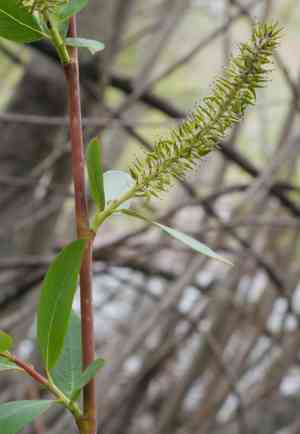
Mackenzie's willow is a robust variety thriving in waterside environments. To achieve successful propagation, select robust cuttings, preferably from youthful shoots, and embed them in adequately draining substrate, ensuring consistent dampness. These cuttings establish roots rapidly and require placement in luminous, diffused illumination. Regular spraying can assist in preserving humidity. Consulting reliable resources guarantees optimal methods and boosts successful outcomes.
When Is the Best Time to Propagate Mackenzie's Willow?
Propagation Method
Cutting
Propagation Period
Autumn,Winter
What Tools Are Used for Mackenzie's Willow Propagation?
Sharp Pruning Shears
Crucial for obtaining clean, precise cuttings from mackenzie's willow. Ensures a smooth cut, minimizing tissue damage to aid rooting success. Sterilizing the shears is vital to prevent disease transmission.
Rooting Hormone
Promotes root development on mackenzie's willow cuttings. Available as powder, liquid, or gel. Dip the cut end of the cutting into the hormone before planting to enhance root formation.
Propagation Trays or Pots
Used to hold cuttings during the rooting process. Should be filled with a well-draining propagation mix, such as perlite and peat moss, providing a stable, aerated medium for root growth.
Misting System or Spray Bottle
Maintains necessary humidity around cuttings to prevent desiccation before roots form. Regular misting keeps cuttings hydrated, which is essential for successful propagation.
Heat Mat
Providing warmth from below can improve root formation for mackenzie's willow. A heat mat under propagation trays helps maintain a consistent, warm temperature, creating an ideal rooting environment.
Clear Plastic Dome or Plastic Bags
Creates a mini-greenhouse effect by maintaining high humidity and stable temperature around mackenzie's willow cuttings. Especially useful to prevent drying out until roots develop.
Sharp Knife or Scalpel
Useful for precise cuts when preparing mackenzie's willow cuttings. Ensures clean, straight cuts, important for the rooting process. Blade sterilization is critical to prevent disease.
How to Propagate Mackenzie's Willow?
Propagation Difficulty
Moderately Difficult
How to Care for Your Newly Propagated Mackenzie's Willow?
How to Care for Your Newly Propagated Mackenzie's Willow?
Once rooted, gradually introduce mackenzie's willow to its permanent outdoor spot by increasing direct sunlight exposure over time. Water consistently to keep soil moist, and apply a balanced fertilizer to support growth. Monitor for pests and diseases, addressing any issues promptly to ensure the new plant's healthy establishment.
Common Mistakes to Avoid When Propagating Mackenzie's Willow
Incorrect Cutting Technique
Using improper cutting methods, such as damaging the bark or making jagged cuts, can hinder successful rooting.
Overwatering or Underwatering
Both excessive and insufficient watering can impede root development. Overwatering can lead to root rot, while underwatering may cause dehydration.
Improper Soil Conditions
Using soil that drains poorly or lacks essential nutrients can prevent cuttings from developing strong roots.
Lack of Humidity
Failing to maintain adequate humidity levels can dry out the cuttings, reducing their chances of successful propagation.
Incorrect Planting Depth
Planting cuttings too deep or too shallow can affect their ability to establish roots effectively.
Tips For Propagating Mackenzie's Willow
Sharp, Clean Cuttings
Use sharp, sterilized tools to make clean cuts, ensuring the bark remains intact and the cut is smooth.
Proper Watering
Maintain consistent moisture in the soil without over-saturating it. Soil should be damp but not soggy.
Well-Draining Soil
Use a soil mix that drains well to avoid waterlogging, which can lead to root rot.
Maintain Humidity
Create a humid environment, such as using a propagation dome or covering the cuttings with plastic, to boost humidity levels around the cuttings.
Correct Planting Depth
Insert cuttings into the soil at a depth where at least one leaf node is below the soil surface but avoid burying them too deep to encourage optimal root formation.



