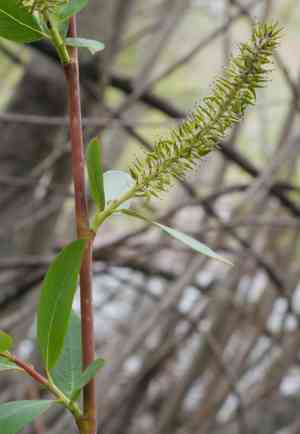
Mackenzie's willow (Salix prolixa)
Also known as: Pacific Willow, Northwest Willow
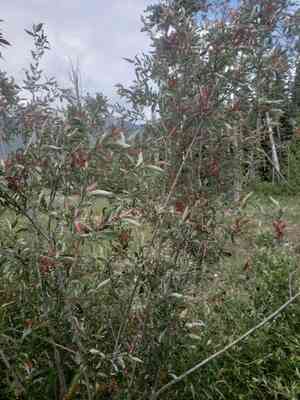
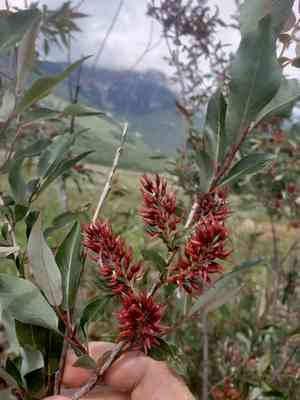
This shrub typically thrives in wet environments like riverbanks, springs, and marshes. It can reach heights of 1 to 5 meters. The leaves are lance-shaped or oval with pointed tips, up to 15 cm long, smooth, and have a waxy underside. They are also accompanied by broad stipules. The flowers are arranged in catkin-like clusters.
In This Article
Attributes of Mackenzie's willow
Lifespan
Perennial
Plant Type
Tree, Shrub
Plant Height
6 to 12 meters
Spread
2 to 6 meters
Leaf Color
Green
Flower Size
0.5 to 1 cm
Flower Color
Yellow-green
Images of Mackenzie's willow


Quickly Identify Mackenzie's willow
1
This plant can be identified by its lance-shaped leaves, which have serrated edges and are green on both sides. The bark is typically smooth and gray, and it produces catkins in early spring.
Scientific Classification of Mackenzie's willow
Phylum
Vascular plants
Class
Dicotyledons
Order
Malpighiales
Family
Willow
Genus
Willows
Species
Mackenzie's willow
Planting and Growing of Mackenzie's willow
Care Difficulty
Easy
Watering Schedule
Every 2 days
Sunlight Requirements
Full sun
Sunshine Duration
4-8 hours
Ideal Temperature
60-75℉
Soil Type
Potting Mix, Peat Mix
Soil pH
6.5-7.5
Fertilizer Type
Balanced
Pruning Season
Spring, Summer
Pruning Area
Branches, Leaves
Pruning Frequency
2 times a year
Repotting Season
Spring
Pot Type
Plastic, Ceramic
 How to Water Mackenzie's willow?
Salix prolixa prefers consistently moist soil. When watering, aim to thoroughly saturate the soil until water trickles out of the drainage holes. Generally, 1000 ml per session ensures the roots are well-drained but not waterlogged, promoting optimal growth and health.
What are the symptoms of an underwatered Mackenzie's willow?
›
What should I do if my Mackenzie's willow is not getting enough water?
›
What are the symptoms of an overwatered Mackenzie's willow?
›
How to save an overwatered Mackenzie's willow?
›
 What Are the Sunlight Requirements for Mackenzie's willow?
Salix prolixa ideally thrives in a mix of full sun with some partial sun, meaning exposure to sunlight for 6-8 hours. This balance ensures robust growth, healthy leaf development, and resilience against environmental stressors or pests.
What is the optimal amount of sunlight for Salix prolixa?
›
How can I ensure Salix prolixa gets ideal sunlight in a heavily shaded area?
›
What benefits does ideal sunlight offer to Salix prolixa?
›
 What Is the Ideal Temperature Range for Mackenzie's willow?
The ideal temperature range for cultivating Salix prolixa is between 60°F and 75°F. These temperatures provide an optimum environment for photosynthesis and nutrient uptake, and ensure consistent growth and development. Maintaining these conditions helps in achieving a healthy plant structure and supports its natural growth cycle.
 What Soil is Best for Mackenzie's willow?
Salix prolixa thrives in moist environments, so choosing soil that retains moisture well is crucial. It prevents the roots from drying out, promoting healthy plant growth and vitality. Opt for loamy soil rich in organic matter to supply the necessary nutrients for Salix prolixa. This enriches the plant, leading to lush foliage and robust health. While moisture is key, preventing waterlogging is equally important. The soil should drain well to avert root rot, maintaining a balance that supports plant health.
 How to Fertilize Mackenzie's willow?
Salix prolixa, commonly known as the Pacific willow, typically benefits from moderate fertilizer amounts. A balanced 10-10-10 NPK fertilizer, applied at a rate of 1 pound per 100 square feet, helps maintain its lush foliage and robust growth. However, avoid excessive amounts to prevent nutrient overload.
 How to Prune Mackenzie's willow?
Begin by thoroughly examining Salix prolixa for any dead, diseased, or damaged branches. Remove these first to prevent the spread of disease. Cut away branches that cross each other, as they can cause wounds and disease. This opens up the plant for better airflow and light penetration. Trim back any overly long or awkwardly placed branches to shape the plant desired. Use gradual cuts to maintain a natural appearance. Throughout the process, step back periodically to evaluate your work. This helps ensure you're maintaining a balanced and aesthetic shape.
More About Pruning Techniques→
 How to Propagate Mackenzie's willow plant?
1
Gather seeds from mature Salix prolixa plants during late spring. Ensure they are dry before storing in a cool, dry place until ready for planting.
2
Cut 6-8 inch sections from healthy branches in early spring. Remove the lower leaves to expose nodes, helping the cutting focus on root development.
3
Prepare a potting mix with equal parts sand and peat moss. Plant seeds or cuttings into the soil and water lightly, keeping the soil moist but not waterlogged.
 How to Repot Mackenzie's willow plant?
1
Salix prolixa requires repotting when the roots begin to circle the pot or protrude from the drainage holes. This is usually a clear indication that the plant's root system has outgrown its current container and needs more space to thrive.
2
Select a pot slightly larger than the previous one with good drainage. A pot that is too large may retain excess moisture, leading to root rot, while a pot that's just right promotes healthy root expansion and proper drainage.
3
Opt for a well-draining, acidic soil mix, rich in organic matter. This type of soil mimics their natural habitat, retaining enough moisture to stay moist without becoming waterlogged, which is ideal for their growth.



