How to Propagate Dwarf saltwort?
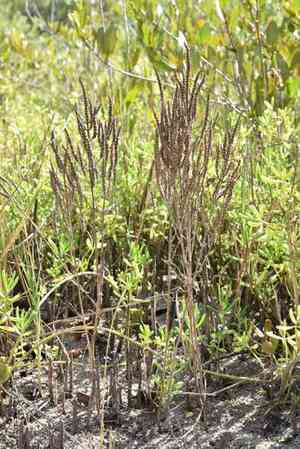
Dwarf saltwort, a distinctive halophyte, flourishes in salty surroundings. Its reproduction mainly entails planting seeds directly into damp, saline earth, guaranteeing excellent contact between the seed and the growing medium. Optimal outcomes are achieved by sustaining steady hydration without excessive wetness. Young plants generally need progressive introduction to increasingly salty environments, replicating their native setting to bolster their growth resilience.
Optimal Propagation Period for Dwarf Saltwort
Propagation Method
Seeding
Propagation Period
Spring
Tools for Dwarf Saltwort Propagation
Seed trays
Seed trays are vital for the controlled germination of dwarf saltwort seeds. They allow for even seed distribution and proper spacing, which prevents overcrowding and ensures good air circulation. Their shallow depth is especially useful for dwarf saltwort's small seeds, making it easier to monitor and manage soil moisture during the crucial germination phase.
Fine vermiculite or perlite
Incorporating fine vermiculite or perlite into the growing medium enhances drainage and aeration around dwarf saltwort seeds. This is important for preventing waterlogging, to which dwarf saltwort seeds are particularly sensitive. The light nature of these materials also aids in maintaining the necessary saline conditions for dwarf saltwort, by enabling more precise watering and salinity adjustments.
Misting spray bottle
A misting spray bottle is essential for providing moisture without disturbing the tiny dwarf saltwort seeds during their delicate early germination stages. The fine mist allows for gentle watering, keeping the soil moist but not saturated, meeting dwarf saltwort's specific moisture requirements without causing soil erosion or seed displacement.
Salinity meter
Given dwarf saltwort's salt-tolerant nature, a salinity meter is a specialized instrument that helps monitor the growing medium's salinity levels. Appropriate salinity is critical for mimicking dwarf saltwort's natural habitat conditions, thereby improving germination and overall plant health. This tool ensures salinity levels are maintained within dwarf saltwort's optimal range.
Grow lights (if indoors)
When propagating dwarf saltwort indoors, grow lights are beneficial for ensuring sufficient light exposure, which is vital for photosynthesis and healthy growth during the seedling stage. These lights provide a consistent light source, which can be adjusted to replicate the natural light patterns necessary for dwarf saltwort's best growth outcomes.
How to Propagate Dwarf Saltwort?
Propagation Type
Simple
Caring for Your Newly Propagated Dwarf Saltwort
Caring for Your Newly Propagated Dwarf Saltwort
Once dwarf saltwort seedlings are established, gradually acclimate them to outdoor conditions. Ensure they receive full sun exposure and maintain soil salinity by irrigating with a saline solution or brackish water. Regularly inspect for pests and diseases, and keep the soil adequately moist without overwatering. Prune as needed to encourage bushy growth and prevent legginess.
Common Propagation Errors for Dwarf Saltwort
Overwatering
Excessive watering can cause root rot in dwarf saltwort, as this succulent naturally thrives in salt marsh environments where the soil is not constantly saturated with fresh water. Overwatering dilutes soil salinity and reduces oxygen availability, hindering root development.
Using low salinity soil
Employing a soil mix with insufficient salinity can impede dwarf saltwort's growth, as it naturally accumulates salts to flourish. Low salinity environments do not provide the ionic balance required for dwarf saltwort's optimal development, potentially leading to nutrient deficiencies and poor plant vigor.
Neglecting light requirements
Dwarf saltwort needs full sunlight for proper development. Insufficient light can result in weak, elongated stems and stunted growth, as dwarf saltwort relies on high light levels for photosynthesis and optimal development.
Dwarf Saltwort Propagation Tips
Appropriate soil mix
Utilize a soil mix with added salt or naturally saline soil to replicate dwarf saltwort's native habitat. This addresses its specific nutritional and environmental needs, fostering healthier growth and better adaptation during propagation.
Regular but minimal watering
Water dwarf saltwort just enough to keep the soil moist but not waterlogged. Adjust the watering schedule based on ambient temperature and humidity. Proper water management prevents root rot while ensuring the plant has adequate moisture for growth.
Full sunlight exposure
Place dwarf saltwort in a location where it receives full sunlight for most of the day. High light exposure is crucial for this plant, promoting robust growth and helping it develop its characteristic structure and coloration.



