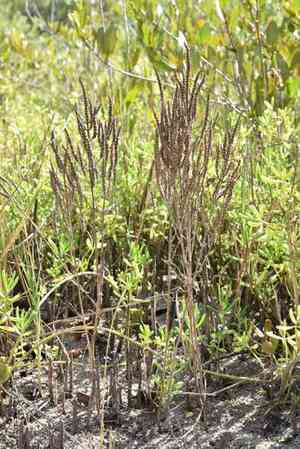
Dwarf saltwort (Salicornia bigelovii)
Also known as: Bigelow's pickleweed
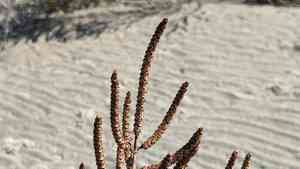
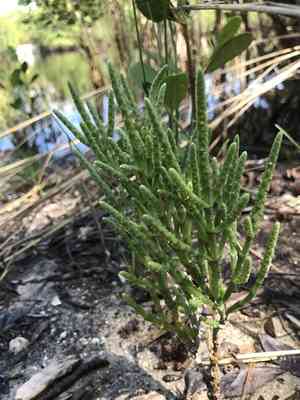
The plant showcases a compact, elongated spike of flowers. Each individual flower features a fused structure of sepals that enclose the reproductive organs, lacking any petals. The resulting fruit is a small utricle with minute, fuzzy seeds. In the southern range, particularly within the Petenes mangroves of the Yucatán, this plant functions as a secondary species within the mangrove ecosystem.
In This Article
Attributes of Dwarf saltwort
Lifespan
Annual
Plant Type
Herb
Plant Height
Up to 1 foot
Spread
Not applicable, as it grows as a single stemmed plant.
Leaf Color
N/A (plant lacks true leaves)
Flower Size
Very small, less than 1/8 inch
Flower Color
Greenish to reddish
Images of Dwarf saltwort
Quickly Identify Dwarf saltwort
1
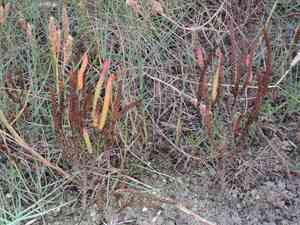
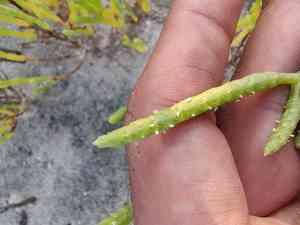
Salicornia bigelovii can be identified by its succulent, jointed stems that are bright green to reddish in color. The plant lacks true leaves and flowers in late summer, producing small, inconspicuous flowers along the stem segments.
Scientific Classification of Dwarf saltwort
Phylum
Vascular plants
Class
Dicotyledons
Order
Caryophyllales
Family
Amaranth
Genus
Glassworts
Species
Dwarf saltwort
Planting and Growing of Dwarf saltwort
Care Difficulty
Easy
Watering Schedule
Every 2 days
Sunlight Requirements
Full sun
Sunshine Duration
6-10 hours
Ideal Temperature
68-86℉
Soil Type
Potting Mix, Peat Mix
Soil pH
6.5-7.5
Fertilizer Type
Balanced
Pruning Season
Spring, Summer
Pruning Area
Branches, Leaves
Pruning Frequency
2 times a year
Repotting Season
Spring
Pot Type
Plastic, Ceramic
 How to Water Dwarf saltwort?
For Salicornia bigelovii, the watering amount should follow the drier side of moist. 500 ml of water should be sufficient per watering, enough to moisten the soil without leaving it soggy. Check the soil moisture after watering to ensure it's damp but not waterlogged.
What are the symptoms of an underwatered Dwarf saltwort?
›
What should I do if my Dwarf saltwort is not getting enough water?
›
What are the symptoms of an overwatered Dwarf saltwort?
›
How to save an overwatered Dwarf saltwort?
›
 What Are the Sunlight Requirements for Dwarf saltwort?
Salicornia bigelovii thrives best in full sun to partial sun, adapting well to varying light conditions. This light range supports robust growth, maintaining its nutritional vigour and salt tolerance.
What is the best light setup?
›
What to do if the natural light is insufficient?
›
What are the benefits of ideal lighting?
›
 What Is the Ideal Temperature Range for Dwarf saltwort?
The ideal temperature range for Salicornia bigelovii is between 68°F and 86°F. These temperatures provide the best conditions for growth and optimal health, as they mimic the plant's natural habitat, ensuring robust development and resilience.
 What Soil is Best for Dwarf saltwort?
Salicornia bigelovii can thrive in soils with high salinity. This makes it an ideal plant for coastal and saline environments, where it can utilize the salt to its advantage, allowing it to grow where other plants might fail. This plant does not require rich, nutrient-dense soils. Its adaptability to nutrient-poor conditions means less fertilizer is needed, making it a sustainable choice for environments with limited resources. Salicornia prefers well-drained soil to prevent waterlogging. Good drainage helps maintain root health and prevents diseases, ensuring robust growth and a thriving plant life.
 How to Fertilize Dwarf saltwort?
Salicornia bigelovii typically requires a balanced approach to fertilization. Given its preference for saline environments, it benefits from specific nutrient ratios that align with its unique habitat needs. When using liquid fertilizer, apply at a reduced concentration; typically diluting standard solutions to half-strength ensures the plant receives adequate nutrients without risk of over-fertilization. The precise amount depends on environmental conditions and plant size but should be approximately 1 liter per square meter every application.
 How to Prune Dwarf saltwort?
Begin by identifying any dead, diseased, or damaged stems. These are your primary targets for removal. Next, focus on thinning out any overcrowded areas to improve air circulation and light penetration. When pruning, make cuts just above a node or a set of healthy leaves. This encourages new growth to sprout from just below the cut, helping to maintain a bushier, more vibrant appearance. Adopt a systematic approach, moving from the outside in, to ensure you don't miss any sections. This also helps create a balanced shape, further promoting the plant's overall aesthetic and health.
More About Pruning Techniques→
 How to Propagate Dwarf saltwort plant?
1
Fill the seed trays with a well-draining potting mix. Moisten the soil lightly to create an ideal environment for the seeds to germinate.
2
Evenly distribute Salicornia bigelovii seeds over the prepared soil. Make sure they are not buried deeply; a light dusting of soil over the top is sufficient to cover them.
3
Select healthy stem segments from the parent plant. Make cuts with your garden shears just below a node, ensuring each cutting is about 4-6 inches long.
 How to Repot Dwarf saltwort plant?
1
Salicornia bigelovii signals the need for repotting when its roots start circling the pot, signifying they lack space. Also, stunted growth and poor drainage are indicators of the necessity to repot. Ideally, aim for late spring or early autumn for best results.
2
Choose a pot slightly larger than the current one, ensuring it has ample drainage holes. A terra-cotta pot is ideal, facilitating perfect moisture balance and preventing root rot by allowing excess water to evaporate.
3
Opt for a sandy, well-drained soil mix, mimicking the natural coastal habitat of Salicornia bigelovii. This ensures optimal drainage and prevents water-logging, supporting healthy root development.



