How to Propagate Lady banks's rose?
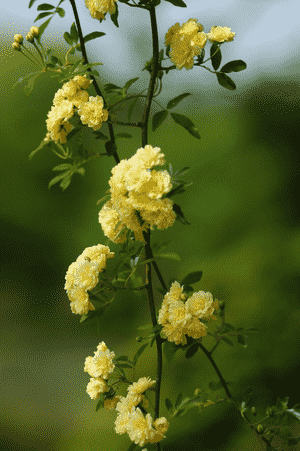
The most effective way to propagate Lady banks's rose is by taking cuttings in the colder periods of fall and winter. While this technique might pose certain difficulties, the emergence of new shoots indicates successful rooting. Guarantee ideal circumstances by preserving sufficient moisture levels.
When Is the Optimal Time to Propagate Lady Banks's Rose?
Propagation Method
Cutting
Propagation Period
Fall, Winter
What Equipment Is Utilized in Lady Banks's Rose Propagation?
Pruning Shears
To obtain cuttings from lady banks's rose, sharp and clean pruning shears are essential. These enable precise cuts, minimizing harm to the parent plant and ensuring a clean surface on the cutting for improved rooting. Sharp blades prevent tissue crushing, which can lead to disease and poor root formation.
Rooting Hormone
This assists in stimulating root growth on lady banks's rose cuttings. By dipping the cutting's base into the rooting hormone, you promote the faster and more effective development of new roots compared to simply placing the cutting in soil alone. This enhances the likelihood of successful propagation.
Sterilizing Agent
Tools used on lady banks's rose should be sterilized between uses to prevent disease transmission. Alcohol or a bleach solution can serve as a sterilizing agent. Sterile equipment ensures the well-being of both the mother plant and the new cuttings.
Potting Mix
A well-draining potting mix is vital for lady banks's rose cuttings to prevent root rot while retaining sufficient moisture to support rooting. A blend containing perlite or vermiculite and peat moss is generally recommended for its aeration and water retention qualities.
Propagation Tray or Pots
These vessels hold the lady banks's rose cuttings as they develop roots. They should feature drainage holes to allow excess water to escape and be appropriately sized to accommodate new root growth without overcrowding.
Plastic Cover or Dome
Maintaining humidity around lady banks's rose cuttings is crucial for their survival during root development. A plastic cover or dome over the propagation tray or pot helps sustain high humidity, which is conducive to rooting and prevents the cuttings from drying out.
Heat Mat
For lady banks's rose, which benefits from consistent and slightly warmer soil temperatures to encourage rooting, a heat mat can be placed beneath propagation trays or pots. This device gently warms the soil, accelerating root development without overheating the cuttings.
Misting Bottle
A misting bottle is employed to gently water lady banks's rose cuttings without disturbing delicate new roots or the rooting medium. Regular misting helps maintain the necessary humidity and soil moisture for successful propagation.
How to Propagate Lady Banks's Rose?
Propagation Method
Cutting
Difficulty Level
Moderately Easy
How to Care for Your Newly Propagated Lady Banks's Rose?
How to Care for Your Newly Propagated Lady Banks's Rose?
Following propagation, keep the soil of lady banks's rose consistently moist but not waterlogged. Provide the plant with full sun to partial shade, and a protected location to shield it from strong winds. Fertilize lady banks's rose sparingly during the growing season and prune as needed to maintain its shape and encourage branching. Ensure winter protection in colder climates, as lady banks's rose can be vulnerable to frost damage.
Common Mistakes to Avoid When Propagating Lady Banks's Rose
Over-watering cuttings
Excess moisture can lead to decay, especially during the delicate stage when lady banks's rose cuttings are attempting to establish roots. This reduces the chances of successful propagation as the cutting may rot before rooting.
Planting cuttings too deeply
Inserting lady banks's rose cuttings too far into the propagation medium can cause the stems to rot before roots can form, as the lower nodes and stem may not receive adequate air circulation.
Using dull tools for cuttings
Employing non-sterile or blunt tools to take lady banks's rose cuttings can crush plant tissue, hindering the cutting's ability to callus properly and form roots, and can also introduce pathogens.
Ignoring pest and disease issues
Transferring cuttings from lady banks's rose plants that have pest infestations or diseases can spread these problems to new plants and impede successful propagation.
Tips For Propagating Lady Banks's Rose
Proper cut selection
Choosing healthy semi-hardwood stem cuttings from lady banks's rose that are approximately 4-6 inches long and possess several leaf nodes will enhance the likelihood of successful rooting.
Use of rooting hormone
Dipping the cut end of lady banks's rose cuttings in rooting hormone can promote faster and more dependable root development, but it's crucial to follow instructions carefully for optimal results.
Appropriate medium and containers
Propagation of lady banks's rose necessitates a well-draining medium, such as a mixture of perlite and peat, and clean containers to prevent diseases and ensure the cuttings have the best environment for rooting.
Maintaining ideal humidity
Keeping lady banks's rose cuttings in a humid environment by utilizing a plastic cover or a humidity dome helps prevent the cuttings from drying out before they have time to root.



