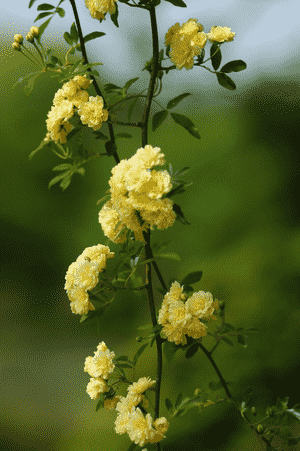
Lady banks's rose (Rosa banksiae)
Also known as: Yellow lady banks climbing rose, Yellow Banksian Rose, Rambler roses
Lady Banks's rose, known for its pale yellow blossoms, is a widely favored garden plant globally. The most extensive specimen of this rose, Rosa banksiae, is found in Tombstone, Arizona, the historic site of the “Gunfight at the O.K. Corral.” The plant originated from a clipping sent from Scotland in 1885, making it over 130 years old today.
In This Article
Attributes of Lady banks's rose
Lifespan
Perennial
Plant Type
Shrub, Vine
Plant Height
4.5 m to 6 m
Spread
1.8 m to 3 m
Leaf Color
Green
Flower Size
1.5 cm to 2.5 cm
Flower Color
White Yellow
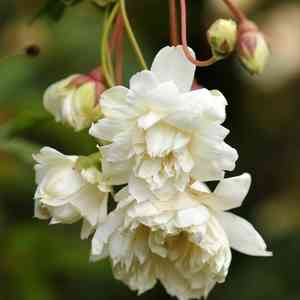
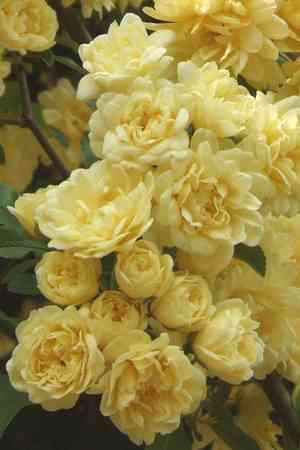
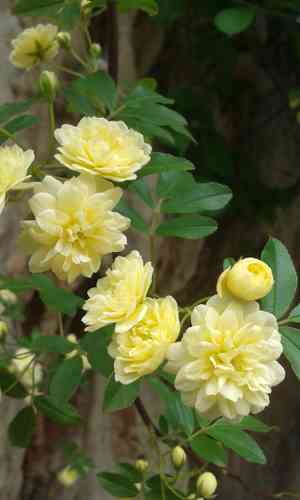
Images of Lady banks's rose
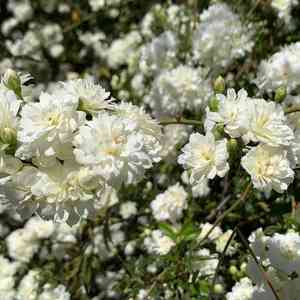
Quickly Identify Lady banks's rose
1
Flexible, thornless green stems capable of climbing over 40 feet (12 meters).
2
Yellow or white 1-inch (2.5 cm) flowers with reflexed 5-lobed sepals.
3
Distinctive dull red spherical hips containing tiny achenes for seed dispersal.
4
Alternate, pinnately compound evergreen leaves with serrated margins and fuzzy lower surface.
5
Smooth, green unarmed stems with profuse branching, ideal for sprawling and climbing.
Scientific Classification of Lady banks's rose
Phylum
Vascular plants
Class
Dicotyledons
Order
Roses, elms, figs, and allies
Family
Rose
Genus
Roses
Species
Lady banks's rose
Planting and Growing of Lady banks's rose
Care Difficulty
Easy
Watering Schedule
Every 4 days
Sunlight Requirements
Full sun
Sunshine Duration
4-8 hours
Ideal Temperature
60-75℉
Soil Type
Potting Mix, Peat Mix
Soil pH
6.5-7.5
Fertilizer Type
Balanced
Pruning Season
Spring, Summer
Pruning Area
Branches, Leaves
Pruning Frequency
2 times a year
Repotting Season
Spring
Pot Type
Plastic, Ceramic
 How to Water Lady banks's rose?
Rosa banksiae requires moderate watering, aiming for around 500 ml per watering session. The principle to follow is to water when the top inch of the soil feels dry, ensuring moisture reaches the roots without leaving the soil waterlogged.
More About Watering Techniques→
What are the symptoms of an underwatered Lady banks's rose?
›
What should I do if my Lady banks's rose is not getting enough water?
›
What are the symptoms of an overwatered Lady banks's rose?
›
How to save an overwatered Lady banks's rose?
›
 What Are the Sunlight Requirements for Lady banks's rose?
Rosa banksiae thrives in full to partial sun, ideally receiving 6 to 8 hours of sunlight daily. This exposure facilitates vibrant blooms and sturdy growth, enhancing the plant's overall aesthetic and vigor.
More About Sunlight Requirements Techniques→
How much light should Rosa banksiae receive?
›
What if I can't provide full sun conditions?
›
What benefits does ideal lighting bring to this plant?
›
 What Is the Ideal Temperature Range for Lady banks's rose?
The ideal temperature range for Rosa banksiae lies between 60°F and 75°F. Within this range, the plant thrives, showing optimal growth rates and vibrant flowering. Such temperatures provide the right balance of warmth and moisture, supporting photosynthesis and nutrient absorption efficiently.
 What Soil is Best for Lady banks's rose?
Rosa banksiae thrives in well-draining soils that prevent water from pooling around the roots. This helps avoid root rot and ensures the plant remains healthy and vigorous. The plant prefers nutrient-rich soil, offering ample organic matter that provides essential nutrients. This encourages robust growth and enhances flowering. Soil should retain some moisture while also allowing excess water to drain. This balance ensures the roots remain hydrated but not waterlogged, promoting optimal health.
More About Soil→
 How to Fertilize Lady banks's rose?
For Rosa banksiae, careful consideration is needed for the fertilizer amount to avoid nutrient imbalances. Liquid fertilizers should be applied at half strength every month, ensuring that they penetrate deeply without saturating the soil. For slow-release fertilizers, follow the manufacturer's instructions closely, as each application should provide gradual nutrient release over several months.
More About Fertilizing Techniques→
 How to Prune Lady banks's rose?
Begin by removing any dead, damaged, or diseased wood, cutting back to a healthy bud or branch. Next, thin out older wood to open up the center of the plant, which enhances air circulation and promotes vigorous new shoots. This is also the time to shape the plant by cutting back overly long stems. In summer and autumn, aim for light pruning, focusing on deadheading spent blooms. This helps redirect the plant’s energy into developing robust shoots, preparing it for the next blooming cycle. Look to trim back any unruly or undesirably long branches that could compromise the plant's aesthetic shape.
More About Pruning Techniques→
 How to Propagate Lady banks's rose plant?
1
Choose a healthy, disease-free stem from the current year's growth. Cut a 6- to 8-inch segment with several nodes using sharp pruning shears.
2
Strip the leaves from the lower half of the cutting. Dip the cut end into rooting hormone to encourage root development.
3
Plant the cutting in a pre-moistened potting mix. Cover with a clear plastic bag or dome to maintain humidity, which is crucial for rooting.
 How to Repot Lady banks's rose plant?
1
Observe for signs like overcrowded roots or reduced growth. If roots start emerging from the drainage holes, or if the plant's growth has noticeably slowed, it's likely time to repot. Ideally, do this in spring when the plant is entering its active growing season, allowing it ample time to adjust.
2
Select a pot that is about 2 inches larger in diameter than the current one. Opt for pots made of clay or terracotta, as they allow for better air circulation around the roots. Ensure the pot has adequate drainage holes to prevent waterlogging, which can be detrimental to Rosa banksiae.
3
Use a loamy, well-draining potting mix. The ideal soil should retain moisture without becoming waterlogged, offering adequate aeration to the roots. This prevents root rot, promoting healthy growth and vibrant flowering.



