How to Propagate Clasped pondweed?
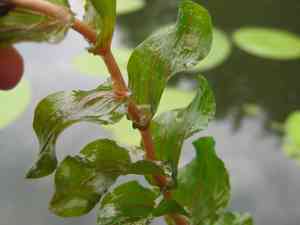
Clasped pondweed can be successfully multiplied using stem sections. Cultivators ought to choose robust, developed stalks for this procedure. Verify that every segment includes a minimum of one joint, as this enhances the probability of successful root formation. Insert the segments into a medium that replicates clasped pondweed's native water habitat, ensuring sufficient hydration and illumination to encourage development.
Optimal Period for Clasped Pondweed Propagation
Propagation Type
Cutting
Propagation Season
Spring,Summer
Tools Utilized in Clasped Pondweed Propagation
Aquatic Plant Scissors
Specifically designed for underwater use, these scissors enable precise cuts, vital for clean stem severance on clasped pondweed. A clean cut minimizes damage, fostering improved recovery and growth in the cuttings.
Aquatic Plant Tweezers
Extended and precise, these tweezers assist in placing clasped pondweed cuttings into the substrate without disturbing delicate stems or nearby flora. This tool is particularly beneficial for preserving the integrity of plant nodes, crucial for root development.
Substrate Spatula
This implement simplifies the manipulation and shaping of the substrate around clasped pondweed cuttings. A well-formed substrate supports cuttings upright, aiding proper root growth and anchoring.
Water Conditioning Additives
Crucial for adjusting water properties to suit clasped pondweed's requirements, these additives help stabilize parameters like pH and hardness. Correct water conditions are essential for enhancing the survival and growth of new clasped pondweed cuttings.
Method for Propagating Clasped Pondweed
Propagation Type
Easy
Caring for Your Newly Propagated Clasped Pondweed
Caring for Your Newly Propagated Clasped Pondweed
Post-propagation, maintain stable water conditions for clasped pondweed, ensuring it is submerged with only the plant's tip slightly above the water surface. Periodically assess water quality to prevent harmful chemical accumulation and ensure the surrounding water stays clear and nutrient-rich. Additionally, manage light exposure to avoid excessive algal growth that could compete with clasped pondweed for nutrients.
Common Errors to Avoid During Clasped Pondweed Propagation
Insufficient water conditions
Propagating clasped pondweed demands specific water conditions. Incorrect water parameters such as pH, temperature, or purity can stress the plant, hindering growth and multiplication. Maintaining optimal conditions is vital for successful propagation.
Overcrowding
Placing too many clasped pondweed cuttings in a confined area can lead to resource competition, potentially reducing growth rates and overall plant health. This density can also impede sunlight and nutrient availability, crucial for photosynthesis and growth.
Neglecting substrate quality
Utilizing an inappropriate substrate can impede the rooting and general health of clasped pondweed. The wrong substrate type may not secure the plant adequately or may lack essential nutrients for optimal growth.
Advice for Propagating Clasped Pondweed
Appropriate cutting size
Ensure cuttings are of suitable length, typically 5-10 cm, to promote better rooting and survival rates. This size helps cuttings absorb sufficient nutrients and establish a robust root system more quickly.
Use of aeration
Proper water aeration is crucial for oxygenating the water, benefiting the root health and general vigor of clasped pondweed. Oxygen-rich water helps prevent rot and other anaerobic conditions that could harm plant cuttings.
Regular monitoring
Periodically check water conditions, including pH and nutrient levels, to ensure they remain within the necessary parameters for clasped pondweed. Prompt adjustments to water conditions can prevent stress and promote vigorous growth.



