How to Propagate Lindheimer's rockdaisy?
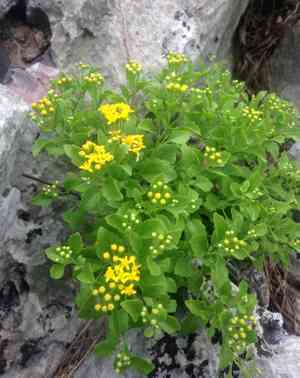
A versatile plant native to stony habitats, lindheimer's rockdaisy flourishes in soil that drains effectively and receives ample sunlight. For propagation via seeding, utilize recently harvested seeds and ensure continuous dampness until sprouting occurs. Developing plantlets need safeguarding from harsh elements to achieve peak development. It is advisable to steer clear of saturated soil to avert root decay. This robust specimen is recognized for its straightforward propagation, rendering it perfect for hobbyists aiming to introduce a natural element to their outdoor space.
Optimal Time for Lindheimer's Rockdaisy Propagation
Propagation Method
Seeding
Propagation Period
Spring
Tools for Lindheimer's Rockdaisy Propagation
Seed Trays
Seed trays offer an organized and regulated setting for planting lindheimer's rockdaisy seeds. They enable efficient space utilization and monitoring of seedling progression.
Seed Starting Mix
A sterile seed starting mix guarantees lindheimer's rockdaisy seeds the highest probability of successful germination by offering a nutrient-rich, well-draining medium devoid of pathogens.
Moisture Dome
A moisture dome assists in sustaining elevated humidity levels around lindheimer's rockdaisy seeds, which is vital for germination. It prevents soil desiccation and ensures uniform moisture distribution.
Heat Mat
A heat mat delivers consistent warmth to the base of seed trays, fostering quicker and more uniform germination of lindheimer's rockdaisy by maintaining an ideal soil temperature.
Spray Bottle
A spray bottle is utilized to gently mist the soil and seedlings of lindheimer's rockdaisy. It ensures the soil remains damp without disturbing the seeds or young plants, which is crucial for their delicate initial growth phases.
Plant Labels
Plant labels serve to identify the varieties and planting dates of lindheimer's rockdaisy. This aids in tracking progress and recognizing seedlings, ensuring proper care and management.
Fine Sieve
A fine sieve can be employed to cover lindheimer's rockdaisy seeds with a thin layer of soil or seed starting mix. This ensures adequate soil contact while permitting light penetration when necessary.
Tweezers
Tweezers are useful for precisely placing small lindheimer's rockdaisy seeds in the seed trays, ensuring even distribution and minimizing the risk of overcrowding.
Grow Lights
Grow lights supply the essential light spectrum for lindheimer's rockdaisy seedlings if natural light is insufficient. This promotes healthy growth and robust development of young plants.
How to Propagate Lindheimer's Rockdaisy
Propagation Difficulty
Simple
Caring for Your Newly Propagated Lindheimer's Rockdaisy
Caring for Your Newly Propagated Lindheimer's Rockdaisy
Post-transplant, irrigate lindheimer's rockdaisy regularly, allowing the substrate to dry slightly between waterings. Ensure the plant is situated in a location with ample sun exposure. Fertilize sparingly, as lindheimer's rockdaisy typically thrives in less nutrient-dense soil. Prune any dead or damaged foliage to encourage robust growth. Monitor for pests and address issues promptly if they arise.
Common Errors to Avoid When Propagating Lindheimer's Rockdaisy
Overwatering
Excessive moisture can lead to root decay, which impedes the plant's ability to absorb nutrients and may result in its demise.
Poor Soil Drainage
Utilizing soil that retains too much water can similarly cause root rot and other problems associated with surplus moisture.
Insufficient Light
Not providing adequate light can result in weak, elongated growth, diminishing the plant's overall health and vigor.
Neglecting to Prune Dead or Diseased Parts
Failing to remove dead or diseased leaves and stems can lead to infections and reduce the plant's overall vitality.
Tips For Propagating Lindheimer's Rockdaisy
Use Well-Drained Soil
Ensure the soil mixture allows for proper drainage to prevent waterlogging and root decay.
Adequate Watering
Water the plant moderately, keeping the soil moist but not saturated. Allow the topsoil to dry slightly between waterings.
Provide Plenty of Light
Place the plant in a location where it can receive abundant sunlight, as this is vital for healthy development.
Routine Pruning
Regularly trim dead or diseased portions of the plant to promote healthy growth and prevent the spread of infections.
Use Root Hormones
When taking cuttings for propagation, dip them in a rooting hormone to enhance the likelihood of successful root formation.



