How to Propagate Forest colicwood?
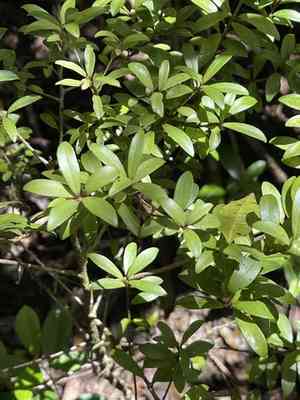
Forest colicwood flourishes in adequately drained earth and areas with partial shade, rendering it suitable for various garden settings. When multiplying forest colicwood from cuttings, choose semi-hardwood sections and ensure they remain damp. Rooting compounds can facilitate quicker root formation. Consistent irrigation is essential, but prevent excessive saturation. Transfer rooted cuttings into bigger containers prior to relocating them to their permanent spot to help them adapt more effectively to external conditions.
Optimal Period for Forest Colicwood Propagation
Propagation Method
Cutting
Propagation Season
Spring,Summer
Tools Required for Forest Colicwood Propagation
Pruning Shears
Pruning shears are vital for taking cuttings from forest colicwood. Select a pair with sharp, clean blades to make precise cuts, minimizing plant tissue damage and reducing disease risk.
Rooting Hormone
Applying rooting hormone to forest colicwood cuttings promotes root development. It contains growth hormones that stimulate root growth, increasing successful propagation chances.
Seedling Trays
Seedling trays offer a controlled environment for rooting forest colicwood cuttings. They secure the growing medium and ensure optimal moisture retention and drainage.
Sterile Potting Medium
A sterile potting medium, such as a perlite and peat moss blend, provides a disease-free environment for rooting forest colicwood cuttings. It offers the right balance of moisture and aeration for root development.
Misting Bottle
A misting bottle is used to maintain necessary humidity levels around forest colicwood cuttings. Regular misting prevents cuttings from drying out and supports healthy root formation.
Heat Mat
A heat mat placed under the seedling tray helps maintain a consistent warm temperature, crucial for forest colicwood cutting root development, especially in cooler climates or seasons.
Clear Plastic Dome or Bag
A clear plastic dome or bag creates a humid microenvironment around forest colicwood cuttings. This helps retain moisture, reducing water loss and accelerating the rooting process.
Sharp Knife or Scalpel
A sharp knife or scalpel is used to make clean cuts on forest colicwood cuttings, particularly for angled cuts that increase surface area for rooting hormones and water absorption.
How to Propagate Forest Colicwood?
Propagation Difficulty
Moderately Difficult
Caring for Your Newly Propagated Forest Colicwood
Caring for Your Newly Propagated Forest Colicwood
Once the cutting has rooted and shows new growth, gradually acclimate forest colicwood to its growing environment by reducing humidity and increasing light exposure. Transplant the plant into a larger pot with well-draining soil when it outgrows its initial container. Water it regularly but allow the top layer of soil to dry out between waterings. Apply a balanced, water-soluble fertilizer every few months to support healthy growth. Regularly check for pests and diseases, and prune as needed to maintain its shape and health.
Common Errors to Avoid When Propagating Forest Colicwood
Incorrect Soil Mix
Using soil mixes that do not drain well can lead to root rot. Forest colicwood thrives in well-draining, slightly acidic soil.
Overwatering
Applying too much water can suffocate the roots and foster fungal growth. Moderate watering is essential for healthy propagation.
Insufficient Light
Placing cuttings or seedlings in low light can stunt growth. Forest colicwood requires ample indirect sunlight for optimal growth.
Improper Cutting Technique
Taking cuttings from the wrong part of the plant or using dull tools can hinder root development. Proper technique ensures the plant can heal and generate new roots efficiently.
Neglecting Humidity
Ignoring humidity levels can result in desiccation of cuttings or seedlings. Forest colicwood prefers a humid environment during the early stages of propagation.
Tips For Propagating Forest Colicwood
Use Appropriate Soil
Opt for a mix that combines perlite, peat, and sand to ensure good drainage and acidity levels.
Moderate Watering
Water sparingly but consistently, just enough to keep the soil moist without waterlogging.
Provide Indirect Sunlight
Place the propagating cuttings or seedlings in bright, indirect light to support photosynthesis without overstressing the young plants.
Correct Cutting Technique
Use sharp, sterilized tools to take semi-hardwood cuttings, ensuring each cutting has at least two nodes.
Maintain Humidity
Employ a humidity dome or cover cuttings with a plastic bag to maintain a high-humidity environment, aiding in successful root development.



