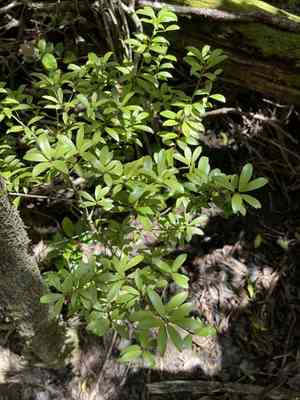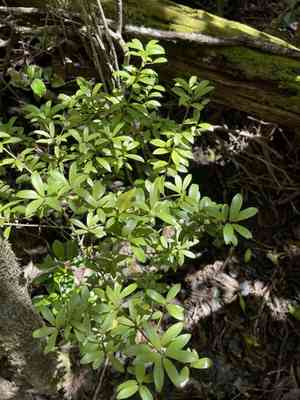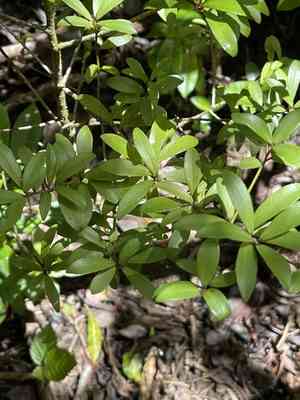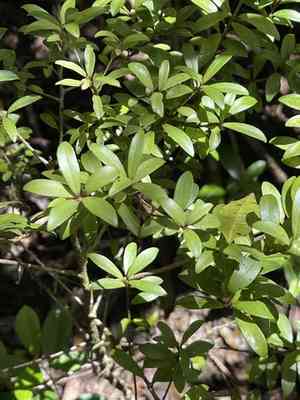
Forest colicwood(Myrsine alyxifolia)

Forest colicwood (Myrsine alyxifolia)

Also known as: Alyxia-fruited Myrsine, Compressed Myrsine

The forest colicwood is a robust evergreen tree notable for its thick, twisting trunks and broad, dark green foliage that forms a dense canopy. Unique for its subtle, calming aroma and small bioluminescent flowers that illuminate the night, this tree offers significant ecological benefits. Its extensive root system prevents soil erosion, while its fallen leaves enrich the soil with vital nutrients. The dense canopy provides essential shelter for various wildlife species, and the glowing flowers attract nocturnal pollinators, thereby supporting a diverse ecosystem. Adaptable to various soil conditions, the colicwood is a versatile and integral part of its native habitat.

Attributes of Forest colicwood

Lifespan
Perennial
Plant Type
Shrub
Plant Height
Up to 1 meter
Spread
Usually less than 1 meter
Leaf Color
Dark green
Flower Size
Less than 1 cm
Flower Color
White to pale pink

ForwardPlant - Identify plants with a snap

Identify and diagnose plants, get toxicity alerts, and explore safety guides for all types of fungi.

Try for Free

Images of Forest colicwood

Forest colicwood(Myrsine alyxifolia)

Quickly Identify Forest colicwood

1
Myrsine alyxifolia can be identified by its small size, leathery leaves, and compressed appearance. The leaves are typically rounded with a glossy surface.

Scientific Classification of Forest colicwood

Phylum
Vascular plants
Class
Dicotyledons
Order
Ericales
Family
Primrose
Genus
Colicwood
Species
Forest colicwood

Planting and Growing of Forest colicwood

Care Difficulty
Moderate
Watering Schedule
Every 4 days
Sunlight Requirements
Partial sun
Sunshine Duration
4-6 hours
Ideal Temperature
60-75℉
Soil Type
Potting Mix, Peat Mix
Soil pH
6.5-7.5
Fertilizer Type
Balanced
Pruning Season
Spring, Summer
Pruning Area
Branches, Leaves
Pruning Frequency
2 times a year
Repotting Season
Spring
Pot Type
Plastic, Ceramic

water icon How to Water Forest colicwood?

For Myrsine alyxifolia, water deeply but infrequently. Ensure the soil is soaked thoroughly, allowing excess water to drain. This helps maintain a moist environment without overwhelming the roots, promoting healthy growth.
What are the symptoms of an underwatered Forest colicwood? ›
What should I do if my Forest colicwood is not getting enough water? ›
What are the symptoms of an overwatered Forest colicwood? ›
How to save an overwatered Forest colicwood? ›

sunlight icon What Are the Sunlight Requirements for Forest colicwood?

Sunlight Requirements: Partial sun, Full shade
Duration of light: Two to six hours
Partial sun to full shade benefits Myrsine alyxifolia, promoting healthy foliage, optimal growth, and vitality while minimizing stress and the risk of damage from improper light exposure.
Solution for Ideal Light ›
How to Achieve ›
Benefits of Ideal Lighting ›

temperature icon What Is the Ideal Temperature Range for Forest colicwood?

Ideal Temperature: 60 ~ 75℉
For Myrsine alyxifolia, maintaining a temperature range between 60°F to 75°F is ideal. This range encourages optimal growth and development of the plant by simulating its native environmental conditions.

soil icon What Soil is Best for Forest colicwood?

Soil type: Loam, Sandy loam, Acidic soil
Soil PH: 6.5 ~ 7.5
Myrsine alyxifolia requires soil with good drainage to prevent water logging. Well-drained soil helps the plant's roots to respire properly and prevents root rot, a common issue in poorly drained soils. The plant thrives in loam and sandy loam soils that are enriched with organic matter. Organic material improves soil fertility, which in turn promotes healthier growth by providing essential nutrients. While good drainage is important, the soil should also retain some moisture to ensure the plant doesn't dry out. This balance helps maintain the plant's hydration without causing water stress.

fertilize icon How to Fertilize Forest colicwood?

Fertilizer type: Balanced
For Myrsine alyxifolia, it is essential to measure the fertilizer based on the manufacturer's instructions. Typically, using half-strength for liquid fertilizers helps prevent over-fertilization, ensuring the plant receives just enough nutrients for optimal growth.

prune icon How to Prune Forest colicwood?

Pruning Time: Spring, Summer, Autumn
Begin by assessing the overall shape of your Myrsine alyxifolia and decide the desired form. Use clean, sharp shears to remove any dead or diseased branches first, which will prevent the spread of disease. Next, target crossing branches that could form weak points in the structure. Ensure cuts are made just above a node to encourage new growth in the desired direction. Lastly, trim back any overly long shoots to maintain your plant's compact shape. More About Pruning Techniques→

propagate icon How to Propagate Forest colicwood plant?

Propagate Time: Spring, Early summer
1
Collect ripe fruits containing seeds from the Myrsine alyxifolia plant. Ensure the seeds are from disease-free plants to avoid potential propagation of pathogens.
2
Select healthy branches and use sharp pruners to cut 4-6 inch sections. Remove lower leaves to reduce moisture loss and prepare the cuttings for rooting.
3
In seed trays, sow seeds under a thin layer of soil. For cuttings, place them in containers filled with a sterile potting mix. Provide consistent moisture without waterlogging.
More About Propagating Techniques→

repot icon How to Repot Forest colicwood plant?

Repotting frequency: Every 2-3 years
1
Look for signs like roots growing through the drainage holes or soil drying out too quickly. These indicate it's time to repot. Ideally, repot during spring or autumn when the plant is in its active growth phase, ensuring quicker adjustment.
2
Opt for a pot that's 1-2 inches larger in diameter than the current one. Ensure it has drainage holes to prevent waterlogging, which can lead to root rot. A slightly larger pot gives roots room for growth, promoting a healthy plant life.
3
Choose a well-draining, sandy soil mix to ensure excess water doesn't lead to root rot. Such soil mimics the plant's natural habitat, promoting robust and healthy root development while providing adequate aeration.

ForwardPlant - Identify plants with a snap

Find the best spots for them to optimize their health, simply using your phone.

Try for Free