How to Propagate Chinese evergreen magnolia?
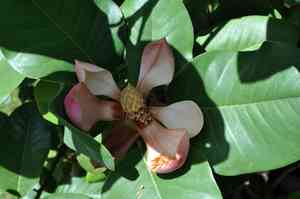
Magnolia grandiflora, a member of the Magnoliaceae family, is an evergreen tree distinguished by its substantial, succulent foliage and impressive blossoms. Reproducing Magnolia grandiflora through cuttings proves successful; select robust, semi-lignified cuttings, ensuring each possesses several leaves. Apply a rooting stimulant to the severed end to foster root growth, then insert the cuttings into a damp, adequately draining substrate. Sustain high humidity and warmth to facilitate successful root formation.
Optimal Period for Propagating Chinese Evergreen Magnolia
Propagation Type
Cutting
Propagation Season
Autumn,Winter
Essential Tools for Chinese Evergreen Magnolia Propagation
Sharp pruning shears
Utilized for obtaining cuttings from chinese evergreen magnolia. A precise cut minimizes plant trauma, fostering successful root formation.
Rooting hormone
Applied to the severed ends of chinese evergreen magnolia cuttings to stimulate root growth. It hastens rooting by supplying vital hormones that encourage root cell proliferation.
Sterilized potting mix
Offers a clean environment for chinese evergreen magnolia cuttings. This blend guarantees cuttings are free from pathogens and have access to necessary nutrients for root development.
Propagation trays
Organize and hold chinese evergreen magnolia cuttings while they establish roots. Tray compartments help maintain consistent moisture levels around each cutting, vital for root initiation.
Humidity dome
Positioned over propagation trays, it sustains high humidity levels around chinese evergreen magnolia cuttings, reducing water loss and creating an ideal rooting environment.
Heated propagator
Maintains a steady temperature favorable for chinese evergreen magnolia cuttings to root more quickly and uniformly, especially in colder climates or seasons.
Method for Propagating Chinese Evergreen Magnolia
Propagation Type
Moderately Difficult
Post-Propagation Care for Your Chinese Evergreen Magnolia
Post-Propagation Care for Your Chinese Evergreen Magnolia
Once rooted, transplant the chinese evergreen magnolia cutting into a larger container with rich, well-draining soil. Water consistently to keep the soil uniformly moist, but ensure proper drainage to prevent waterlogging. Position the plant where it receives partial to full sunlight. Apply mulch around the base to retain moisture and suppress weeds. Fertilize with a balanced, slow-release product during the growing season, and inspect for pests or diseases. Prune as needed to maintain desired shape and encourage robust growth.
Common Errors to Avoid When Propagating Chinese Evergreen Magnolia
Over-watering
Excessive moisture can lead to root rot, hindering successful root development and potentially killing cuttings.
Improper soil mix
Using a dense or poorly draining soil blend can suffocate roots and impede adequate growth, resulting in poor propagation success.
Insufficient lighting
Placing cuttings in too much shade or direct sunlight can either stunt growth or cause leaf scorch, compromising the plant's vitality.
Not using rooting hormone
Omitting rooting hormone can decrease the likelihood of successful root formation, as the plant receives less stimulus for root growth.
Neglecting humidity
Failing to maintain a humid environment can cause cuttings to dry out before roots have adequately developed.
Advice for Propagating Chinese Evergreen Magnolia
Balanced watering
Ensure soil is moist but not waterlogged. Use well-draining soil to prevent water accumulation around the roots.
Appropriate soil mix
Utilize a blend that includes components like perlite, peat, and a bit of sand to ensure proper aeration and moisture retention.
Adequate lighting
Place cuttings in bright, indirect light to encourage healthy growth while avoiding leaf burn.
Use rooting hormone
Dip cuttings in rooting hormone before planting to enhance root development and improve propagation success rate.
Maintain humidity
Cover the cuttings with a plastic dome or place in a mini greenhouse to keep the environment humid, aiding in root development.



