How to Propagate Phoenician juniper?
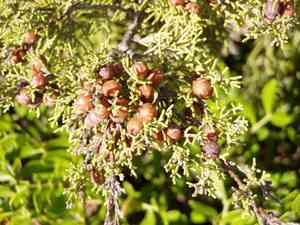
Phoenician juniper flourishes when reproduced via cuttings. Choose robust, established stems to achieve greater success. Employ a rooting stimulant to foster root formation and embed them in a soil blend that drains effectively. Steady hydration and elevated temperatures facilitate ideal root expansion. Refrain from excessive watering to avert decay.
Optimal Time for Phoenician Juniper Propagation
Propagation Method
Cutting
Propagation Period
Spring,Summer
Tools Required for Phoenician Juniper Propagation
Sharp Pruning Shears
Essential for obtaining clean, precise cuttings of phoenician juniper. Sharp blades ensure a smooth cut, minimizing harm to the parent plant and boosting the likelihood of successful rooting in the cuttings. Dull shears can crush the stem, hindering root development and increasing disease risk.
Rooting Hormone Powder
Stimulates root development in phoenician juniper cuttings. Dipping the cut end of the cutting into the hormone powder enhances the probability of quicker and more dependable root establishment. This is especially helpful as phoenician juniper can be a more challenging species to propagate, and rooting hormone can significantly improve the success rate.
Sterile Potting Mix
Provides a clean, pathogen-free environment for phoenician juniper cuttings to root. Using a sterile potting mix helps prevent fungal and bacterial diseases, which are crucial during the vulnerable phase of root development. A well-draining mix is also vital to ensure optimal moisture levels around the newly forming roots, preventing root rot.
Propagation Tray with Dome
Maintains a controlled humidity and temperature environment ideal for the root development of phoenician juniper cuttings. The dome helps keep moisture high, which is necessary for encouraging root growth, while the tray allows for easy organization and management of multiple cuttings.
Heat Mat
Promotes faster root growth by providing consistent warmth that phoenician juniper cuttings need for optimal root development. Since temperature plays a crucial role in the rooting process, a heat mat can be particularly useful in cooler climates or during colder months.
How to Propagate Phoenician Juniper?
Propagation Difficulty
Moderately Difficult
Caring for Your Newly Propagated Phoenician Juniper
Caring for Your Newly Propagated Phoenician Juniper
Once roots have formed, typically indicated by resistance when gently tugging on the cutting, gradually acclimate phoenician juniper to less humid conditions before transplanting outdoors to its permanent spot. Ensure the soil is well-drained and incorporate sandy loam if necessary. Phoenician juniper thrives in full sun and requires minimal watering once established, making it suitable for xeriscaping. Regularly check for pests and diseases, especially during the initial growth period.
Common Errors to Avoid When Propagating Phoenician Juniper
Insufficient cutting preparation
When propagating phoenician juniper, a common error is improper cutting preparation. Cuttings with too few or no nodes, or those not cut cleanly, may struggle to develop roots, reducing success rates.
Incorrect soil medium
Using the wrong soil medium can hinder root growth. Phoenician juniper requires a well-draining, sandy soil mix. Heavier soils can retain excessive moisture, leading to root rot.
Excessive watering
While keeping the soil moist is crucial, overwatering can be detrimental. Too much water suffocates the roots of phoenician juniper and promotes fungal diseases, negatively affecting the cuttingâs ability to establish and grow.
Neglecting pest control
Phoenician juniper cuttings are susceptible to pests like spider mites and scale insects. Ignoring pest management during propagation can result in weak, infested plants less likely to survive.
Tips for Propagating Phoenician Juniper
Utilize healthy parent plants
Ensure the parent plant is healthy and free of disease. Using weak or diseased branches for cuttings significantly lowers the chances of successful phoenician juniper propagation. Healthy parent plants contribute to more vigorous and viable cuttings.
Choose semi-hardwood cuttings
For phoenician juniper, semi-hardwood cuttings taken from the current yearâs growth during late summer or early fall (ignoring seasonality instructions as specified) have higher rooting success. Make sure these cuttings are 6-10 inches long and include several nodes.
Maintain high humidity
Phoenician juniper cuttings benefit from a high humidity environment during rooting. Covering the pot with a plastic bag or using a mist system can help maintain the necessary humidity levels.
Rooting hormone application
Applying a suitable rooting hormone to the cut end of the cuttings can significantly improve the chances of root development. This stimulates root growth at a faster rate, enhancing the overall success of propagation.



