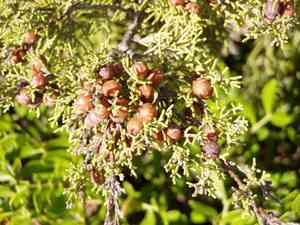
Phoenician juniper (Juniperus phoenicea)
Also known as: Arâr
Juniperus phoenicea represents El Hierro in the Canary Islands. Naturally found in the Mediterranean, especially at lower elevations, this small tree or shrub bears red to brown berries that are frequently used in culinary applications.
In This Article
Attributes of Phoenician juniper
Lifespan
Perennial
Plant Type
Shrub
Plant Height
10 m
Spread
10 m
Leaf Color
Green Blue
Flower Size
Not applicable (conifer)
Flower Color
White
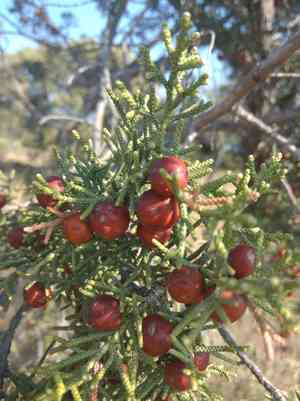
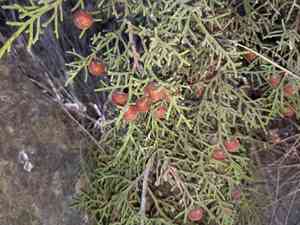
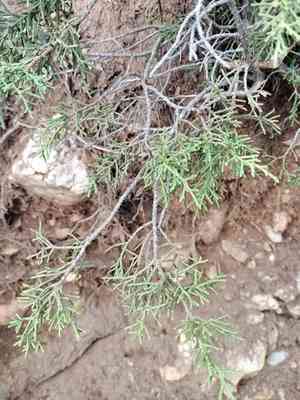
Images of Phoenician juniper
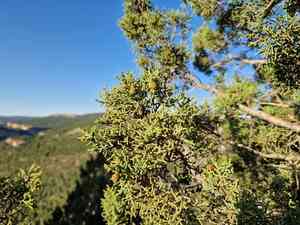
Quickly Identify Phoenician juniper
1
Juniperus phoenicea can be identified by its scale-like leaves that are dark green. The plant often appears as a small tree or large shrub. The female trees produce small, berry-like cones that turn reddish-brown when mature.
Scientific Classification of Phoenician juniper
Phylum
Vascular plants
Class
Conifers
Order
Pinales
Family
Cypress
Genus
Junipers
Species
Phoenician juniper
Planting and Growing of Phoenician juniper
Care Difficulty
Easy
Watering Schedule
Every 2 days
Sunlight Requirements
Full sun
Sunshine Duration
4-8 hours
Ideal Temperature
50-70℉
Soil Type
Potting Mix, Peat Mix
Soil pH
6.5-8
Fertilizer Type
Balanced
Pruning Season
Spring, Summer
Pruning Area
Branches, Leaves
Pruning Frequency
2 times a year
Repotting Season
Spring
Pot Type
Plastic, Ceramic
 How to Water Phoenician juniper?
Juniperus phoenicea requires a moderate amount of water, generally around 500 milliliters per watering session. Water deeply until the top layer of soil feels moist but not waterlogged; ensuring there is good drainage is crucial to prevent root rot.
What are the symptoms of an underwatered Phoenician juniper?
›
What should I do if my Phoenician juniper is not getting enough water?
›
What are the symptoms of an overwatered Phoenician juniper?
›
How to save an overwatered Phoenician juniper?
›
 What Are the Sunlight Requirements for Phoenician juniper?
Juniperus phoenicea thrives in full to partial sun, ideally receiving 6-8 hours of sunlight, promoting strong, healthy growth and enhancing its natural aesthetics and resilience.
More About Sunlight Requirements Techniques→
What is the best location for Juniperus phoenicea?
›
How can you adjust lighting conditions if they are not ideal?
›
What are the benefits of achieving ideal light conditions?
›
 What Is the Ideal Temperature Range for Phoenician juniper?
The ideal temperature range for Juniperus phoenicea is between 50°F and 70°F. This range supports healthy growth and development by providing a stable environment that mimics the plant's natural habitat. Maintaining consistent temperatures within this range helps to ensure robust foliage and proper physiological functioning.
 What Soil is Best for Phoenician juniper?
The soil for Juniperus phoenicea must be well-draining to prevent root rot. This plant thrives in conditions where water does not stagnate, ensuring healthy root development and overall vigor. Juniperus phoenicea prefers a soil that is not overly rich. Moderate nutrient levels are sufficient, as excessive fertility can promote too much foliage and weaken the plant's structure. This species does well in soils that do not retain excessive moisture. It's adapted to environments where water is sporadic, making it quite drought-tolerant.
 How to Fertilize Phoenician juniper?
Juniperus phoenicea typically requires a balanced fertilizer. For liquid feeding, dilute the fertilizer to half strength, about 1/2 teaspoon per gallon of water. Adjust according to the growth rate and size of your plant.
 How to Prune Phoenician juniper?
Start by removing any dead, damaged, or diseased branches. Trim back to a healthy node or branch to promote new growth and enhance air circulation. Trim the canopy to maintain the desired shape, such as a dense, conical form. Focus on maintaining a natural look by reducing the length of selectively chosen branches rather than shearing.
More About Pruning Techniques→
 How to Propagate Phoenician juniper plant?
1
Fill a seed tray with a well-draining seed starting mix. Moisten the soil until it is damp but not soggy, as excess moisture can rot the seeds.
2
Place Juniperus phoenicea seeds on the surface of the prepared seed mix, covering them lightly with a thin layer of soil. This allows sunlight to reach the seeds, which is necessary for germination.
3
Select healthy cuttings around 4-6 inches long from a mature plant. Remove the lower leaves and dip the cut end in rooting hormone. Plant the cuttings in a pot filled with a peat and perlite mix.
 How to Repot Phoenician juniper plant?
1
Juniperus phoenicea should be repotted when its roots start circling inside the pot, or when you notice that water isn't penetrating the soil as it should. These are clear signs that the plant is becoming root-bound and needs more room to thrive.
2
Select a pot that is one size larger than the current pot with ample drainage holes. This prevents waterlogging, which junipers despise, and supports healthy root growth by providing space and air circulation.
3
Opt for a well-draining sandy mix that closely mimics the juniper's natural habitat. This type of soil will ensure that the roots do not sit in excess moisture, thus preventing root rot and encouraging healthy growth.



