How to Propagate Myrtleleaf St. John's wort?
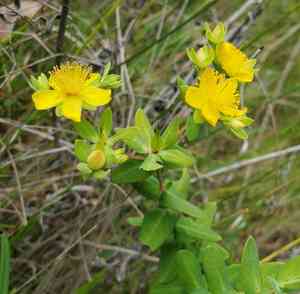
Hypericum myrtifolium originates from the southeastern regions of the United States and thrives in bright, adequately drained locations. For reproduction, taking cuttings proves successful. Employ semi-hardwood cuttings during the summer season, confirming the donor plant's robust health. Sustain a damp, but not saturated, medium for root formation. Vigilance against infestations and ailments is crucial throughout its development. Improve the soil with organic material to foster stronger root growth.
When Is the Optimal Time to Propagate Myrtleleaf St. John's Wort?
Propagation Method
Cutting
Propagation Period
Spring,Summer
What Equipment Is Utilized in Myrtleleaf St. John's Wort Propagation?
Pruning Shears
Employed to obtain cuttings from healthy parent plants by making precise cuts. This minimizes harm to both the parent and the cutting, which is vital for initial success.
Rooting Hormone
Applied to the severed end of the cutting to stimulate root development, enhancing the likelihood of successful propagation.
Propagation Trays
Offers a controlled setting for cuttings with proper drainage and space, ensuring the cuttings remain upright and have access to necessary nutrients.
Misting Bottle
Maintains moisture levels around the cuttings to prevent dehydration, crucial for water retention in the initial phases.
Sterilized Potting Mix
Provides a sterile, nutrient-rich medium for cuttings to establish roots, reducing disease risk and fostering a healthy growth environment.
Clear Plastic Dome
Used to cover propagation trays to create a miniature greenhouse effect that maintains humidity and warmth, encouraging root formation.
Heating Mat
Positioned beneath the propagation tray to supply bottom heat, which is particularly advantageous for root initiation and growth in cuttings.
Sharp Knife
Essential for precise cuts when pruning shears might be too large, ensuring clean and appropriate sizing of the cuttings.
How to Propagate Myrtleleaf St. John's Wort?
Propagation Difficulty
Moderately Difficult
How to Care for Your Newly Propagated Myrtleleaf St. John's Wort?
How to Care for Your Newly Propagated Myrtleleaf St. John's Wort?
Following propagation, maintain consistent moisture levels and avoid waterlogging. Myrtleleaf St. John's wort prefers well-draining soil and partial to full sun exposure. Prune regularly to shape and encourage denser growth, and monitor for pests or diseases. Apply mulch around the plant's base to retain soil moisture and regulate temperature. With proper care, myrtleleaf St. John's wort will flourish and develop into a robust specimen.
Common Errors to Avoid When Propagating Myrtleleaf St. John's Wort
Using unsuitable soil
Inappropriate soil can impede root development and affect nutrient uptake. Myrtleleaf St. John's wort thrives in well-draining, slightly acidic to neutral soil. Compacted or heavy soils can retain excessive moisture, leading to root rot.
Overwatering
Myrtleleaf St. John's wort is prone to root rot if overwatered. Excessive water can also deplete essential nutrients from the soil, weakening the plant and hindering its growth.
Incorrect cutting technique
Employing improper cutting methods, such as dull tools or incorrect cutting angles, can damage plant tissue, reducing the chance of successful rooting and promoting infection.
Inadequate light exposure
Providing too little light can prevent myrtleleaf St. John's wort cuttings from photosynthesizing effectively, resulting in weak or stunted growth. Conversely, excessive direct sunlight can scorch the cuttings.
Neglecting humidity levels
Failing to maintain adequate humidity can dry out the cuttings, leading to unsuccessful propagation. Insufficient humidity hinders root initiation and growth.
Not using rooting hormone
Skipping rooting hormone can slow down the rooting process. Rooting hormone promotes faster and more vigorous root development.
Tips For Propagating Myrtleleaf St. John's Wort
Choose the right soil
Utilize well-draining, slightly acidic to neutral soil for optimal results. Adding perlite or sand can enhance drainage and aeration.
Water moderately
Keep the soil consistently moist but not waterlogged. Allow the top inch of soil to dry out between waterings to prevent root rot.
Use clean, sharp tools
Sterilize pruners or knives before taking cuttings to minimize infection risk. Make clean cuts at a 45-degree angle just below a node to encourage rooting.
Provide indirect light
Place cuttings in a bright area with indirect light. Avoid direct sunlight, which can be too intense and harm delicate cuttings.
Maintain high humidity
Cover cuttings with a plastic bag or place them in a propagation tray with a dome to retain moisture. Mist the cuttings regularly to maintain a humid environment.
Apply rooting hormone
Dip the base of the cuttings in rooting hormone before planting to boost root development and increase the chances of successful propagation.



