How to Propagate Smooth rupturewort?
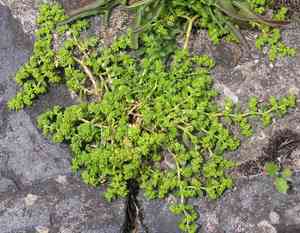
Herniaria glabra is a ground-covering perennial recognized for its thick leaves and resilience, flourishing in diverse substrates, such as stony and sandy varieties. For its propagation, employing cuttings is the most effective method. Select robust, non-blooming stems to enhance the likelihood of success. Cuttings ought to be harvested from strong shoots, carefully detached with a sterile, keen tool. Insert the cuttings into a potting blend that drains efficiently, making sure the nodes are submerged, as these are the locations where roots will emerge. Steady hydration and warmth facilitate the development of roots.
What Is the Best Time To Propagate Smooth Rupturewort?
Propagation Type
Cutting
Propagation Season
Spring,Summer
What Tools Are Used in Smooth Rupturewort Propagation?
Sharp Pruning Shears
Crucial for obtaining clean cuts from smooth rupturewort for propagation through cuttings. Sharp blades ensure precise and smooth cuts, vital for good wound healing and reducing infection risk. Properly trimmed stems help maintain the plant's health during the cutting process.
Rooting Hormone
Boosts the likelihood of successful root formation from smooth rupturewort cuttings. Applied to the fresh cut base of the stem, it accelerates root growth, aiding in the establishment of new plants and improving propagation success rates.
Sterile Potting Mix
Offers a safe, uncontaminated environment for new smooth rupturewort cuttings, essential for preventing fungal or bacterial diseases during early root development. A well-draining mix promotes necessary aeration and moisture retention, ideal for root growth.
Seed Trays or Small Pots
Used to house new smooth rupturewort cuttings as they develop roots. These containers should offer sufficient space for initial growth while remaining compact enough to maintain a favorable microenvironment around the cuttings.
Plastic Covers or Humidity Domes
Help maintain a high humidity environment around new smooth rupturewort cuttings, crucial for preventing them from drying out before roots can establish. These covers also aid in maintaining stable temperature conditions around the propagation medium.
Labeling Materials
Important for organizing and tracking the progress of each smooth rupturewort cutting, especially when propagating multiple specimens simultaneously. Clear labeling allows for better monitoring of growth stages and necessary care adjustments.
How to Propagate Smooth Rupturewort?
Propagation Type
Easy
How to Care for Your Newly Propagated Smooth Rupturewort?
How to Care for Your Newly Propagated Smooth Rupturewort?
Once roots are established, gradually introduce the young smooth rupturewort to less humid conditions by removing the cover for increasing periods over a week. Transplant them into a larger pot or a garden spot that receives full sun to part shade and has well-draining soil. Water the plants regularly, but allow the soil to dry slightly between waterings. Avoid overwatering to prevent root rot. Smooth rupturewort is drought resistant once established, making it low maintenance in suitable climates.
Common Mistakes to Avoid When Propagating Smooth Rupturewort
Overwatering
Excessive water can lead to root rot, hindering smooth rupturewort's growth and risking plant death from fungal infections.
Too deep planting
Planting smooth rupturewort cuttings or seeds too deeply can prevent them from receiving adequate light and air, essential for root development and sprouting.
Neglecting to provide drainage
Insufficient drainage can cause water to accumulate at the base of smooth rupturewort, increasing the risk of fungal diseases.
Overcrowding
Planting smooth rupturewort cuttings or seeds too close together can result in poor air circulation and competition for nutrients, impairing overall plant health.
Tips For Propagating Smooth Rupturewort
Soil preparation
Use well-drained soil mixed with sand or perlite to promote healthy root development for smooth rupturewort.
Appropriate cutting size
Take cuttings of smooth rupturewort that are 2-4 inches in length to ensure enough leaf nodes for rooting and growth.
Humidity control
Maintain a humid environment for the initial stages of smooth rupturewort's cutting propagation to prevent desiccation.
Light exposure
Provide smooth rupturewort with adequate bright, indirect sunlight to support photosynthesis without causing leaf burn.



