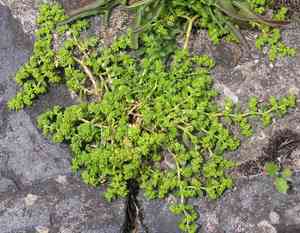
Smooth rupturewort (Herniaria glabra)
Also known as: Glabrous rupturewort
Creeping Thyme is a garden-worthy carpet plant, valued for its softness. This perennial groundcover is delightful to walk on and emits a musky fragrance when stepped on. It remains low, not exceeding 8 cm in height, and adds winter interest as its green foliage transitions to bronze or red.
In This Article
Attributes of Smooth rupturewort
Lifespan
Perennial, Annual, Biennial
Plant Type
Herb
Plant Height
1 cm to 3 cm
Spread
30 cm
Leaf Color
Green Bronze
Flower Size
1 mm to 1.8 mm
Flower Color
Green
Images of Smooth rupturewort

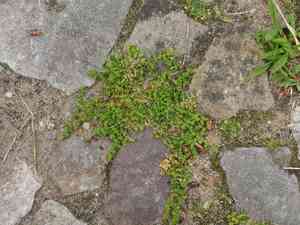
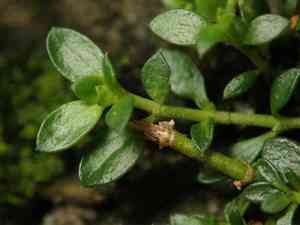
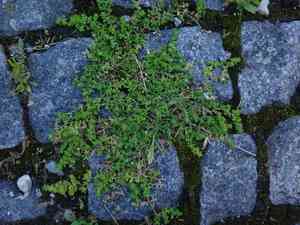
Quickly Identify Smooth rupturewort
1
Herniaria glabra can be identified by its small, rounded leaves that form dense mats close to the ground. The stems are often reddish and the tiny greenish flowers are inconspicuous. The plant generally lacks petals, and the flowers are clustered in the leaf axils.
Scientific Classification of Smooth rupturewort
Phylum
Vascular plants
Class
Dicotyledons
Order
Caryophyllales
Family
Pink
Genus
Herniaria
Species
Smooth rupturewort
Planting and Growing of Smooth rupturewort
Care Difficulty
Easy
Watering Schedule
Every 4 days
Sunlight Requirements
Full sun
Sunshine Duration
6-10 hours
Ideal Temperature
60-75℉
Soil Type
Potting Mix, Peat Mix
Soil pH
6.5-7.5
Fertilizer Type
Balanced
Pruning Season
Spring, Summer
Pruning Area
Branches, Leaves
Pruning Frequency
2 times a year
Repotting Season
Spring
Pot Type
Plastic, Ceramic
 How to Water Smooth rupturewort?
For Herniaria glabra, ensure that the soil is thoroughly moistened without becoming waterlogged. A good rule of thumb is to provide around 250 milliliters of water per session, enough to seep through the soil but ensure it doesn't pool excessively.
What are the symptoms of an underwatered Smooth rupturewort?
›
What should I do if my Smooth rupturewort is not getting enough water?
›
What are the symptoms of an overwatered Smooth rupturewort?
›
How to save an overwatered Smooth rupturewort?
›
 What Are the Sunlight Requirements for Smooth rupturewort?
Herniaria glabra thrives best in full sun to partial sun, enhancing its growth and appearance. Ideal lighting ensures a healthy plant with vibrant colors and strong structural development.
More About Sunlight Requirements Techniques→
Obtaining Ideal Sun Exposure
›
Implementation of Ideal Light
›
Benefits of Ideal Lighting
›
 What Is the Ideal Temperature Range for Smooth rupturewort?
The ideal temperature range for Herniaria glabra lies between 60°F and 75°F. Within this range, the plant can efficiently perform photosynthesis, develop healthy foliage, and thrive optimally. Maintaining these temperatures ensures the plant's cellular processes occur at a steady pace without external stressors affecting growth.
 What Soil is Best for Smooth rupturewort?
Herniaria glabra thrives in well-draining soils, which prevent root rot by allowing excess water to escape. This feature keeps the roots healthy and minimizes the risk of fungal diseases. The plant prefers soils rich in nutrients, but it can still perform well in moderately fertile soils. Balanced nutrient availability supports vigorous growth and enhances its lush green appearance. Herniaria glabra prefers a sandy or loamy texture, which ensures good aeration and allows roots to spread easily. This improves nutrient uptake and fosters strong developmental roots.
 How to Fertilize Smooth rupturewort?
Herniaria glabra requires a balanced approach to fertilizer application. When using liquid fertilizers, apply at half-strength to avoid over-fertilization. This plant thrives with minimal nutrients, so err on the side of caution. For solid fertilizers, use a teaspoon of a slow-release product once every four months to provide consistent nourishment without overwhelming the plant.
 How to Prune Smooth rupturewort?
Begin by selecting a pair of sharp, sterilized scissors or garden shears. Look for any leggy, untidy, or discolored stems. Trim these back gently, cutting just above a set of leaves or a branching point to promote bushier growth. Remember to shape the plant to maintain an even, carpet-like surface, ensuring you do not remove more than one-third of the growth at a time. In spring, focus on removing any winter-damaged or dead foliage to stimulate new growth. Summer pruning is about maintaining shape and size while encouraging lushness, especially in preparation for autumn. During autumn, a light trim will help in managing growth and preparing it for the cooler months. Avoid harsh cutting in winter to prevent stress.
More About Pruning Techniques→
 How to Propagate Smooth rupturewort plant?
1
Start by filling the seed tray with a well-draining potting mix. Sprinkle Herniaria glabra seeds over the surface and lightly cover them with a thin layer of soil. Water gently and maintain moisture for germination.
2
Select healthy stems and cut 4 to 6-inch sections just below a node. Remove lower leaves and dip the cut end in rooting hormone to enhance root development before planting in moist soil.
3
Dig up the matured Herniaria glabra plant and carefully divide the roots into smaller sections. Ensure each section has a healthy root system, and replant immediately in prepared soil.
 How to Repot Smooth rupturewort plant?
1
Look for signs like roots protruding through drainage holes, slowed growth, or soil that dries out too quickly. These indicators signal that it's time to give Herniaria glabra a roomier home for optimal growth.
2
Select a pot slightly larger than the current one, ideally with good drainage holes. This allows excess water to escape, thus preventing root rot, while giving the roots ample space to spread out and thrive.
3
Opt for well-draining, sandy soil to mimic the plant's natural habitat. Such soil ensures adequate aeration and prevents waterlogging, fostering healthy root development and minimizing the risk of fungal diseases.



