How to Propagate Velvet raisin?
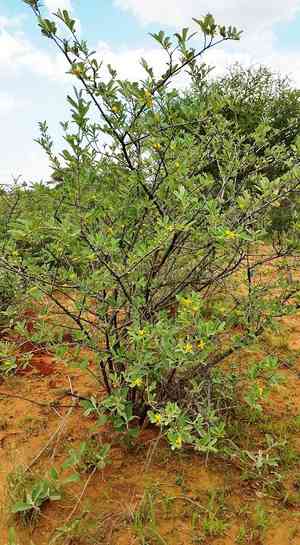
Grewia flava originates from southern Africa and is recognized for its ability to withstand arid conditions. To propagate, choose robust cuttings, preferably from partially matured woody stems. Verify that each cutting possesses a minimum of one node and a few leaves. Submerge the severed end in rooting compound prior to placing it in a substrate that drains effectively. Steady dampness without saturation, along with luminous, diffused illumination, represent optimal circumstances for root formation. Anticipate root growth within roughly 4 to 6 weeks.
Optimal Period for Velvet Raisin Propagation
Propagation Type
Cutting
Propagation Season
Spring,Summer
Tools Required for Velvet Raisin Propagation
Sharp Pruning Shears
These are crucial for obtaining clean cuttings from velvet raisin's parent plant. A precise cut minimizes disease risk and aids in efficient wound healing, fostering better root development.
Rooting Hormone
This compound aids in speeding up root formation on velvet raisin's cuttings. The hormone promotes rapid development of root cells, enhancing the likelihood of successful propagation.
Propagation Tray
These containers offer a controlled setting for rooting the cuttings. They maintain consistent moisture levels and expose the cuttings to indirect light, which is vital for velvet raisin's initial growth phases.
Misting Bottle
A misting bottle ensures cuttings remain moist without becoming saturated. Consistent moisture is essential for velvet raisin's cuttings to root correctly and avoid dehydration.
Heat Mat
A heat mat supplies warmth to the base of the propagation tray, which can stimulate root growth. For velvet raisin, warmth is critical as it mimics the natural conditions the plant thrives in.
High-Quality Potting Mix
A well-draining potting medium is necessary to prevent waterlogging and root rot. For velvet raisin, a mix that retains some moisture while allowing excess water to escape is ideal.
Plastic Covers or Humidity Domes
These coverings maintain humidity levels around the cuttings, which is essential for reducing water loss and preventing the cuttings from drying out. For velvet raisin, maintaining high humidity is crucial for successful root development.
How to Propagate Velvet Raisin?
Propagation Type
Moderately Difficult
Caring for Your Newly Propagated Velvet Raisin
Caring for Your Newly Propagated Velvet Raisin
After propagation, ensure velvet raisin is placed in an area receiving full sun to partial shade. Water regularly, allowing the soil to dry slightly between waterings. Fertilize lightly during the growing season with a balanced fertilizer. Prune as needed to maintain shape and encourage bushier growth. Protect from extreme temperatures and pests when necessary.
Common Mistakes to Avoid When Propagating Velvet Raisin
Overwatering
Excessive water can lead to root rot and fungal diseases as velvet raisin's roots prefer well-drained soil.
Improper soil choice
Using dense or clay-rich soil hinders drainage, causing suffocation and decay of velvet raisin roots.
Insufficient light
Lack of adequate light results in weak growth and poor rooting, impeding the establishment of velvet raisin.
Excessive handling
Handling cuttings or seedlings too often can cause stress and damage delicate roots and stems.
Inconsistent temperatures
Exposing velvet raisin to fluctuating temperatures can hinder germination and rooting, affecting overall plant health.
Tips For Propagating Velvet Raisin
Well-drained soil
Utilize a sandy or loamy soil mixture to ensure proper drainage and prevent waterlogging for velvet raisin.
Moderate watering
Water the plant sparingly, allowing the soil to dry out slightly between waterings to prevent root rot.
Sufficient lighting
Place velvet raisin in a location with bright, indirect sunlight to promote healthy growth and strong rooting.
Minimal handling
Handle cuttings or seedlings gently and only when necessary to avoid unnecessary stress and damage.
Stable temperature
Maintain a consistent temperature to ensure optimal root development and overall health of velvet raisin.



