How to Propagate Shining cranesbill?
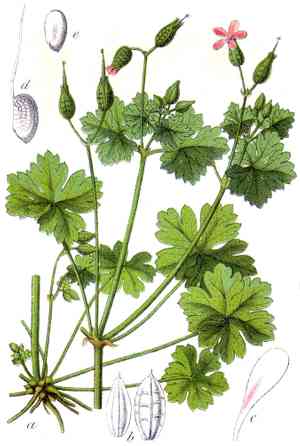
Geranium lucidum flourishes when reproduced through seeding in the optimal period of springtime. This species is quite simple to multiply, with robust seedlings indicating successful development. Ensure the use of porous soil to improve sprouting rates.
Optimal Time for Shining Cranesbill Propagation
Propagation Method
Seeding
Propagation Period
Spring
Essential Tools for Shining Cranesbill Propagation
Seed trays or pots
Containers like seed trays or pots are vital for planting shining cranesbill seeds. They offer a controlled setting for seed germination. Their size and depth should match the seeds, allowing ample room for initial root growth.
Sterile potting mix
A premium, sterile potting mix is crucial for preventing disease and fostering healthy development during the initial phases of shining cranesbill propagation. This medium should possess good drainage and aeration properties to aid root establishment without being excessively wet or dry.
Watering can with a fine rose
A watering can equipped with a fine rose attachment ensures gentle and uniform watering, supplying the necessary moisture for shining cranesbill seeds without dislodging them. It is essential for maintaining proper soil moisture levels without causing erosion or seed displacement.
Plastic wrap or humidity dome
Plastic wrap or a humidity dome creates a miniature greenhouse effect, helping to maintain high humidity and a consistent temperature around germinating shining cranesbill seeds. This promotes faster germination and prevents the soil from drying out.
Labels and markers
Labels and markers are necessary for tracking sowing dates and identifying seedlings. They assist in monitoring growth progress and are especially useful when propagating various plant species alongside shining cranesbill.
Micro-trowel or dibber
A micro-trowel or dibber helps create small indentations in the potting mix for sowing shining cranesbill seeds. It ensures seeds are placed at the correct depth, which is important for optimal germination rates.
Pruning shears (for cuttings)
If propagation involves taking cuttings from a mature shining cranesbill plant, a pair of sterilized pruning shears is needed. These shears should be sharp to make clean cuts that heal quickly and minimize the risk of disease.
Rooting hormone (optional)
Rooting hormone can be utilized to stimulate root development in cuttings (if this method is employed for shining cranesbill). The hormone enhances the likelihood of successful rooting by accelerating the process and producing a stronger root system.
How to Propagate Shining Cranesbill
Propagation Method
Seeding
Difficulty Level
Easy
Caring for Your Newly Propagated Shining Cranesbill
Caring for Your Newly Propagated Shining Cranesbill
Once shining cranesbill seedlings have developed their first true leaves, thin them if needed to prevent overcrowding. Transplant them to their permanent spot in an area with partial to full sunlight and moist, well-drained soil. Water consistently, especially during dry spells, to establish a robust root system. As a resilient plant, shining cranesbill will require minimal upkeep once established, but regular deadheading can encourage extended blooming and prevent unwanted self-seeding. Monitor for pests and diseases, though shining cranesbill is generally hardy when planted in suitable conditions.
Common Errors to Avoid When Propagating Shining Cranesbill
Overwatering cuttings
Excess moisture can lead to rot in shining cranesbill cuttings. This hinders root development and can potentially kill the propagation material.
Poor cutting selection
Using unhealthy or non-viable parts of shining cranesbill can result in rooting and growth failures. Weak or diseased cuttings do not propagate effectively.
Ignoring soil conditions
Shining cranesbill requires specific soil conditions to flourish. Failing to provide the correct soil mixture can lead to poor root development and plant growth.
Neglecting humidity levels
Shining cranesbill cuttings need a certain level of humidity to root, but too much can encourage mold growth, while too little can cause the cuttings to dry out.
Overcrowding pots
Planting shining cranesbill cuttings too close together can restrict access to nutrients, light, and airflow, leading to competition and poor growth.
Tips for Propagating Shining Cranesbill
Healthy cutting selection
Choose robust, healthy stems of shining cranesbill for cuttings to ensure vigorous growth and higher propagation success rates.
Appropriate soil mix
Utilize a well-draining soil mix for shining cranesbill that retains sufficient moisture without becoming waterlogged, to encourage strong root development.
Controlled watering
Maintain a balance by keeping the soil moist but not saturated to prevent root rot and provide an optimal environment for shining cranesbill cuttings to root.
Humidity balance
Create a favorable microclimate with balanced humidity for shining cranesbill, using methods such as covering cuttings with a plastic dome to avoid excess moisture or dehydration.
Spacing cuttings
Provide shining cranesbill cuttings with ample space in their growing medium to ensure they have adequate access to light, nutrients, and air circulation.



