How to Propagate Greater fringed gentian?
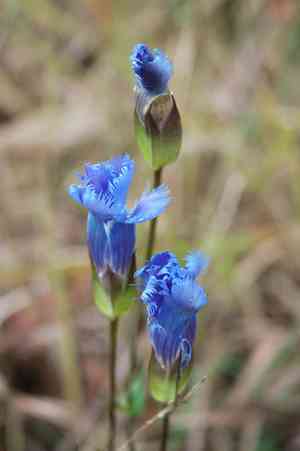
The most effective method for propagating greater fringed gentian involves seeding. To achieve successful cultivation, utilize newly harvested seeds and embed them in a well-drained, hydrated substrate. Maintaining consistent moisture in the growing medium is vital for the sprouting process. Position the seeds superficially, as they necessitate illumination for peak development. Gentle management of the fragile young plants during relocation can significantly improve their chances of survival.
Optimal Time for Greater Fringed Gentian Propagation
Propagation Method
Seeding
Propagation Period
Spring
Tools Required for Greater Fringed Gentian Propagation
Seed trays or flats
Seed trays or flats are vital for the uniform distribution and planting of greater fringed gentian's seeds. These trays must have fine drainage holes to prevent waterlogging, which is essential to avoid seed decay. Their shallow depth also allows for regulated soil moisture, beneficial for greater fringed gentian germination.
Fine-grained germination mix
This specific soil blend helps maintain proper moisture levels without becoming saturated. It is especially advantageous for greater fringed gentian as it supports delicate seedlings by offering a stable medium that doesn't hinder the growth of tiny roots. The fine texture also ensures close seed-to-soil contact, boosting germination rates.
Misting bottle
Used to gently moisten greater fringed gentian seeds without dislodging them, a misting bottle helps maintain the ideal humidity levels necessary for seed germination. The fine mist ensures the soil is uniformly damp, promoting consistent germination, which is crucial for greater fringed gentian seeds that need constant moisture without being waterlogged.
Clear plastic cover
A clear plastic cover placed over seed trays creates a miniature greenhouse effect, which benefits greater fringed gentian. This cover aids in maintaining a high humidity environment required for greater fringed gentian seeds to germinate successfully. It also keeps the temperature stable, which can improve germination rates.
Plant labels and marker
Essential for tracking the planting date and type of greater fringed gentian, plant labels assist in monitoring growth and development stages. Accurate labeling is critical for documenting successful propagation methods and conditions for greater fringed gentian.
How to Propagate Greater Fringed Gentian?
Propagation Type
Simple
Caring for Your Newly Propagated Greater Fringed Gentian
Caring for Your Newly Propagated Greater Fringed Gentian
Once greater fringed gentian sprouts, provide consistent watering to keep the soil uniformly moist. Position it in an area that mimics its natural, cool, and damp habitat, such as a partially shaded spot. Avoid excessive watering to prevent root rot, and transplant carefully when seedlings are large enough to handle, ensuring minimal root disturbance. Fertilization is usually unnecessary, but lightly apply a balanced, slow-release fertilizer once a year in early spring if growth appears stunted.
Common Errors to Avoid When Propagating Greater Fringed Gentian
Overwatering
Watering greater fringed gentian too often can lead to root rot, as this species prefers well-drained soil. Excessive moisture around the roots may cause fungal diseases that hinder growth and can ultimately kill the plant.
Insufficient light exposure
Providing inadequate light for greater fringed gentian can impede its growth. While greater fringed gentian thrives in partial shade, too little light can reduce its flowering capacity and overall vitality.
Using soil with poor drainage
Planting greater fringed gentian in soil that retains too much water can severely impact its health. Poor drainage can cause water to accumulate around the roots, leading to similar issues as overwatering, such as root rot.
Tips For Propagating Greater Fringed Gentian
Utilize fresh seeds
For successful germination, it is vital to sow fresh seeds of greater fringed gentian soon after collection. Older seeds have significantly lower germination rates, which can result in unsuccessful propagation efforts.
Provide appropriate shading
While greater fringed gentian requires good light, excessive direct sunlight can be harmful. Providing dappled or partial shade, especially during the hottest parts of the day, will aid in optimal growth and development.
Replicate natural conditions
To enhance the germination and growth rates of greater fringed gentian, simulate its natural growing conditions as closely as possible. This involves using well-draining soil, maintaining moderate moisture levels, and ensuring a cool rooting environment.



