How to Propagate Whitish gentian?
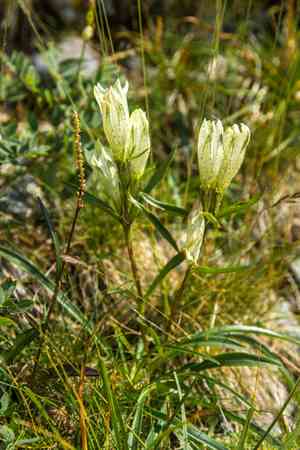
Whitish gentian, a high-altitude flora flourishing in cooler climates, predominantly reproduces via its seeds. Cultivating whitish gentian effectively from seeds entails planting them in a substrate that is both well-draining and damp. Chilling the seeds can boost their sprouting rate, replicating the essential frigid environment of their natural surroundings. Following germination, young plants need progressive adaptation to external environments to guarantee vigorous growth.
When Is the Optimal Time to Propagate Whitish Gentian?
Propagation Method
Sowing
Propagation Period
Spring
What Equipment Is Used in Whitish Gentian Propagation?
Seed trays
Seed trays are vital for uniformly distributing and organizing whitish gentian seeds during the initial propagation phase. These trays enable precise regulation of soil conditions and moisture levels, which is critical for whitish gentian germination. They help ensure each seed has sufficient space to develop without competition, simplifying subsequent transplantation stages.
Fine soil mix or peat pellets
A fine soil mix or peat pellets are advantageous for whitish gentian due to its need for a well-drained yet moist medium. This substrate type supports the delicate roots of whitish gentian during germination and early growth by offering an ideal balance of aeration and moisture retention, crucial for root development and overall plant vitality.
Misting bottle
A misting bottle allows for gentle irrigation that will not disturb whitish gentian seeds or young seedlings. Controlled moisture application is essential for the germination and initial growth phases of whitish gentian, helping maintain necessary humidity around seedlings without causing waterlogging, which could lead to fungal diseases or seed rot.
Labels and markers
Labels and markers are important tools in the propagation process of whitish gentian to track sowing dates and identify seedling varieties, especially when propagating multiple species. This practice aids in maintaining a proper propagation schedule and monitoring growth progress, which is essential for timely care and successful cultivation.
How to Propagate Whitish Gentian?
Propagation Difficulty
Easy
How to Care for Your Newly Propagated Whitish Gentian?
How to Care for Your Newly Propagated Whitish Gentian?
Following propagation, gradually introduce whitish gentian seedlings to their permanent outdoor environment if they were started indoors. Ensure they are planted in moist, well-draining soil with partial shade. As whitish gentian is sensitive to moisture levels, keep the soil consistently damp but not waterlogged. During the growing season, apply a balanced, slow-release fertilizer to support growth. Monitor for pests and diseases, especially during cooler, damp periods.
Common Errors to Avoid When Propagating Whitish Gentian
Overwatering
Watering whitish gentian too often can lead to root rot, as this species thrives in well-drained soils. Excessive soil moisture hinders the plant's ability to absorb essential nutrients and can cause roots to decay, compromising the plant's overall health and propagation success.
Deep planting
Planting whitish gentian seeds or root cuttings too deeply can prevent germination or impede root establishment. Whitish gentian requires shallow planting to ensure adequate light exposure and air circulation, which are critical for seed germination and root growth.
Using dense soil
Employing a soil mix that is too dense or clay-heavy can obstruct drainage and restrict root growth. This error can severely impact the root development of whitish gentian, as the species requires loose, well-draining substrates to flourish.
Tips For Propagating Whitish Gentian
Use sandy substrate
Utilizing a sandy, well-draining substrate for whitish gentian is crucial. This soil type facilitates proper drainage and prevents waterlogging, promoting healthier root development and more effective propagation.
Moderate watering
Maintaining a balanced watering regimen for whitish gentian, ensuring the soil is moist but not saturated, is essential. This approach prevents overwatering, thereby reducing the risk of root rot and supporting healthier plant growth.
Surface sowing
For seed propagation, surface sowing is recommended for whitish gentian. Scatter the seeds on the soil surface and lightly press them in rather than covering them with soil. This method maximizes light exposure, which is necessary for the germination of these light-dependent seeds.



