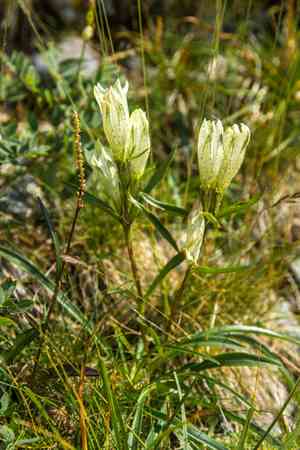
Whitish gentian (Gentiana algida)
Also known as: Alpine Gentian, Whitish Gentian
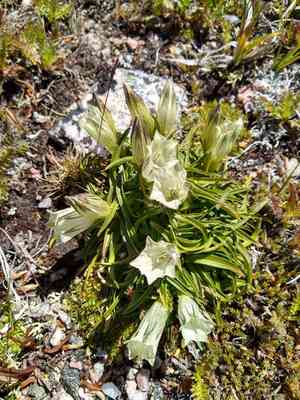
The whitish gentian (Gentiana alba) is an adaptable perennial that flourishes in open prairies, meadows, and savannas. Distinguished by its pale trumpet-shaped flowers, it grows on sturdy stems with lance-shaped leaves forming a dense basal rosette. This plant favors slightly acidic to neutral, well-drained soils and does well in full sun to partial shade, reflecting its resilience and preference for less extreme environments compared to its alpine relatives.
In This Article
Attributes of Whitish gentian
Lifespan
Perennial
Plant Type
Herb
Plant Height
5-20 cm
Spread
10-15 cm
Leaf Color
Green
Flower Size
1-2 cm
Flower Color
White, Pale Blue
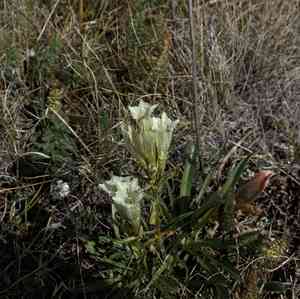
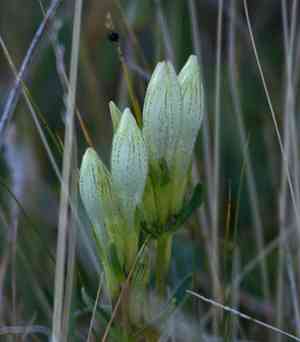
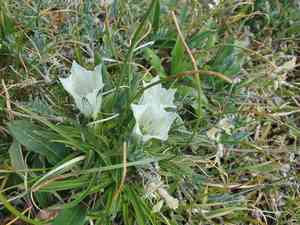
Images of Whitish gentian
Quickly Identify Whitish gentian
1
To identify Gentiana algida, look for a low-growing plant with narrow, lance-shaped leaves and white or pale blue star-shaped flowers. The flowers typically have fine lines or speckles. The plant grows in clumps and prefers moist, well-drained soils in alpine or subalpine meadows.
Scientific Classification of Whitish gentian
Phylum
Vascular plants
Class
Dicotyledons
Order
Gentianales
Family
Gentian
Genus
Gentian
Species
Whitish gentian
Planting and Growing of Whitish gentian
Care Difficulty
Hard
Watering Schedule
Every 2 days
Sunlight Requirements
Partial sun
Sunshine Duration
6-10 hours
Ideal Temperature
50-68℉
Soil Type
Potting Mix, Peat Mix
Soil pH
6.5-7.5
Fertilizer Type
Balanced
Pruning Season
Spring, Summer
Pruning Area
Branches, Leaves
Pruning Frequency
2 times a year
Repotting Season
Spring
Pot Type
Plastic, Ceramic
 How to Water Whitish gentian?
Gentiana algida requires moderate watering. The soil should be kept moist but not waterlogged, as overly soggy soil can lead to root rot. Water the plant thoroughly until water drains from the bottom of the pot, ensuring the moisture has reached the root zone but never leaving the plant in standing water.
What are the symptoms of an underwatered Whitish gentian?
›
What should I do if my Whitish gentian is not getting enough water?
›
What are the symptoms of an overwatered Whitish gentian?
›
How to save an overwatered Whitish gentian?
›
 What Are the Sunlight Requirements for Whitish gentian?
For Gentiana algida, a balance of dappled light is ideal, providing sufficient energy for photosynthesis without the risk of overheating. Optimal lighting ensures robust growth, vibrant flowers, and overall resilience.
What type of sunlight does Gentiana algida prefer?
›
How can I ensure my Gentiana algida gets ideal lighting?
›
What benefits does Gentiana algida get from ideal lighting?
›
 What Is the Ideal Temperature Range for Whitish gentian?
The ideal temperature range for Gentiana algida is between 50°F to 68°F. This alpine perennial thrives in cooler climates, where it can experience consistent temperatures that mimic its natural mountain habitat. Providing these conditions ensures optimal growth and flowering, as it is adapted to temperate zones.
 What Soil is Best for Whitish gentian?
Gentiana algida thrives in well-drained soil, preventing waterlogging that can lead to root diseases. Ensuring good drainage promotes healthy root development and enhances the plant's ability to absorb nutrients. This plant prefers soil with moderate fertility. Excessive nutrients can lead to lush foliage but fewer flowers, so balancing nutrient levels helps maintain a healthy plant with abundant blossoms. While drainage is crucial, retaining some moisture is essential for Gentiana algida, as it helps maintain hydration without causing rot. Mulching can aid in moisture retention, benefiting the plant's growth.
 How to Fertilize Whitish gentian?
For Gentiana algida, it is advisable to use minimal amounts of fertilizer, as it thrives in less nutrient-rich soils. Liquid fertilizers should be diluted to half the recommended strength, while solid fertilizers should be applied sparingly.
 How to Prune Whitish gentian?
The best time to prune Gentiana algida is in early Spring, before new growth begins, and again after the Summer bloom has finished. This timing helps to ensure that you are not cutting off any of the upcoming season’s budding flowers. Begin by removing any dead or damaged stems by cutting at an angle just above healthy foliage or a bud. Trim selectively to shape the plant, focusing on any uneven growth. For maintaining the plant’s size, cut back one-third of the stems to a node.
More About Pruning Techniques→
 How to Propagate Whitish gentian plant?
1
Start by collecting seeds from mature Gentiana algida plants. Dry the seeds completely and store them in a cool, dark place until you are ready to plant them in the early spring.
2
Fill seed trays with a sterile potting mix, gently pressing the soil flat. Sow the seeds on the surface and lightly press them into the soil without covering them completely to allow light exposure for germination.
3
Select healthy, established plants in late summer. Gently dig around a plant to expose the roots and cut sections that are 3-4 inches long with a sterilized knife. Allow the cuttings to callous over before planting.
 How to Repot Whitish gentian plant?
1
Gentiana algida generally signals the need for repotting when you observe its roots poking through the drainage holes or when the growth appears stunted despite regular feeding. Ideally, plan on repotting in the spring or summer, as this is when the plant is actively growing and can recover quickly from any root disturbance.
2
Select a pot with adequate drainage holes to prevent water logging, which can lead to root rot. The ideal pot will be just one size larger than the current one, allowing space for root expansion without risking excess soil that stays wet too long.
3
Opt for a well-draining soil mix, such as one composed of peat, perlite, and sand. This composition helps maintain the right balance of moisture and air, ensuring roots stay healthy and avoiding water accumulation that could lead to rot.
Learn More About Whitish gentian Diseases
Anthracnose
Bacterial Leaf Spot
Bacterial Soft Rot
Bacterial Wilt
Crown Gall
Cyst Nematode
Damping-off
Downy Mildew
Drought Stress
Fusarium Wilt
Gray Mold
Leaf Spot
Mosaic
Nutrient Deficiency
Nutrient Toxicity
Powdery Mildew
Root Rot
Root-knot Nematode
Rusts
Sooty Mold
Spider Mites
Temperature Stress
Thrips Damage
White Mold



