How to Propagate Arizona lipfern?
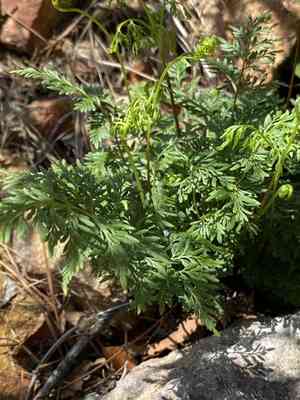
The Arizona lipfern flourishes in arid, stony substrates that drain effectively. During propagation, guarantee a sanitized setting to avert fungal ailments. Gather spores and disseminate them onto a blend of peat and sand, gently dampening the top layer. Sustain elevated humidity and supply diffused illumination. Due to its gradual development, perseverance is crucial. Regular observation of hydration levels will encourage peak growth.
Optimal Period for Arizona Lipfern Propagation
Propagation Method
Seeding
Propagation Period
Spring
Equipment for Arizona Lipfern Propagation
Seed Trays
Seed trays offer a controlled setting for planting arizona lipfern spores. They assist in regulating soil moisture and temperature, which are crucial for spore germination and initial development.
Fine-Mesh Sieve
A fine-mesh sieve is vital for removing debris and ensuring a smooth, uniform layer of soil or substrate, which is perfect for the delicate spores of arizona lipfern.
Humidity Dome
Humidity domes help maintain steady humidity and temperature levels, essential for the germination of arizona lipfern spores. They also protect young plants from drying out.
Misting Bottle
A misting bottle ensures gentle and even moisture delivery to the substrate without disturbing the spores or soil structure, which is crucial for the health of arizona lipfern during the early stages of propagation.
Sterile Cutting Tools
Sterile cutting tools are necessary to obtain clean, disease-free samples (e.g., leaf sections) from arizona lipfern if vegetative propagation methods are used alongside sowing. Sterility helps prevent illness.
How to Propagate Arizona Lipfern
Propagation Difficulty
Simple
Caring for Your Newly Propagated Arizona Lipfern
Caring for Your Newly Propagated Arizona Lipfern
Once spores have germinated and small ferns have emerged, gradually introduce the young plants to lower humidity and more light by slowly removing the cover. Transplant them into individual pots with well-draining soil when they are large enough to handle. Maintain consistent moisture, avoid overwatering, and provide filtered light to ensure healthy growth.
Common Errors to Avoid When Propagating Arizona Lipfern
Overwatering
Leads to root rot due to excessive soil moisture, harmful to arizona lipfern's survival.
Improper Soil Composition
Using dense, poorly draining soil can suffocate roots and hinder proper development.
Insufficient Light
Placing arizona lipfern in low-light conditions impedes photosynthesis, stunting growth and propagation success.
Incorrect Spore Collection and Handling
Failure to properly harvest, store, or plant spores can significantly reduce germination rates.
Advice for Propagating Arizona Lipfern
Moderate Watering Routine
Ensure soil is consistently moist but not waterlogged by watering only when the top inch feels dry.
Well-Draining Soil
Utilize a blend of sand, perlite, and organic matter to promote aeration and prevent water retention.
Ample Indirect Light
Position arizona lipfern where it can receive plenty of indirect sunlight to stimulate healthy growth.
Proper Spore Technique
Gather fully mature spores and store them in a dry, cool place before sowing on a suitable moist soil surface.



