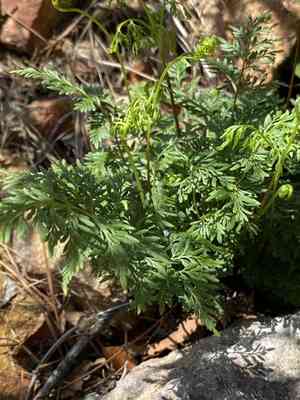
Arizona lipfern (Gaga arizonica)
Also known as: None
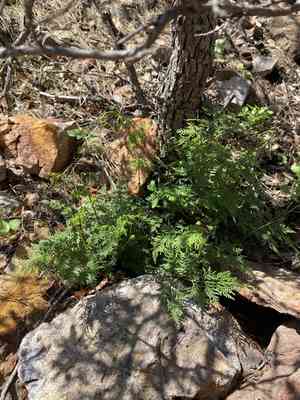
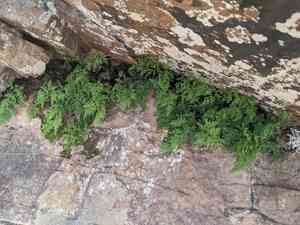
The Arizona lipfern is well-suited to the dry, rocky habitats of Arizona, often flourishing on cliffs, slopes, and canyon walls. It features delicate, feathery fronds with a unique, wavy appearance. This fern is highly adaptable to arid conditions, storing water in its thick, clustered leaf bases, which helps it endure the region's frequent droughts.
In This Article
Attributes of Arizona lipfern
Lifespan
Perennial
Plant Height
10-30 cm
Spread
Not applicable
Leaf Color
Green
Flower Size
Not applicable
Flower Color
Not applicable
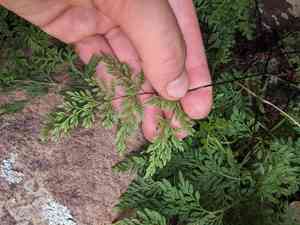
Images of Arizona lipfern
Quickly Identify Arizona lipfern
1
This fern can be identified by its finely divided, delicate fronds and unique reproductive structures called sori, which are located on the underside of the fronds.
Scientific Classification of Arizona lipfern
Phylum
Vascular plants
Class
Ferns
Order
Polypodiales
Family
Brake
Genus
Gaga lipferns
Species
Arizona lipfern
Planting and Growing of Arizona lipfern
Care Difficulty
Moderate
Watering Schedule
Every 2 days
Sunlight Requirements
Partial sun
Sunshine Duration
4-8 hours
Ideal Temperature
65-75℉
Soil Type
Potting Mix, Peat Mix
Soil pH
6.5-7.5
Fertilizer Type
Balanced
Pruning Season
Spring, Summer
Pruning Area
Branches, Leaves
Pruning Frequency
2 times a year
Repotting Season
Spring
Pot Type
Plastic, Ceramic
 How to Water Arizona lipfern?
Gaga arizonica thrives on consistent, yet moderate watering. The aim is to moisten the soil uniformly without drenching it. When you water, ensure that the topsoil is adequately wet, but avoid water pooling at the surface or accumulating in saucers.
What are the symptoms of an underwatered Arizona lipfern?
›
What should I do if my Arizona lipfern is not getting enough water?
›
What are the symptoms of an overwatered Arizona lipfern?
›
How to save an overwatered Arizona lipfern?
›
 What Are the Sunlight Requirements for Arizona lipfern?
Partial sun with some shade ensures that Gaga arizonica thrives; it benefits from moderated exposure preventing both sun damage and lack of photosynthesis.
What is the ideal lighting solution for Gaga arizonica?
›
What measures ensure ideal lighting for Gaga arizonica?
›
What are the benefits of ideal lighting for Gaga arizonica?
›
 What Is the Ideal Temperature Range for Arizona lipfern?
The ideal temperature range for growing Gaga arizonica is between 65°F and 75°F. Within this range, the plant can perform essential metabolic processes efficiently, promoting healthy growth and vibrant foliage. Maintaining this temperature range helps ensure the plant's physiological functions remain stable and reduces the risk of stress-related diseases.
 What Soil is Best for Arizona lipfern?
Gaga arizonica thrives in nutrient-rich soil that promotes healthy growth. This type of soil supports robust plant development and helps the plant to produce lush foliage. The plant benefits from well-draining soil that prevents water from pooling around its roots, reducing the risk of root rot and other moisture-related issues. Aerated soil is crucial as it allows gases to be exchanged and roots to breathe, fostering a healthy root system for optimal plant growth.
 How to Fertilize Arizona lipfern?
For Gaga arizonica, use a balanced fertilizer such as 10-10-10, applying approximately 1/4 to 1/2 teaspoon per gallon of water if you're using a liquid fertilizer. Solid fertilizers should be applied at about 1 teaspoon per square foot, ensuring uniform distribution.
 How to Prune Arizona lipfern?
First, identify any dead or yellowing leaves. These are typically found at the base of the stems. Use your pruning tool to remove these leaves, cutting as close to the main stem as possible. Trim back overgrown stems to maintain a neat shape. Cut just above a set of leaves to encourage new growth. This maintains the plant's aesthetic appeal and encourages a fuller plant. After pruning, apply a gentle water-soluble fertilizer to promote new growth. Ensure the plant is well-watered but not waterlogged to facilitate recovery after pruning.
More About Pruning Techniques→
 How to Propagate Arizona lipfern plant?
1
Choose a healthy and non-flowering stem from the plant. The cutting should be around 4-6 inches long and taken from the upper part of the plant for optimal rooting potential.
2
Remove any lower leaves to expose nodes, as these are the points from which roots will emerge. Dip the cut end into rooting hormone to promote faster rooting and reduce the likelihood of rot.
3
Insert the prepared cutting into a moist, well-draining potting mix. Ensure that at least two nodes are buried beneath the soil surface. Keep the soil consistently moist but not waterlogged.
 How to Repot Arizona lipfern plant?
1
Gaga arizonica should be repotted when its roots begin to circle the bottom of the pot or become visible on the soil surface. This typically happens every 2-3 years. Look for signs of stunted growth or nutrient deficiencies, which indicate it's time for a bigger home.
2
Select a pot that is one size larger in diameter than the current one. Ensure it has adequate drainage holes to prevent water accumulation, which could lead to root rot. Terra cotta pots are preferred as they allow the soil to dry out more quickly, which is ideal for Gaga arizonica.
3
Opt for a well-draining soil mix, typically a cactus or succulent blend, that allows for quick drying. Including ingredients like perlite or pumice improves aeration and moisture retention balance, which is critical for Gaga arizonica's health and growth.
Learn More About Arizona lipfern Diseases
Anthracnose
Bacterial Leaf Spot
Bacterial Soft Rot
Bacterial Wilt
Black Spot
Chemical Injury
Crown Gall
Cyst Nematode
Damping-off
Downy Mildew
Drought Stress
Fusarium Wilt
Gray Mold
Leaf Curl
Leaf Spot
Mosaic
Nutrient Deficiency
Nutrient Toxicity
Powdery Mildew
Root Rot
Root-knot Nematode
Rusts
Sooty Mold
Spider Mites
Temperature Stress
Thrips Damage
White Mold



