How to Propagate Fine-leaved sheep's fescue?
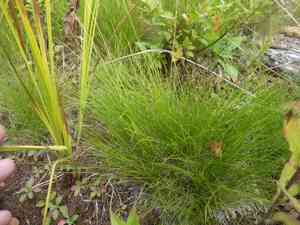
Fine-leaved sheep's fescue flourishes most effectively when multiplied via separation, a method suited to its developmental patterns. Begin by carefully detaching the root masses of an established specimen in either late spring or early fall. This approach facilitates the protection of the fragile root structure, guaranteeing that the separated portions rapidly and successfully take root in permeable earth. Consistent irrigation after relocation aids fine-leaved sheep's fescue in recuperating and adjusting to its new surroundings, fostering vigorous development.
Optimal Time for Fine-leaved Sheep's Fescue Propagation
Propagation Method
Splitting
Propagation Period
Spring,Autumn
Tools for Fine-leaved Sheep's Fescue Propagation
Garden Spade or Fork
These implements are vital for the manual separation of fine-leaved sheep's fescue. A sharp, sturdy spade or fork is employed to carefully dig around and beneath the plant. It aids in lifting the root ball from the ground without causing undue harm. Their robustness allows for cutting through tough soil and dividing dense root clumps, which is key for effective fine-leaved sheep's fescue propagation.
Root Pruning Shears
These specialized cutters are utilized for trimming roots during the division process. They help in making clean cuts on roots, ensuring each fine-leaved sheep's fescue division possesses a healthy root system without fraying or tearing. This promotes faster recovery and better root establishment after transplant.
Transplanting Trowel
A transplanting trowel is used for smaller, more precise tasks, such as digging planting holes for each fine-leaved sheep's fescue division. Its narrow blade facilitates minimal disruption to nearby plants and accurate placement of the divisions, ensuring fine-leaved sheep's fescue is replanted at the correct depth for optimal development.
Watering Can with Fine Rose
Following division and replanting, maintaining sufficient moisture is critical for fine-leaved sheep's fescue's recuperation. A watering can with a fine rose attachment ensures gentle irrigation that doesn't disturb the soil or newly planted divisions, providing a soft shower that helps settle the soil around the roots.
Rooting Hormone (optional)
While not strictly necessary, applying a rooting hormone to the cut root surfaces can boost root development. This is particularly beneficial when propagating fine-leaved sheep's fescue, as it encourages quicker establishment and stronger root growth in the newly divided plants.
How to Propagate Fine-leaved Sheep's Fescue?
Propagation Difficulty
Simple
Caring for Newly Propagated Fine-leaved Sheep's Fescue
Caring for Newly Propagated Fine-leaved Sheep's Fescue
After propagation, fine-leaved sheep's fescue requires continuous care to flourish. Ensure it's planted in well-draining soil and an area receiving full sun to partial shade. Allow the soil to dry slightly between watering to prevent root rot. During the growing season, a light top dressing of balanced, slow-release fertilizer can encourage healthier, denser growth. Minimize foot traffic around the growing area to reduce soil compaction, which can negatively impact root growth. Monitoring and timely weed removal will also help fine-leaved sheep's fescue establish more robustly in its new environment.
Common Errors to Avoid When Propagating Fine-leaved Sheep's Fescue
Overwatering
Excessive moisture can lead to root rot in fine-leaved sheep's fescue, which prefers well-drained soil. This error can significantly impede root development and decrease survival rates during propagation.
Deep planting
Planting fine-leaved sheep's fescue seeds too deeply can prevent germination due to insufficient light and excessive soil moisture. This can result in poor or failed germination, affecting overall propagation success.
Ignoring soil type
Using an unsuitable soil type that doesn't mimic fine-leaved sheep's fescue's natural sandy or loamy environment can lead to poor root development and plant stress, reducing the propagation success rate.
Tips For Propagating Fine-leaved Sheep's Fescue
Use of fresh seeds
Utilizing fresh seeds for sowing increases the germination rate of fine-leaved sheep's fescue, as older seeds may have reduced viability and consequently, lower propagation success.
Light exposure
Ensuring adequate light exposure during seed germination is crucial for fine-leaved sheep's fescue, as it requires light to trigger the germination process. Providing a light seed cover or surface sowing can enhance germination results.
Moderate watering
Maintaining soil moisture at moderate levels is essential for fine-leaved sheep's fescue to avoid waterlogging and ensure optimal moisture for seed germination and root growth.



