How to Propagate Serrate spurge?
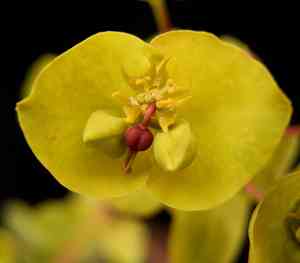
Serrate spurge, a species within the extensive Euphorbiaceae family, is commonly reproduced via stem sections. This technique entails harvesting robust, non-blooming stems from an established specimen during its vigorous growth phases. The stem sections ought to measure several inches in length, with foliage stripped from their bottom portion. Applying rooting stimulant can improve the likelihood of successful rooting, following which the sections are inserted into adequately draining substrate that is kept damp yet not oversaturated. Steady atmospheric moisture encourages superior root formation for these severed plant parts.
Optimal Time for Serrate Spurge Propagation
Propagation Type
Cutting
Propagation Season
Spring,Summer
Tools for Serrate Spurge Propagation
Sharp Pruning Shears
Crucial for making clean cuts from serrate spurge, sharp pruning shears help minimize harm to the parent plant, resulting in healthier cuttings. A precise cut aids in quicker healing for both the cutting and the parent plant, lowering infection risk.
Rooting Hormone
Rooting hormone encourages root development in serrate spurge cuttings, boosting propagation success rates. By enhancing root production, it assists new plants in establishing more quickly once moved to their growing medium.
Sterile Potting Mix
Utilizing a sterile potting mix for planting serrate spurge cuttings helps prevent pathogens that could harm young plants. An ideal medium is well-draining yet water-retentive, providing necessary moisture for root development without waterlogging.
Propagation Trays
Propagation trays provide an organized space for nurturing multiple serrate spurge cuttings. Features like adjustable vents can help manage humidity, which is vital for the successful rooting and growth of new plants.
Humidity Domes
Placed over propagation trays, humidity domes help maintain high moisture levels around serrate spurge cuttings. This is crucial for preventing excessive water loss through the leaves, promoting better growth conditions for young cuttings.
How to Propagate Serrate Spurge?
Propagation Type
Easy
Caring for Your Newly Propagated Serrate Spurge
Caring for Your Newly Propagated Serrate Spurge?
Once rooted, serrate spurge requires minimal attention. Ensure it is placed in a location with full sun to partial shade and water it regularly, allowing the soil to dry out slightly between waterings. Serrate spurge's natural drought tolerance makes it adaptable, but avoid excessive moisture to prevent issues like root rot. During growing season, a balanced, slow-release fertilizer can be applied to support its growth.
Common Mistakes to Avoid When Propagating Serrate Spurge
Overwatering
Watering serrate spurge too often is a common error, leading to root rot. Due to its modest water needs, excessive moisture in the soil can suffocate the roots and promote fungal diseases, undermining the plant's overall health.
Deep planting
Planting seeds or cuttings of serrate spurge too deep can hinder successful germination or rooting. Insufficient light and air exposure can stunt growth and may lead to rotting.
Neglecting aftercare
Neglecting post-propagation care, such as failing to regulate environmental conditions like humidity and temperature, can hinder serrate spurge's ability to establish. Vulnerable to environmental stress, the young plants require controlled conditions to thrive.
Tips For Propagating Serrate Spurge
Moderate watering
Ensure moderate watering when propagating serrate spurge, keeping the soil moist but not waterlogged. This balance supports healthy root development without risking diseases associated with overwatering.
Appropriate planting depth
Plant seeds or place cuttings of serrate spurge at a shallow depth. This allows sufficient light and air to stimulate growth and promotes stronger root systems.
Environmental control
Maintain a controlled environment in terms of humidity and temperature during the initial stages of propagation. Protect serrate spurge from extreme conditions to facilitate successful establishment and growth.



