How to Propagate Eggleaf Spurge?
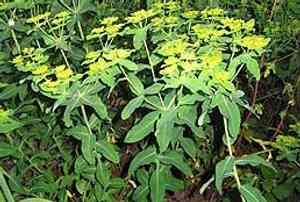
Eggleaf Spurge is best multiplied by planting seeds in the springtime. It is quite simple to propagate, with fresh foliage emerging as a sign of success. Provide sufficient illumination and hydration for peak development.
When Is the Optimal Time to Propagate Eggleaf Spurge?
Propagation Method
Sowing
Propagation Period
Spring
What Equipment Is Used for Eggleaf Spurge Propagation?
Seed trays or pots
Seed trays or pots provide individual sections or ample room for planting seeds, preventing congestion and minimizing transplant shock. They facilitate optimal soil aeration and drainage, crucial for eggleaf Spurge seed germination.
Sterile seed-starting mix
A sterile seed-starting mix offers a disease-free environment, vital for preventing damping off and other seedling ailments. The mix is formulated to retain moisture yet drain effectively, conditions that foster robust root development in eggleaf Spurge seeds.
Dibber or seeding tool
A dibber or seeding tool enables precise placement of eggleaf Spurge seeds at the recommended depth, ensuring consistent germination rates and assisting in proper spacing for optimal growth.
Watering can with a fine rose
A watering can with a fine rose allows for gentle irrigation that doesn't disturb or wash away the tiny eggleaf Spurge seeds. It delivers uniform moisture essential for seedling development without causing soil erosion.
Plastic domes or clear covers
Plastic domes or clear covers help maintain humidity and temperature around the eggleaf Spurge seeds, creating a mini-greenhouse effect. This microclimate promotes quicker germination and stronger seedling development.
Heat mat (optional for warmer conditions)
A heat mat assists in maintaining a consistent soil temperature, which can be advantageous for germinating eggleaf Spurge seeds, especially in cooler environments, as it encourages faster germination and vigorous early growth.
Tweezers
Tweezers provide the ability to handle small eggleaf Spurge seeds delicately during sowing, allowing for accurate seed placement without causing harm, and also aid in thinning seedlings without disturbing adjacent plants.
Labels and markers
Labels and markers are crucial for tracking eggleaf Spurge seed varieties and planting dates. This ensures organized cultivation, particularly when managing multiple trays or pots, and helps monitor growth progress.
How to Propagate Eggleaf Spurge?
Propagation Method
Sowing
Difficulty Level
Easy
How to Care for Your Newly Propagated Eggleaf Spurge?
How to Care for Your Newly Propagated Eggleaf Spurge?
Following transplanting, eggleaf Spurge will require consistent watering to establish its root system, particularly during the initial growing season. Position the plant in an area with full sun to partial shade, and ensure the soil drains well to prevent root rot. Avoid overhead irrigation to minimize the risk of powdery mildew and fungal diseases. Fertilize with a balanced, slow-release fertilizer early in the growing season. As eggleaf Spurge matures, reduce watering, as it is drought-tolerant. Monitor for pests like aphids and treat with appropriate measures if necessary. Prune any dead or damaged stems to maintain the plant's health and appearance.
Common Mistakes to Avoid When Propagating Eggleaf Spurge
Overwatering
Supplying too much water can lead to root rot in eggleaf Spurge, as the plant is susceptible to waterlogging. This stresses the plant and hinders root development.
Deep planting
Placing eggleaf Spurge cuttings too deeply into the substrate can result in stem rot because the cuttings need good air circulation around their bases to initiate roots.
Ignoring sanitation
Failing to sterilize propagation tools can spread diseases to eggleaf Spurge cuttings, leading to poor health or failure to root.
Overcrowding
Placing eggleaf Spurge cuttings too close together can restrict airflow and create humid conditions that promote fungal growth, negatively impacting the cuttings' ability to root successfully.
Tips For Propagating Eggleaf Spurge
Well-draining medium
Utilize a well-draining propagation medium for eggleaf Spurge to prevent water accumulation and reduce the risk of root rot.
Proper depth
Plant eggleaf Spurge cuttings at a shallow depth to ensure sufficient stem is exposed for adequate air circulation, promoting better root initiation.
Tool sanitation
Always clean and sterilize cutting tools before use to avoid transmitting diseases to the eggleaf Spurge cuttings.
Spacing
Provide each eggleaf Spurge cutting with ample space to allow air movement and decrease the risk of fungal issues, enhancing the rooting environment.



