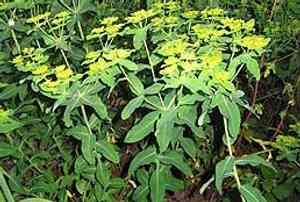
Eggleaf Spurge(Euphorbia oblongata)

Eggleaf Spurge (Euphorbia oblongata)

Also known as: Oblong Spurge

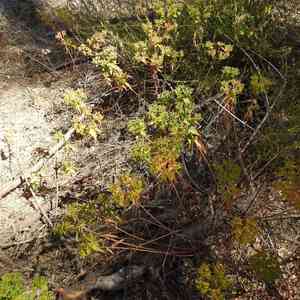
Native to Turkey and Southeast Europe, the eggleaf spurge (Euphorbia oblongata) is an invasive weed that can reach up to three feet in height. It forms dense colonies that can outcompete native vegetation. Caution is needed when handling this plant, as its white sap can irritate the skin and is toxic to livestock if consumed.

Attributes of Eggleaf Spurge

Lifespan
Annual, Perennial
Plant Type
Herb
Plant Height
50 cm to 60 cm
Spread
1 m
Leaf Color
Green Gray Red
Flower Size
2.5 cm
Flower Color
Yellow Green

ForwardPlant - Identify plants with a snap

Identify and diagnose plants, get toxicity alerts, and explore safety guides for all types of fungi.

Try for Free

Images of Eggleaf Spurge

Eggleaf Spurge(Euphorbia oblongata)

Quickly Identify Eggleaf Spurge

1
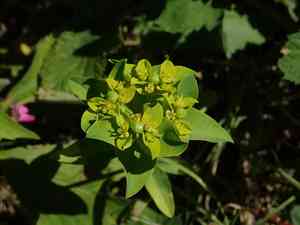
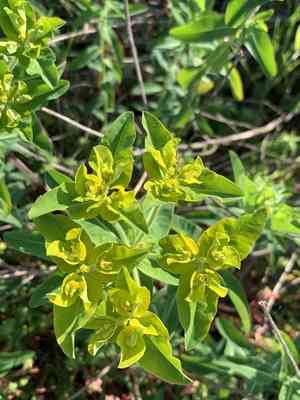
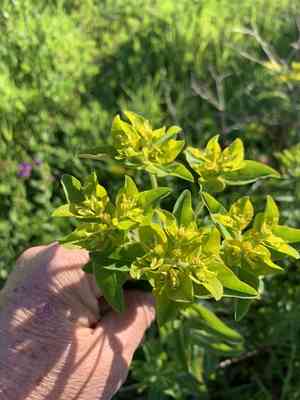
Euphorbia oblongata can be identified by its narrow, elongated leaves and clusters of small, yellow-green flowers. The plant exudes a milky sap when cut, which is a common trait of the Euphorbia genus.

Scientific Classification of Eggleaf Spurge

Phylum
Vascular plants
Class
Dicotyledons
Order
Malpighiales
Family
Spurge
Genus
Spurges
Species
Eggleaf Spurge

Planting and Growing of Eggleaf Spurge

Care Difficulty
Easy
Watering Schedule
Every 4 days
Sunlight Requirements
Full sun
Sunshine Duration
6-10 hours
Ideal Temperature
60-75℉
Soil Type
Potting Mix, Peat Mix
Soil pH
6.5-7.5
Fertilizer Type
Balanced
Pruning Season
Spring, Summer
Pruning Area
Branches, Leaves
Pruning Frequency
2 times a year
Repotting Season
Spring
Pot Type
Plastic, Ceramic

water icon How to Water Eggleaf Spurge?

Euphorbia oblongata prefers a watering amount that allows the soil to be evenly moist but not waterlogged. Aim to water around 200 ml each time, ensuring that the soil is thoroughly moist but water is not sitting on the surface. Keeping a balance in moisture is key to healthy growth.
What are the symptoms of an underwatered Eggleaf Spurge?
What should I do if my Eggleaf Spurge is not getting enough water?
What are the symptoms of an overwatered Eggleaf Spurge?
How to save an overwatered Eggleaf Spurge?

sunlight icon What Are the Sunlight Requirements for Eggleaf Spurge?

Sunlight Requirements: Full sun, Partial sun
Duration of light: 6 to 8 hours daily
Euphorbia oblongata ideally requires full sun to partial sun, translating to 6 to 8 hours daily. This lighting helps maintain its aesthetic qualities and health by ensuring a balanced energy intake through consistent photosynthesis.
How much sunlight does Euphorbia oblongata need daily?
How can I ensure optimal lighting for Euphorbia oblongata?
What benefits does optimal lighting bring to Euphorbia oblongata?
More About Sunlight Requirements Techniques

temperature icon What Is the Ideal Temperature Range for Eggleaf Spurge?

Ideal Temperature: 60 ~ 75℉
Euphorbia oblongata thrives best in a temperature range between 60°F and 75°F. This range supports optimal photosynthesis and growth processes, ensuring the plant remains healthy and vibrant. Maintaining consistent temperatures within this range can help in achieving robust plant growth and flowering.

soil icon What Soil is Best for Eggleaf Spurge?

Soil type: Sandy soil, Loam, Calcareous soil
Soil PH: 6.5 ~ 7.5
Euphorbia oblongata thrives in soil that offers excellent drainage. Well-drained soil prevents waterlogging, which can lead to root rot. Proper drainage ensures roots get sufficient oxygen, promoting vigorous growth and minimizing disease risks. This plant prefers a nutrient-rich medium, which supports flourishing blooms and healthy foliage. A loamy, organically rich soil provides essential nutrients, resulting in a robust and vibrant plant. Although Euphorbia oblongata needs well-drained soil, it also benefits from moderate water retention. Sandy loam is ideal, balancing moisture supply without holding excessive water, ensuring the plant remains hydrated during dry spells.

fertilize icon How to Fertilize Eggleaf Spurge?

Fertilizer type: Balanced
For Euphorbia oblongata, the fertilization amount should be moderate to prevent root burn. Use a balanced liquid fertilizer diluted to half-strength. For each application, 250 ml of this diluted solution per plant is generally adequate. Avoid applying too close to the plant stem to prevent concentration build-up.

prune icon How to Prune Eggleaf Spurge?

Pruning Time: Spring, Summer
Begin by identifying any dead, diseased, or damaged stems. Consider the overall shape you desire for the plant before making any cuts. Use sharp, sanitized pruning shears to make clean cuts just above a leaf node. This encourages new growth and prevents the spread of disease. Trim back stems to maintain a rounded, bushy shape. This not only helps with aesthetic appeal but also promotes fuller growth and better flowering. More About Pruning Techniques

propagate icon How to Propagate Eggleaf Spurge plant?

Propagate Time: Spring, Early Summer
1
Start by filling a seed tray with a well-draining seed-starting mix. Sow the seeds on top, covering lightly with soil. Water gently and keep the tray in a warm, bright location until germination occurs.
2
Choose healthy stems for cuttings, cutting just below a node. Remove leaves from the lower half, dip the cut end in rooting hormone, and plant it in a pot filled with a pre-moistened perlite mix.
3
Carefully remove the plant from its container, and gently separate the root ball into sections. Each section should have roots and shoots. Replant the divisions into separate pots filled with fresh potting soil.
More About Propagating Techniques

repot icon How to Repot Eggleaf Spurge plant?

Repotting frequency: Every 1-2 years
1
Euphorbia oblongata needs repotting when its roots begin to outgrow the pot or when the soil quality degrades. Signs include roots emerging from drainage holes, slower growth, reduced flowering, or when soil remains soggy longer than usual. Repotting should ideally be done in spring or summer for optimal growth and adaptation.
2
Select a pot that is slightly larger than the current one, with ample drainage holes. A pot that's too large can lead to overwatering issues, as the plant's roots may not absorb moisture quickly enough. The material can vary—clay pots help with aeration and moisture evaporation, while plastic ones retain moisture.
3
Opt for a well-draining cactus mix, which helps prevent root rot by allowing excess water to escape easily. This type of soil is often a blend of potting soil, sand, and perlite or pumice. Such texture ensures that the roots have access to necessary moisture while minimizing waterlogging.

ForwardPlant - Identify plants with a snap

Find the best spots for them to optimize their health, simply using your phone.

Try for Free

Toxicity of Eggleaf Spurge

Is Eggleaf Spurge toxic to humans?

Eggleaf Spurge, similar to all varieties of spurges, contains a bitter, toxic sap that renders the plant hazardous for consumption and unpleasant to handle without adequate protection. Contact with the sap can lead to an unpleasant rash if it touches your skin; therefore, it is essential to wear gloves when cutting or uprooting this weed. This toxic substance can also cause significant irritation to the eyes; even the fumes may trigger excessive tearing. Ingesting it results in even more severe reactions, including intense pain and swelling in the mouth and throat, extreme digestive disturbances, abdominal pain, nausea, vomiting, and diarrhea.

Is Eggleaf Spurge toxic to cat?

Eggleaf Spurge is classified as having a moderate level of toxicity, posing a danger if cats consume any part of the plant. The main threat arises from the sap or juice, which can cause physical discomfort if ingested by felines. Cats may experience poisoning if they chew or swallow any portion of the plant that secretes this sap. Should there be any suspicion that a cat has been exposed to eggleaf Spurge, prompt veterinary attention is essential to address and alleviate any possible health concerns.

Is Eggleaf Spurge toxic to dog?

Eggleaf Spurge presents a moderate risk of toxicity for dogs. Poisoning generally occurs when a dog consumes portions of the plant, especially the sap or juice. Following ingestion, dogs may display signs such as vomiting, diarrhea, lethargy, and irritation within the mouth or gastrointestinal tract. If you believe your dog has ingested eggleaf Spurge, it is crucial to obtain prompt veterinary attention to ensure appropriate treatment and symptom management.

Identify toxic plants for your safety

Learn which plants are harmful to you and your pets, and make informed choices for a safer home!

Try for Free
WARNING
The judgment on toxicity and danger is for reference only. We DO NOT GUARANTEE any accuracy of such judgment. Therefore, you SHALL NOT rely on such judgment. It is IMPORTANT TO SEEK PROFESSIONAL ADVICE in advance when necessary.
More About Toxic Techniques