How to Propagate Upland boneset?
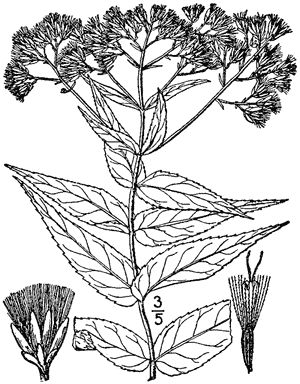
Upland boneset flourishes most effectively when reproduced via seeding. To achieve successful development, employ a growing medium that drains efficiently and ensure steady hydration without saturating the soil. At first, shield young plants from intense solar exposure, progressively introducing them to increased illumination as they develop. Careful handling is essential during relocation to safeguard the fragile root structures.
What Is the Best Time To Propagate Upland Boneset?
Propagation Type
Sowing
Propagation Season
Spring
What Tools Are Used in Upland Boneset Propagation?
Seed trays
Seed trays are vital for the initial germination phase of upland boneset. They enable organized sowing and separation of seeds, offering the necessary space for early root development. Their shallow design helps maintain proper seed depth, ensuring optimal soil contact and moisture retention crucial for germination.
Misting bottle
A misting bottle is essential for maintaining the high humidity required for upland boneset seed germination. Regular misting keeps the soil surface moist without waterlogging, which can harm seeds. The fine mist ensures small seeds are not dislodged, especially important for the fine seeds upland boneset produces.
Peat pots
Peat pots are beneficial for upland boneset as they reduce root disturbance during transplanting. These biodegradable pots can be planted directly into the soil, lessening stress on young plants by avoiding direct root handling. This is particularly advantageous for upland boneset, which may suffer transplant shock if roots are disturbed.
Grow lights
Grow lights provide the necessary light spectrum for upland boneset's growth when natural sunlight is insufficient, such as in early spring or controlled environments like greenhouses. These lights help ensure a consistent light source, crucial for uniform seed growth and preventing seedlings from becoming leggy.
Heating mat
A heating mat speeds up germination by maintaining a consistent soil temperature, which is critical for upland boneset. This tool is especially useful during cooler months or climates where ambient temperatures might hinder germination rates. Consistent warmth from the mat ensures quicker and more uniform seed generation.
How to Propagate Upland Boneset?
Propagation Type
Easy
How to Care for Your Newly Propagated Upland Boneset?
How to Care for Your Newly Propagated Upland Boneset?
After propagation, ensure upland boneset plants receive full to partial sunlight. Water them regularly, especially during dry spells, to maintain consistent soil moisture. Apply mulch around the base to retain moisture and suppress weeds. Prune dead or damaged stems to encourage healthy growth and flowering. Monitor for pests and diseases, treating as needed to keep plants healthy and vigorous.
Common Mistakes to Avoid When Propagating Upland Boneset
Overwatering
Excessive water can cause root rot in upland boneset, leading to root decay and hindering the plant's ability to absorb nutrients effectively. This results in a weakened plant less likely to thrive during propagation.
Using non-sterile tools
Non-sterile cutting tools can introduce pathogens to upland boneset, potentially causing infections that compromise the health of cuttings and reduce the chances of successful propagation.
Cutting too small a section
Propagating upland boneset with too small a cutting can result in insufficient energy reserves for the plant to establish new growth, leading to a lower survival rate.
Ignoring root health
Failing to inspect and trim unhealthy roots during division propagation can significantly impede the overall health and growth of upland boneset, leading to poor establishment and development.
Planting at incorrect depth
Planting cuttings or divided parts too deep can cause upland boneset cuttings or root divisions to suffer from lack of air, while planting too shallow may not provide enough support or moisture retention for new roots.
Tips For Propagating Upland Boneset
Moisture control
Maintain consistent moisture, but avoid waterlogging the soil. This balance prevents root rot and provides optimal conditions for root development in upland boneset.
Use of sterile equipment
Always use clean and sterilized pruning tools when taking cuttings from upland boneset. This practice minimizes the risk of disease transmission, ensuring healthier propagation.
Adequate cutting size
Ensure the cuttings are large enough to contain several nodes. This increases the likelihood of successful rooting and establishment in upland boneset.
Root health management
Examine and trim away any decayed or overly long roots when propagating upland boneset through division, which promotes more vigorous growth and healthier plants.
Proper planting depth
Plant upland boneset cuttings and root divisions at the appropriate depth. This depth should support the plant while allowing the top of the cutting or division to be just above the soil line to facilitate growth.



