How to Propagate Kennedy's buckwheat?
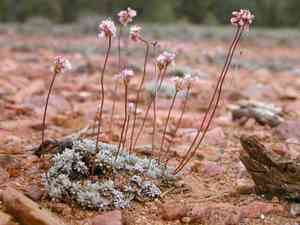
Eriogonum kennedyi flourishes in porous, sandy substrates under direct solar illumination. To achieve successful propagation via seeding, position the seeds on the soil's surface, leaving them uncovered, as light is crucial for their sprouting. Ensure continuous dampness without saturation. Implementing a period of cold stratification improves the germination percentage. It is vital to offer a sheltered setting from harsh temperatures until the young plants are firmly rooted.
Optimal Propagation Period for Kennedy's Buckwheat?
Propagation Method
Seeding
Propagation Season
Spring
Essential Tools for Kennedy's Buckwheat Propagation?
Seed Trays
Seed trays are vital for offering a controlled setting for kennedy's buckwheat sprouts. They enable proper soil drainage and room for root development, crucial during initial propagation stages.
Heat Mat
A heat mat delivers consistent warmth to seed trays, encouraging quicker and more uniform germination of kennedy's buckwheat seeds. This tool ensures seeds get the perfect temperature for sprouting.
Humidity Dome
A humidity dome aids in maintaining high moisture levels around kennedy's buckwheat seeds, preventing desiccation. This is especially beneficial during germination, ensuring a suitable microenvironment.
Seed Starting Mix
A well-draining seed starting mix is crucial for kennedy's buckwheat, providing a sterile medium that boosts germination rates and lowers the risk of damping-off disease. It supports strong root growth in seedlings.
Spray Bottle
A spray bottle allows for gentle irrigation of kennedy's buckwheat seedlings without disturbing the soil or delicate roots. Maintaining correct moisture levels is key to preventing seedling stress.
Labels
Labels are important for tracking kennedy's buckwheat propagation, ensuring different batches or varieties are easily identified. This helps monitor growth and care needs accurately.
Grow Lights
Grow lights supply the necessary light spectrum for kennedy's buckwheat seedlings, especially if natural light is insufficient. Adequate lighting promotes healthy, robust growth and prevents leggy seedlings.
How to Propagate Kennedy's Buckwheat?
Propagation Type
Simple
Post-Propagation Care for Kennedy's Buckwheat?
Post-Propagation Care for Kennedy's Buckwheat?
Once sprouts appear, gradually introduce them to outdoor conditions by increasing sun exposure and reducing humidity. Transplant the young plants into well-draining soil in their permanent spot, ensuring full sun. Water carefully to avoid overwatering, and protect from extreme weather as needed for healthy growth.
Common Errors to Avoid When Propagating Kennedy's Buckwheat
Overwatering
Excessive watering can cause root rot, making it hard for kennedy's buckwheat to establish and thrive. This plant prefers well-drained, rocky soils.
Incorrect soil type
Using rich, heavy soils can impede the growth of kennedy's buckwheat. This plant flourishes in rocky, well-drained soils, and unsuitable soil can lead to poor plant health.
Insufficient sunlight
Kennedy's buckwheat needs full sun for optimal growth. Inadequate sunlight can result in weak development and poor flowering.
Improper spacing
Planting kennedy's buckwheat too close can lead to competition for resources, resulting in stunted growth and increased vulnerability to pests and diseases.
Neglecting seed stratification
Failing to stratify seeds can lower germination rates. Kennedy's buckwheat seeds often require a cold stratification period to germinate successfully.
Advice For Propagating Kennedy's Buckwheat
Use sandy or gritty soil
Ensure the soil drains well by using a sandy or gritty mix, which mimics kennedy's buckwheat's natural environment.
Provide full sun
Plant kennedy's buckwheat in an area that receives full sun throughout the day to ensure vigorous growth and flowering.
Space plants properly
Adequately space individual plants to reduce competition and encourage healthy growth.
Cold stratify seeds
If propagating from seed, simulate natural conditions by chilling the seeds for a period before planting to improve germination rates.
Avoid overwatering
Water sparingly, allowing the soil to dry out between waterings to prevent root rot and other moisture-related issues.



