How to Propagate Hairy fleabane?
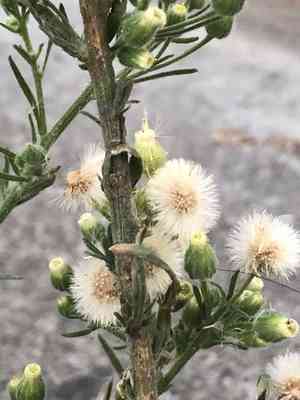
Hairy fleabane can be successfully multiplied by planting its seeds. Verify that the growing medium drains properly and is somewhat damp. Gently blanket the seeds with a fine layer of earth and position them in a brightly lit location. Sustain uniform dampness until sprouting occurs. Once seedlings produce several true leaves, thin them out, providing adequate space to avoid excessive density. Confirm the vicinity is clear of unwanted vegetation to minimize rivalry for nourishment and hydration.
When Is the Optimal Time to Propagate Hairy Fleabane?
Propagation Method
Seeding
Propagation Period
Spring
What Equipment Is Utilized for Hairy Fleabane Propagation?
Seed Trays
Seed trays offer a regulated environment for planting hairy fleabane seeds. They facilitate easy monitoring and care of young plants, ensuring prime growth conditions.
Fine Seed Compost
Employing a fine seed compost guarantees excellent seed-to-soil contact, vital for hairy fleabane germination. It supplies necessary nutrients and a light medium for root expansion.
Seed-Starting Heat Mat
A seed-starting heat mat delivers consistent warmth, which can boost the germination rate of hairy fleabane. It establishes an ideal setting by maintaining a steady soil temperature.
Water Mister
A water mister ensures gentle, even moisture distribution without disturbing hairy fleabane seeds. Sufficient moisture is crucial to prevent seed desiccation and encourage effective germination.
Plastic Dome or Cover
Utilizing a plastic dome or cover preserves humidity and warmth around hairy fleabane seeds, reducing evaporation and fostering a microclimate favorable for early development.
Labels and Markers
Labels and markers assist in tracking various batches of hairy fleabane seeds. This is important for observing growth stages and managing multiple propagation efforts.
Small Dibber or Pencil
A small dibber or pencil is useful for creating precise indentations in the soil to position hairy fleabane seeds at the correct depth, ensuring good seed-to-soil contact.
UV Grow Light
A UV grow light provides supplementary illumination for hairy fleabane, especially when cultivated indoors or in low-light settings, supporting robust seedling growth.
Sterilizing Solution
A sterilizing solution is important for sanitizing propagation tools and containers to prevent fungal and bacterial infections, which can impact the health and viability of hairy fleabane seedlings.
How to Propagate Hairy Fleabane?
Propagation Difficulty
Simple
How to Care for Your Newly Propagated Hairy Fleabane?
How to Care for Your Newly Propagated Hairy Fleabane?
Post-germination, gradually introduce seedlings to outdoor conditions. Once robust, transplant them to their permanent spot. Ensure ample sunlight, regular but not excessive watering, and protection from harsh weather. Fertilize sparingly, as hairy fleabane thrives in relatively low-nutrient soils.
Common Errors to Avoid When Propagating Hairy Fleabane
Overwatering
Excessive moisture can lead to root rot, significantly hindering the growth and survival of hairy fleabane.
Using Poor Soil
Employing soil with inadequate drainage can result in waterlogged conditions, harmful to the plant's roots.
Incorrect Light Exposure
Placing hairy fleabane in too much shade can impede its growth, while excessive direct sunlight might cause leaf scorch.
Improper Cutting Handling
Failing to use sterile tools or damaging the cuttings can introduce disease and decrease the likelihood of successful propagation.
Neglecting Temperature Needs
Exposing cuttings to unsuitable temperatures (too hot or too cold) can kill them or impede their root development.
Tips For Propagating Hairy Fleabane
Ensure Proper Drainage
Utilize well-draining soil to prevent water accumulation around the roots, thereby avoiding root rot.
Moderate Watering
Water sparingly, ensuring the soil remains slightly moist but not saturated.
Optimal Light Conditions
Provide indirect sunlight or partial shade to balance light exposure, benefiting the plant's growth.
Sterile Tools
Always use clean, sterilized tools to take cuttings to prevent disease and infection.
Right Temperature
Maintain a stable and moderate temperature around the plant cuttings to promote healthy rooting and growth.



