How to Propagate Broad-leaved helleborine?
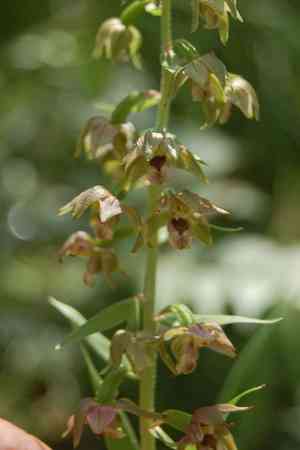
The reproduction of Broad-leaved helleborine is mainly achieved via separation, a favored technique ideally performed in the spring and fall. This propagation process can present a moderate challenge, with indicators of success being fresh shoots and robust root formation. Sufficient moisture and dappled light contribute to a positive outcome.
Optimal Period for Broad-leaved Helleborine Propagation
Propagation Type
Division
Propagation Season
Spring, Autumn
Tools Required for Broad-leaved Helleborine Propagation
Sharp, sterilized knife or pruning shears
These are crucial for making clean cuts through rhizomes or roots during division, a common method for broad-leaved helleborine. Clean cuts minimize damage and disease risk.
Hand trowel
A hand trowel is used to carefully excavate around the broad-leaved helleborine, lifting it from the soil with minimal root disruption. Its narrow blade suits delicate root systems.
Gloves
Gloves safeguard the propagator's hands from cuts or skin irritation, while also preventing pathogen transfer to the broad-leaved helleborine.
Watering can with a fine rose
Gentle watering is vital after propagation to ensure newly divided broad-leaved helleborine receive adequate moisture without oversaturation, achievable with a fine rose attachment.
Rooting hormone powder or gel
For broad-leaved helleborine, applying rooting hormone to fresh divisions can stimulate root development and enhance propagation success rates.
Potting mix
A well-draining potting mix ensures that newly propagated broad-leaved helleborine divisions have suitable soil conditions for root growth and to prevent decay.
Labels and marker
Labels help track propagated broad-leaved helleborine, including propagation date and other relevant details. A marker is used for writing on these labels.
Plastic pots or trays
These containers will hold the divided broad-leaved helleborine and their potting mix. They must have sufficient drainage holes to prevent water accumulation.
Method for Propagating Broad-leaved Helleborine
Propagation Type
Division
Difficulty Level
Easy
Post-Propagation Care for Your Broad-leaved Helleborine
How to Care for Your Newly Propagated Broad-leaved Helleborine?
Following propagation, broad-leaved helleborine should be placed in partial shade to mimic its natural woodland setting. The soil must remain moist but not waterlogged, as broad-leaved helleborine prefers good drainage. Avoid exposing new plants to intense midday sun. Fertilization is generally unnecessary for broad-leaved helleborine, as they thrive in low-nutrient soils. Monitor for pests or diseases and address issues promptly. As broad-leaved helleborine establishes, it will require minimal upkeep, but ensure growing conditions align with its natural preferences.
Common Errors to Avoid When Propagating Broad-leaved Helleborine
Overwatering
Excessive watering of broad-leaved helleborine can lead to root rot, as it generally prefers well-drained soil. This can result in a weakened root system and ultimately, plant demise.
Excessive repotting
Frequent repotting or disturbing broad-leaved helleborine's roots can stress the plant, as it prefers to establish itself undisturbed. This may lead to stunted growth or failure to thrive.
Using poor soil
Employing the incorrect soil type, especially one that doesn't resemble broad-leaved helleborine's natural woodland habitat, can hinder growth. Inappropriate soil may lack vital nutrients or proper drainage.
Ignoring symbiotic relationships
Neglecting the symbiotic relationship between broad-leaved helleborine and specific fungi can significantly reduce propagation success. Such symbiosis is crucial for nutrient absorption.
Too much light
Providing excessive light can harm broad-leaved helleborine, as it naturally thrives in dappled shade. Overexposure to light can cause leaf burn and stress the plant.
Advice for Propagating Broad-leaved Helleborine
Semi-shade location
Positioning broad-leaved helleborine in a semi-shaded environment will replicate its natural habitat and encourage robust growth. This simulates the dappled woodland conditions broad-leaved helleborine is accustomed to.
Woodland soil mix
Utilizing a woodland soil mix rich in organic matter can boost the success of propagating broad-leaved helleborine. This supplies essential nutrients and maintains the desired soil moisture balance.
Minimal disturbance
Avoiding unnecessary repotting or root disruption allows broad-leaved helleborine to establish its root system, increasing its chances for successful propagation.
Incorporate mycorrhizal fungi
Inoculating the soil with compatible mycorrhizal fungi can aid in establishing the symbiotic relationship vital for broad-leaved helleborine's growth and should be considered during propagation.
Appropriate watering
Providing consistent, moderate watering to keep the soil slightly moist is important. Monitoring to ensure the soil isn't waterlogged will help prevent root rot.



