How to Propagate Few-flowered spike-rush?
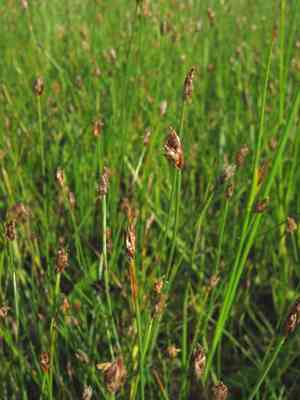
Few-flowered spike-rush is successfully multiplied by means of division, a straightforward technique involving the separation of its thick, mat-producing rhizomes. Gently place the divided sections into damp, adequately draining soil, taking care to disturb the roots as little as possible. This technique facilitates rapid establishment and expansion, rendering it perfect for augmenting few-flowered spike-rush populations in natural-style aquatic gardens or for rehabilitating wetland environments.
Optimal Time for Few-flowered Spike-rush Propagation
Propagation Type
Division
Propagation Season
Spring,Autumn
Tools for Few-flowered Spike-rush Propagation
Sharp Knife or Garden Shears
These implements are vital for dividing few-flowered spike-rush. A keen blade or shears ensures clean cuts, which are essential to prevent damage to the root systems during the division process. Precise, clean cuts minimize stress on few-flowered spike-rush, reducing infection risk and promoting faster recovery and growth.
Watering Can with Fine Rose
After dividing and replanting, providing few-flowered spike-rush with gentle irrigation is crucial to prevent soil erosion around the newly placed divisions and to help the soil settle. A watering can with a fine rose attachment distributes water evenly and softly, which is especially important for maintaining the integrity of the soft, wetland soil where few-flowered spike-rush thrives.
Garden Fork or Spade
A garden fork or spade is utilized for initially extracting few-flowered spike-rush from the ground. This tool should be sharp and robust to effectively penetrate the wetland soil without harming the root system. A fork is particularly advantageous as it can gently separate roots without cutting them.
Plant Labels and Marker
Following division, it is advisable to label each newly planted section of few-flowered spike-rush. This assists in monitoring the growth and health of each division individually, which is essential for successful propagation. Using waterproof labels and a permanent marker ensures that labels remain readable throughout the growing season, regardless of weather conditions.
Garden Gloves
When handling few-flowered spike-rush, especially during division, wearing garden gloves protects hands from moisture and soilborne pathogens. This is particularly important when working in wet conditions, typical for few-flowered spike-rush, to maintain hygiene and prevent potential skin irritations.
Propagating Few-flowered Spike-rush: A Guide
Propagation Type
Easy
Caring for Your Newly Propagated Few-flowered Spike-rush
Caring for Your Newly Propagated Few-flowered Spike-rush
After propagation, maintain a consistently moist environment for few-flowered spike-rush, as it flourishes in wet conditions. Avoid allowing the soil to dry out, which could stress the plants. Continue to check for signs of pests or diseases, and remove any decaying or dead foliage to encourage healthy growth. Keeping the area free of weeds will also help few-flowered spike-rush establish without competition for nutrients and light.
Common Errors to Avoid When Propagating Few-flowered Spike-rush
Overwatering
Excessive moisture can lead to root rot in few-flowered spike-rush, an outcome that would severely hinder its growth and propagation. This species requires well-drained conditions.
Deep planting
Planting few-flowered spike-rush too deeply can impede proper rhizome development and hinder growth. It is crucial to ensure that rhizomes are planted shallowly to facilitate adequate light exposure and air circulation.
Neglecting division
Failing to regularly divide few-flowered spike-rush can result in overcrowded conditions that stifle growth and reduce plant vigor. Overcrowding can lead to diminished resources like nutrients and light.
Tips for Propagating Few-flowered Spike-rush
Suitable substrate
Utilize a sandy or gravelly substrate for propagating few-flowered spike-rush. This preference for a well-drained medium helps prevent roots from becoming waterlogged, thus promoting better growth and healthier plants.
Shallow planting
Ensure rhizomes of few-flowered spike-rush are planted superficially, just beneath the substrate surface. This positioning aids in the optimal development of shoots and roots, crucial for successful propagation.
Regular division
Perform division of few-flowered spike-rush every few years to maintain plant health and vigor. This process involves separating older clumps into smaller sections, which encourages rejuvenation and reduces competition for resources among the plants.



